

Singles’ Day on 11 November has become one of the biggest online shopping days of the year in Singapore. The major marketplaces, brand webstores and even some physical retailers run campaigns that start well before the day itself. Getting genuinely good 11.11 deals Singapore shoppers can feel good about is less about luck and more about preparation: knowing how vouchers work, building your cart early, tracking prices and spotting discounts that are not really discounts.
This guide is a Singles’ Day playbook. It focuses on the mechanics of the sale rather than general shopping habits or when to buy through the rest of the year.
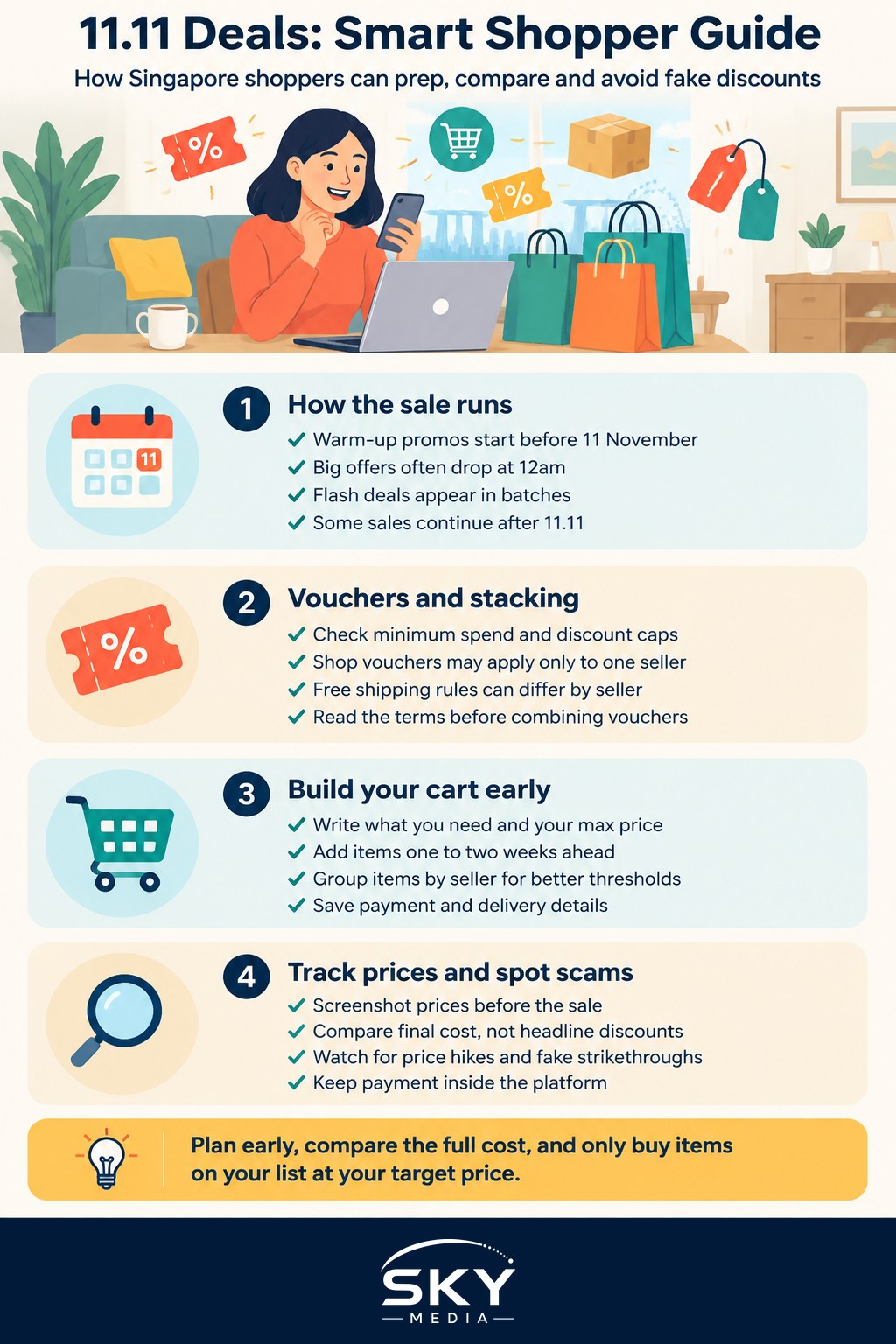
How 11.11 Sales Usually Work
Although each platform designs its own campaign, most 11.11 events in Singapore follow a familiar pattern.
- Warm-up period. In the days or weeks before 11 November, platforms run teaser promotions, let you collect vouchers in advance and encourage you to add items to your cart or wishlist.
- Midnight start. Many of the strongest offers, including limited flash deals and capped vouchers, go live at 12am on 11 November and can run out within minutes.
- Timed flash sales. Throughout the day, platforms release small batches of discounted items at set times.
- Extended or follow-up sales. Some campaigns carry on for a day or more after, and some shops hold back stock for a later sale.
Exact timings, voucher amounts and caps change every year and differ by platform, so read the campaign page of each app you plan to use rather than assuming last year’s pattern will repeat.
Understanding Vouchers and Stacking Rules
Vouchers are where most of the real savings come from, and also where most confusion happens. You will typically see several types.
| Voucher type | Who funds it | What to check |
|---|---|---|
| Platform voucher | The marketplace | Minimum spend, cap on discount, eligible categories, claim limit |
| Shop or seller voucher | The individual seller | Applies only to that shop, may need you to follow the shop first |
| Free shipping voucher | Platform or seller | Minimum spend, eligible sellers, which delivery option it covers |
| Payment or bank promotion | Bank, card or wallet provider | Eligible cards, registration needs, cashback timing and caps |
Platforms usually allow some combinations, such as a platform voucher plus a shop voucher plus free shipping, but not others. The rules are set out in the voucher terms, which are short but worth reading. Pay attention to three details in particular:
- Minimum spend is often calculated before shipping and after other discounts. Adding a filler item to hit the threshold only makes sense if you would have bought it anyway.
- Caps limit the maximum discount. A high percentage voucher with a low cap can be worth less than a smaller flat discount.
- Claim limits and timing. Some vouchers must be collected in advance, and popular ones are fully redeemed within minutes of going live.
Building Your Cart Before the Day
A prepared cart is what lets you check out calmly at midnight instead of scrambling.
- Start with a written list. Note what you need, the maximum you are willing to pay, and whether it is a need or a want. This list is your anchor when flashy banners appear.
- Add items to your cart one to two weeks ahead. This lets you watch how the price behaves and makes the platform show you which vouchers apply.
- Split carts by seller. Shop vouchers and free shipping thresholds are usually per seller, so grouping items from the same shop can unlock better combinations.
- Save your payment and delivery details. Update your address and confirm your preferred payment method before the sale, so you are not typing card numbers at 12.01am.
- Have a fallback. For high-demand items that may sell out, shortlist a second seller or a comparable model at a price you are happy with.
If you are new to comparing value carefully, our guide on how to become a smarter shopper in Singapore covers unit pricing and other everyday habits that help here.
Tracking Prices So You Know a Real Deal
The single most useful habit for 11.11 is knowing what an item normally costs. Without that baseline, every “up to 90% off” banner looks tempting.
- Screenshot prices early. A dated screenshot of the product page from a few weeks before the sale is a simple, reliable record.
- Use price history tools carefully. Some browser extensions and third-party apps track marketplace price histories. They can be helpful, but check what data they collect and only install tools from reputable sources.
- Compare across platforms. The same item may be listed by several sellers and on several platforms. Check the official brand store too, which sometimes matches or beats marketplace pricing.
- Count the full cost. Include shipping, any platform fees shown at checkout and the value of vouchers you actually qualify for, then compare final prices, not headline discounts.
Knowing how sellers set prices also helps. Retailers often anchor discounts against a “recommended” or original price, which is why understanding how businesses approach pricing makes it easier to read sale tags critically.
Spotting Fake and Inflated Discounts
Not every discount on Singles’ Day is what it seems. Common warning signs include:
- Price raised before the sale. The “original” price is bumped up in the weeks before, so the 11.11 price looks like a big cut but is close to the usual price. Your screenshots expose this.
- Strikethrough prices that never applied. A crossed-out price that the item was never actually sold at is a red flag.
- Very low prices on branded goods from unknown sellers. This can point to counterfeits. Look for official stores, seller ratings, the number of reviews and how long the shop has been active.
- Off-platform payment requests. A seller asking you to pay through a direct bank transfer or a chat link is a scam risk. Keep payment inside the platform, where buyer protection usually applies.
- Fake countdown pressure. Timers and “only 2 left” messages are designed to rush you. If it is on your list at your target price, buy it. If not, let it go.
If something goes wrong, contact the platform’s customer support first. The Consumers Association of Singapore (CASE) provides guidance on consumer disputes, and the ScamShield resources from the authorities help you recognise and report scams. Check their official websites for current procedures.
Understanding Platform Rules on Delivery and Returns
Deals are only good if the item arrives and can be returned if faulty.
- Expect slower delivery. Parcel volumes surge after 11.11, so delivery estimates can stretch, especially for items shipped from overseas.
- Check the return window and conditions. Platforms have their own buyer protection and return policies, and individual sellers may add conditions. Read them before paying for anything expensive.
- Confirm the order before release. Some platforms hold payment until you confirm receipt. Inspect the item before confirming, and raise any issue within the stated window.
- Keep records. Save order confirmations, chat messages and photos of the item on arrival until you are sure everything is in order.
A Simple 11.11 Game Plan
To bring it together, a sensible routine looks like this: write your list and budget about two weeks before, screenshot prices, add items to your cart, collect vouchers as they appear, confirm payment details the day before, and check out early on 11 November for the items that matter most. Then close the app. The best Singles’ Day deal is the one that saves money on something you actually planned to buy.
Frequently Asked Questions
Is it better to shop at midnight or later in the day on 11.11? Midnight suits limited flash deals and capped vouchers, which can run out within minutes. Many offers are released again in timed batches through the day, though. If you will be tired and careless at midnight, buying key items in the morning is a fair trade.
How do I check if a seller on 11.11 is genuine? Look for official brand stores, then check seller ratings, the number of reviews and how long the shop has been active. Be wary of very low prices on branded goods from unknown sellers, which can point to counterfeits, and never pay outside the platform.
Can I combine platform vouchers, shop vouchers and bank promotions? Often some combinations are allowed, such as a platform voucher with a shop voucher and free shipping, but not all. The voucher terms list what stacks, along with minimum spend and caps. Bank or card promotions usually have their own registration and cashback rules.
Where can I report a scam or get help with a dispute after 11.11? Contact the platform’s customer support first, since buyer protection usually applies to payments made inside the platform. CASE provides guidance on consumer disputes, and the ScamShield resources help you recognise and report scams. Check their official websites for current procedures.
Is the official brand store cheaper than marketplace sellers on 11.11? Sometimes it matches or beats marketplace pricing, so it is worth checking. Compare final prices after vouchers, shipping and any fees rather than headline discounts, and remember that the official store may offer easier warranty and return handling.
Further reading: Double-Date Online Sales (7.7, 8.8, 9.9) Explained for Singapore Shoppers · A Singapore Shopper’s Guide to 11.11 Vouchers