

Short vertical video has become one of the most reliable ways for a small business to be discovered. A clear short form video strategy in Singapore helps you turn TikTok, Instagram Reels and YouTube Shorts from a time sink into a steady source of attention. The good news is that you do not need a studio or a large team. You need a simple, repeatable approach and the discipline to keep showing up.
This guide covers how to plan, film, and sustain short-form video without burning out or overspending.
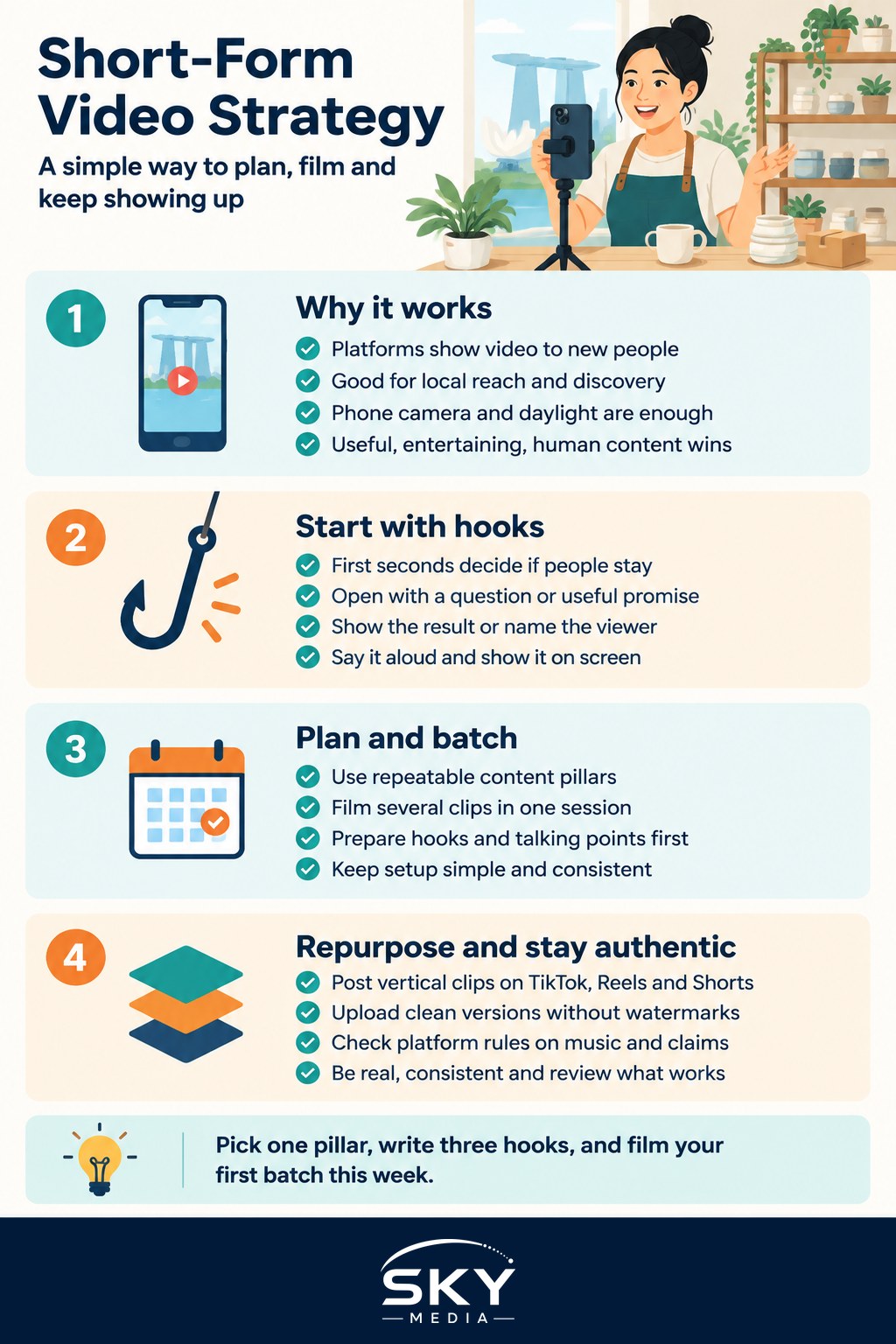
Why short-form video works for small businesses
The major platforms actively surface short video to people who do not yet follow you. That reach is the real prize. A well-made clip can put your business in front of a stranger who happens to be in your neighbourhood or your niche, which is far harder to achieve with a static post.
Short video also suits the way people browse. It is quick, casual, and forgiving of imperfect production. A phone camera and decent daylight are enough to start. What matters is that the content is useful, entertaining, or genuinely human, because that is what keeps people watching and prompts them to look you up.
Start with hooks
The first two or three seconds decide whether someone keeps watching or swipes away. Treat the opening as the most important part of every video. A strong hook usually does one of a few things: it poses a question the viewer wants answered, promises something useful, shows a surprising result up front, or names the exact person the video is for.
For a local business, hooks that work include lines like “three mistakes people make when choosing a contractor,” or “here is what actually happens in our kitchen before we open.” Say the hook out loud and show it on screen as text at the same time, since many people watch with the sound off at first.
After the hook, deliver on the promise quickly. Cut anything that does not move the video forward. Short attention means every second has to earn its place.
Plan around simple content pillars
Rather than inventing each video from scratch, build a few repeatable formats you can return to again and again. A handful of pillars might include:
- Quick tips your customers actually ask about
- Behind-the-scenes of how you make or do something
- A common myth in your industry, corrected
- A before-and-after or a satisfying process
- Answers to real customer questions
With four or five pillars, you always have somewhere to start. The formats stay familiar to viewers while the specifics keep changing.
Batch your filming
The single biggest time saver is batching. Set aside one session to film several videos back to back while you are already set up and in the right frame of mind. Prepare a short list of hooks and talking points beforehand so you are not thinking on your feet. Filming five clips in an hour is far more efficient than filming one clip on five separate days.
Keep a simple filming setup: a phone on a small tripod, a window for light, and a quiet spot. Consistency of setup means your videos look coherent and you spend less time fiddling with gear.
| Task | When to do it | Why batch it |
|---|---|---|
| Write hooks and outlines | Start of the week | Keeps filming focused |
| Film clips | One session, back to back | Same setup, same energy |
| Edit and add captions | After filming | Repetition speeds you up |
| Schedule and post | Across the week | Steady cadence, no gaps |
Repurpose across platforms
A vertical video filmed once can live on TikTok, Reels, and Shorts with little extra effort. Film in a way that works everywhere: shoot vertical, keep captions clear, and avoid anything that ties the clip to a single app. Be aware that platforms tend to favour content uploaded natively rather than clips carrying another app’s watermark, so download a clean version and upload it fresh to each place.
Repurposing is not limited to social platforms either. A single clip can support a blog post, an email, or a customer answer. Getting more value from each filming session is what makes the whole strategy sustainable.
Respect the platform rules and keep it authentic
Each platform has its own community guidelines and rules on music, claims, and promotions. Read them, especially where you make any claim about a product or a result. Using licensed audio from the platform’s own library is the safe route, since music you do not have rights to can get a video muted or removed.
Authenticity matters more than polish. People respond to a real person talking plainly far more than to an over-produced advertisement. Show your face, use your own voice, and let the character of your business come through. That human quality is your genuine advantage over larger competitors, and it is the thing that cannot be copied.
Stay consistent and review
Results come from repetition, not from a single viral moment. Commit to a cadence you can actually keep, such as two or three videos a week, and hold to it for a few months before judging the outcome. Consistency trains both the algorithm and your audience to expect you.
Review lightly as you go. Notice which hooks held attention and which topics prompted comments or saves, then make more of what works. Avoid chasing raw view counts alone, since a smaller number of the right local viewers is worth more to a business than a large number of passers-by.
Pick one pillar, write three hooks, and film your first batch this week. The strategy is simple. The winning move is to keep going.
Explore more
Social Media Marketing for Small Business
Content Marketing for SMEs
Building a Content Calendar
Digital Marketing for SMEs
Frequently Asked Questions
Do I need to show my face in short videos for my business? No, though it helps build trust. You can film hands at work, a product being made, text-led tips or a voiceover over footage. Choose what you are comfortable sustaining, since consistency matters more than appearing on camera every time.
How long should a short business video be? As long as it takes to deliver the promise in the hook, and no longer. Many useful clips are quick, but there is no single ideal length. Cut anything that does not move the video forward, then check which lengths hold your viewers.
Which platform should a local business start with? Pick the one where your customers already spend time, rather than all three at once. Because a vertical clip can be reused on TikTok, Reels and Shorts, you can begin on one and expand later without refilming. Watch which one brings enquiries.
Can I use trending songs in my business videos? Be careful. Music you do not have rights to can lead to a video being muted or removed, and business accounts often face tighter rules. Stick to licensed audio from the platform’s own library, and read the current terms for commercial use.
What equipment do I really need to start filming? A phone, decent daylight and a quiet spot are enough to begin. A small tripod helps keep the frame steady. Spend on gear only after you have kept a posting routine going for a while and know what actually limits you.