

A sudden sewer-like whiff in the bathroom is one of the most common household complaints in Singapore flats and condos. In most cases a floor trap smell comes from one of a few simple causes: the trap has dried out, it is clogged with hair and soap scum, or a seal or cover is not doing its job. The good news is that most of these can be fixed at home in minutes, without harsh chemicals or expensive renovations.
This guide focuses specifically on the floor trap, the drain set into your bathroom, kitchen or yard floor. It is different from a general musty smell caused by damp walls or poor ventilation.
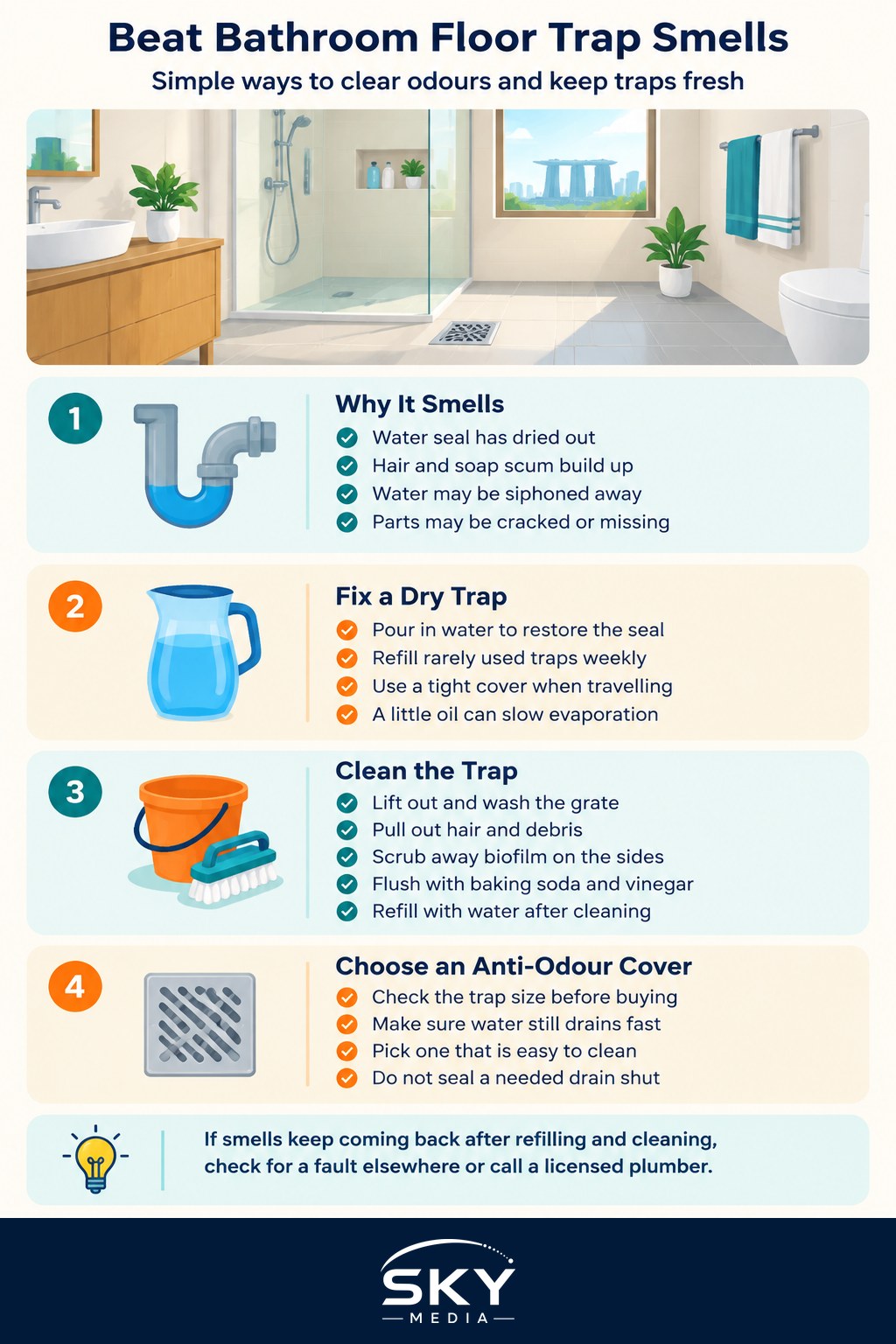
How a Floor Trap Keeps Smells Out
A floor trap is not just a hole in the floor. Underneath the grating is a bend or chamber that holds a small amount of water. This water seal sits between your bathroom and the drain pipes, stopping sewer gases and insects from coming back up.
When the water seal is intact and the trap is clean, you should not smell anything. Odours usually mean one of these things has gone wrong:
- The water seal has evaporated. This is the most common cause in rarely used bathrooms, service yards and guest toilets.
- Gunk has built up. Hair, soap scum, skin cells and grime form a slimy layer (biofilm) that rots and smells, even if water is still flowing.
- The seal has been siphoned away. Strong flows from a washing machine or another appliance on a shared pipe can sometimes pull water out of the trap.
- A part is broken or missing. Cracked grates, damaged inner components or gaps around the trap can let air through.
- There is a problem further down. A blocked or damaged pipe beyond your flat can cause backflow or persistent smells.
Fixing a Dry Floor Trap
If the smell comes from a bathroom you rarely use, start here.
- Pour water into the trap. A pail or a few cups of water usually restores the seal. The smell often fades within minutes.
- Make it a habit. Run water into rarely used traps once a week, or set a phone reminder. This matters more if you travel or leave a bathroom unused for long stretches.
- Slow evaporation. Some people add a small amount of cooking oil on top of the water after refilling, which can float on the surface and slow evaporation. It is a common household trick, but it is not a substitute for regular use or a proper anti-odour fitting.
- Cover it when away. If you are going on a long trip, a tight-fitting cover or a damp cloth weighted over the grate can help, though remember to remove it before anyone uses the shower.
Deep Cleaning a Smelly Floor Trap
If water is flowing but the trap still smells, it probably needs a proper clean.
What you need: rubber gloves, an old toothbrush or small bottle brush, a drain hair catcher or long tweezers, a bucket, dishwashing liquid, and a mild cleaner such as baking soda and vinegar.
- Remove the grate. Most grates lift out or unscrew. Clean it separately with a brush and soapy water.
- Pull out hair and debris. Use a hair catcher tool or tweezers to remove clumps from the top of the trap. Wear gloves, as it can be unpleasant.
- Scrub the sides. Brush away biofilm from the walls of the trap as far down as you can safely reach.
- Flush with baking soda and vinegar. Sprinkle a few spoonfuls of baking soda in, add a cup of vinegar, wait for the fizzing to settle, then flush with plenty of hot tap water. Avoid boiling water if your pipes are plastic, as very hot water can damage some fittings.
- Replace the grate and refill. Make sure water sits in the trap to restore the seal.
Avoid mixing bleach with vinegar, ammonia-based cleaners or other drain products, as this can release dangerous fumes. If you use commercial drain cleaners, follow the label exactly and ventilate the room. Many households find that a monthly clean, plus a hair catcher on the grate, prevents most smells.
Clean traps also make your bathroom less attractive to pests. Cockroaches and drain flies are often drawn up through dirty or dry traps, so see our guide on getting rid of cockroaches at home if you have noticed visitors.
Choosing an Anti-Odour Floor Trap Cover
If smells keep returning, an anti-odour cover or insert can help. These sit in or on top of the trap and use a one-way mechanism so water drains down but air and insects cannot rise up. The main types are compared below.
| Type | How it works | Pros | Things to check |
|---|---|---|---|
| Pop-up or spring insert | A plug lifts to let water through, then closes | Neat look, easy to clean | Must match your trap size; springs can clog with hair |
| Silicone flap or valve | A soft flap opens under water pressure, then seals | Flexible, fits many traps, no moving metal parts | Can wear out and needs replacing |
| Weighted or magnetic seal | A small weight or magnet closes the opening after drainage | Good for rarely used drains | Can stick if dirty; check flow is fast enough for showers |
| Full grate replacement | A new grate with built-in anti-odour design | Tidy, permanent look | Must fit your existing trap exactly; may need a handyman |
Practical tips when buying:
- Measure first. Note the diameter and depth of your trap opening before buying, as sizes vary.
- Check flow rate. A cover that drains too slowly can cause water to pool on the floor, which is a slip hazard. Our guide to anti-slip treatments for bathroom floors covers other ways to keep wet floors safe.
- Plan for cleaning. Choose a design you can easily lift out and rinse, because hair will still collect.
- Do not seal a trap permanently if it is needed to drain water from a shower or washing area.
When the Smell Is Not Coming From Your Trap
If you have refilled, cleaned and covered the trap and the smell persists, the cause may be elsewhere:
- Gaps around the trap or cracked tiles. Sealant or grout around the trap can fail over time. A handyman or contractor can reseal it.
- Toilet bowl seals. A worn seal at the base of the toilet can give off similar odours. Check for dampness or rocking.
- Sink and basin traps. These also rely on a water seal and can dry out or clog.
- Shared pipes and stacks. In HDB flats, the vertical soil and waste pipes that serve several units are generally maintained by the town council. If you suspect a blockage or leak in a common pipe, or smells affect neighbours too, contact your town council. In condos, contact the management office of the MCST (Management Corporation Strata Title, the body that runs the estate). Rules about who handles which pipe can differ, so check with them before arranging repairs yourself.
- Persistent or strong smells. If odours are strong, come with gurgling sounds, water backing up or slow drainage across several fixtures, call a licensed plumber.
Simple Habits to Keep Floor Traps Fresh
- Run water into every trap at least weekly, including the service yard and guest bathroom.
- Use a hair catcher and empty it after showers.
- Clean the trap and grate monthly.
- Keep the bathroom ventilated with a window or exhaust fan.
- Deal with smells early, before buildup turns into a blockage.
For lingering odours in other parts of the home, our guide to removing cigarette smell from a room has useful ventilation and deodorising tips. With a little regular care, your floor traps should stay quiet, clean and odour-free.
Frequently Asked Questions
Does pouring cooking oil into a floor trap really stop smells? It can slow evaporation, since a little oil floats on the water after refilling. It is a common household trick but not a substitute for regular use or a proper anti-odour fitting, so keep running water into rarely used traps weekly.
Is it safe to pour boiling water down a floor trap? Avoid it if your pipes are plastic, because very hot water can damage some fittings. Use hot tap water instead after scrubbing and a baking soda and vinegar flush. Never mix bleach with vinegar or ammonia-based cleaners.
How do I choose an anti-odour cover that will not flood the floor? Measure the diameter and depth of your trap opening first, then check the flow rate. A cover that drains too slowly lets water pool, which is a slip hazard. Pick a design you can lift out and rinse, since hair will still collect.
Who fixes a smell coming from shared pipes in my flat? In HDB flats, the vertical soil and waste pipes serving several units are generally maintained by the town council, so contact it if neighbours smell it too. In condos, contact the MCST management office before arranging repairs yourself.
When should I call a plumber for a drain smell? Call a licensed plumber if the odour is strong, comes with gurgling sounds, or water backs up or drains slowly across several fixtures. Those signs point to a blockage or damage beyond a simple dried-out or dirty trap.
Further reading: Getting Rid of Drain Flies and Fruit Flies