
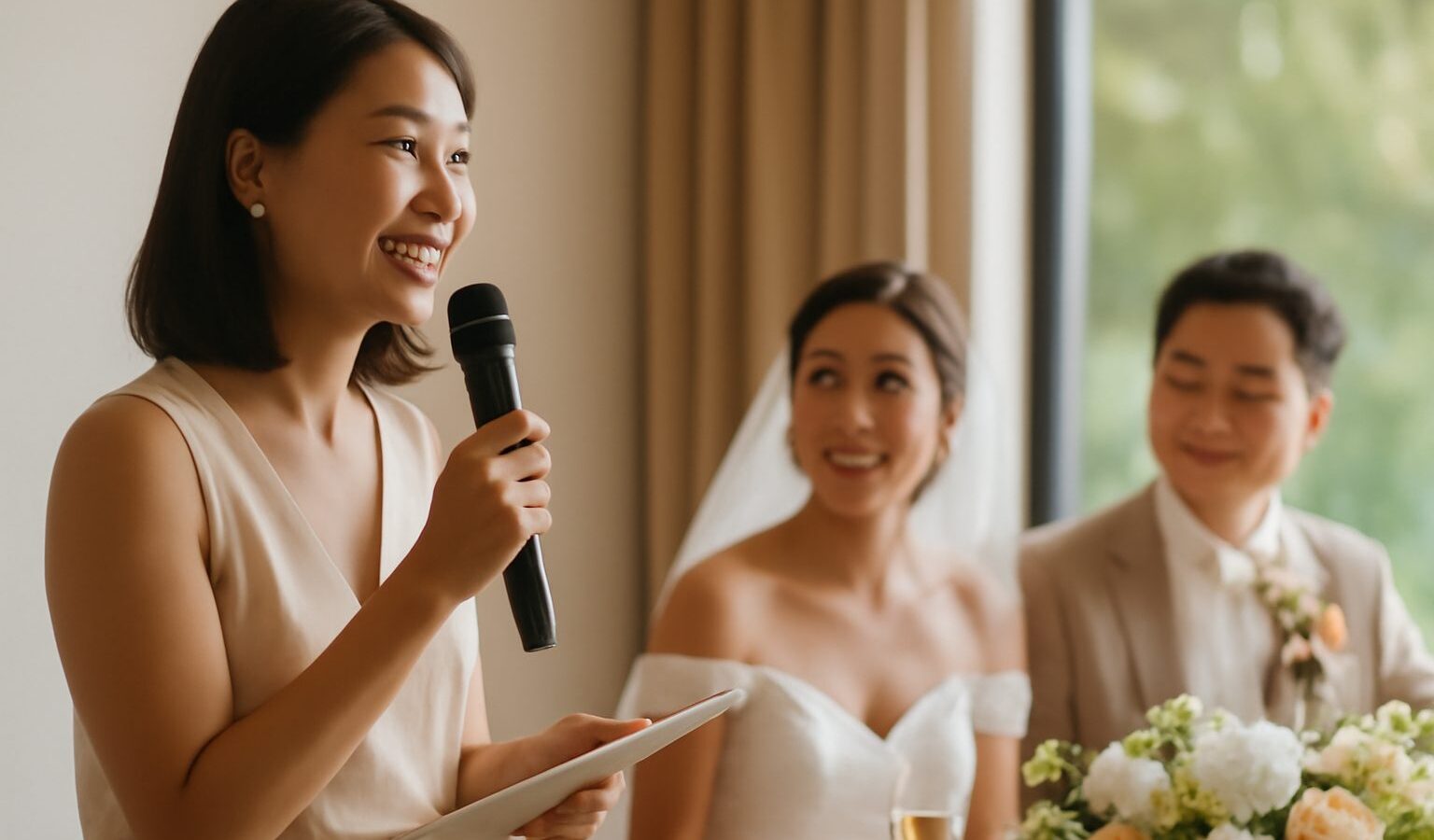
Agreeing to be a wedding emcee is a real honour and a real job. You are the voice that holds a banquet together, the person who tells 300 guests when to sit, when to raise a glass and when the couple is walking in. Do it well and nobody notices the effort. Do it badly and the night drags. The good news is that hosting a Singapore reception is far more about preparation and calm than about being naturally funny. This guide covers what the role involves and how to carry it off.
What the Job Actually Involves
A wedding emcee is part timekeeper, part narrator and part crowd-warmer. At a hotel or restaurant banquet you are the link between the couple, the guests, the banquet manager and the audiovisual team. Your core duties usually include:
- Welcoming guests and settling the room before dinner.
- Announcing each march-in and the couple’s entrance.
- Cueing speeches, video montages and the toast.
- Signalling course service so the kitchen stays on schedule.
- Handling small surprises without letting the room feel them.
You are not there to be the star. The best hosts are warm, brief and almost invisible, handing the spotlight straight to the couple and their families. If you talk more than the people getting married, something has gone wrong.
Preparing Before the Day
Preparation is where a smooth night is won. Meet the couple at least a couple of weeks out and build a shared run of show, meaning a minute-by-minute plan of the evening. Confirm the order of segments, the names you will announce and, crucially, how to pronounce every one of them. Mispronouncing a grandparent’s name is the one mistake guests remember.
Walk through these before the day:
- Names and titles. Write them phonetically. Check dialect names, Malay and Tamil names, and any professional titles the family wants used.
- The programme flow. Know what follows what, and what triggers each cue.
- Language mix. Agree how much English, Mandarin, dialect, Malay or Tamil the room needs.
- Contact points. Get the numbers of the banquet manager, the audiovisual operator and the bridal party lead.
- Sensitivities. Ask which family dynamics, names or jokes to avoid.
Build your script as cue cards, not a word-for-word essay. You want prompts you can glance at, not paragraphs you will read in a flat voice. Aligning early with the couple’s wedding day run of show means your cues match what the photographer, the venue and the bridal party expect.
Running the Programme on the Night
Arrive early, find the banquet manager and the audiovisual desk, and test the microphone before a single guest sits down. Agree a silent signal with the banquet captain, because most course-service and march-in cues come from them, not from you. Your job is to translate their nods into announcements the room can follow.
During dinner, keep your links short. Guests came to eat and talk, not to hear you fill time. Announce, hand over, step back. When you introduce speakers, say the name and their relationship to the couple, then get off the mic. If you are briefing people who will speak, our guide to wedding speeches and toasts helps them keep it tight so your schedule holds.
Watch the energy of the room. If a segment overruns and dinner is stacking up, quietly compress the next link. If the couple is caught up in photos, stretch gently until they are ready. Flexibility, delivered calmly, is the mark of a good host.
Leading the Yum Seng and Big Moments
The yum seng is the loud, communal toast at Chinese banquets, where the whole room raises glasses and holds the final cheer as long as they can. As emcee you lead it from the stage, so set it up clearly: make sure every table is poured, explain the cheer for guests who are new to it, then lead with full commitment. A timid yum seng is a flat one.
Not every wedding drinks alcohol, and that is completely fine. Muslim, some Christian and many other families toast with soft drinks, tea or juice, and your energy leading the cheer matters far more than what is in the glass. Match the moment to the family and faith rather than assuming.
Other big moments to steer with care:
- The march-in. Build anticipation, then let the music and the couple do the work.
- Cake cutting and first dance. Announce, then go quiet so cameras can work.
- Family blessings. Slow right down and lead with respect.
Handling the Wobbles
Something will not go to plan. A microphone will cut out, a video will not load, a speaker will freeze. Your value is staying unbothered in front of the room. Keep two or three light, warm holding lines ready to fill thirty seconds while the audiovisual team fixes a glitch. Never announce the problem; simply bridge to the next thing that is ready.
If a speaker rambles or gets emotional, let them have their moment, then step in gently with a thank-you and applause. If a guest is disruptive, deal with it quietly through the banquet staff rather than from the stage. The room takes its mood from you, so an unruffled host keeps everyone comfortable.
Emcee Styles: Which Suits the Couple
There is no single correct style. Match yours to the couple and their families rather than to your own instinct. The table below compares common approaches.
| Style | Best for | Strength | Watch out for |
|---|---|---|---|
| Warm and simple | Family-heavy, multi-generation banquets | Puts elders at ease | Can feel flat if too plain |
| Lively and playful | Younger crowds, close friends | High energy, fun | Jokes that exclude elders |
| Formal and polished | Corporate or large hotel dinners | Smooth and reassuring | Can seem distant |
| Bilingual balanced | Mixed-language guest lists | Nobody feels left out | Needs real fluency, not guesswork |
If the couple has Chinese customs earlier in the day, you may also cue the games and the tea reception, so it helps to understand Chinese wedding gatecrashing games and the Chinese wedding tea ceremony so your announcements match what is happening.
The Takeaway
Being a wedding emcee comes down to preparation, calm and generosity. Learn the names, build the run of show with the couple, keep your links short, lead the big moments with real commitment and absorb the small disasters without passing them to the room. Do that, and you give the couple the quiet gift of a night that simply flows.