
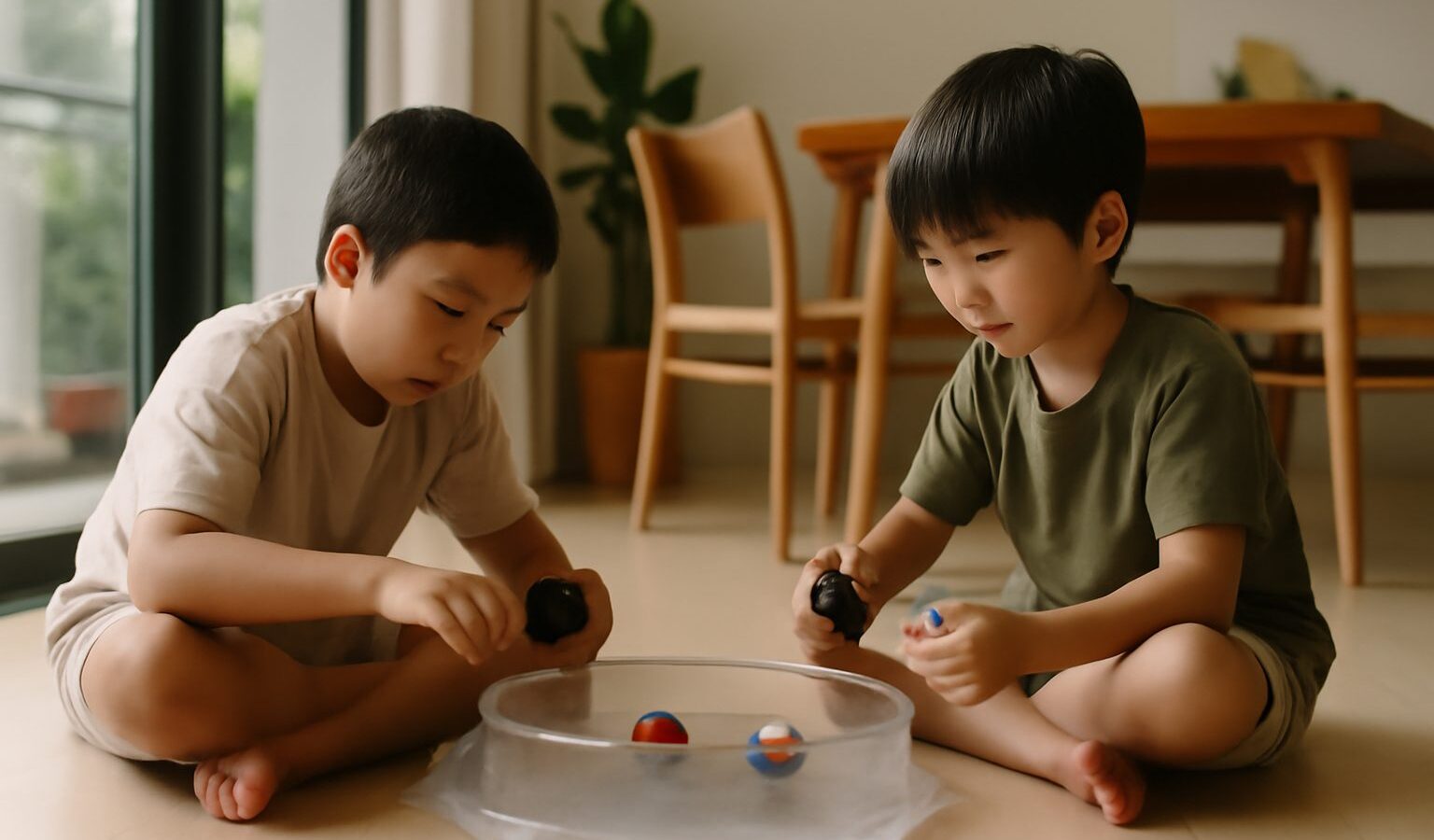
If your child has started talking about “Xtreme finishes”, “ratchets” and “bits”, you have probably met the latest wave of Beyblade. The spinning-top battle toy has come back strongly, and Beyblade Singapore play now spans primary school kids, teens and a fair number of adults who remember the original series from their own childhood. This guide explains how the current system works, what to buy first, how stadium play is scored, and how families can find friendly local communities without overspending.
How the Current Beyblade System Works
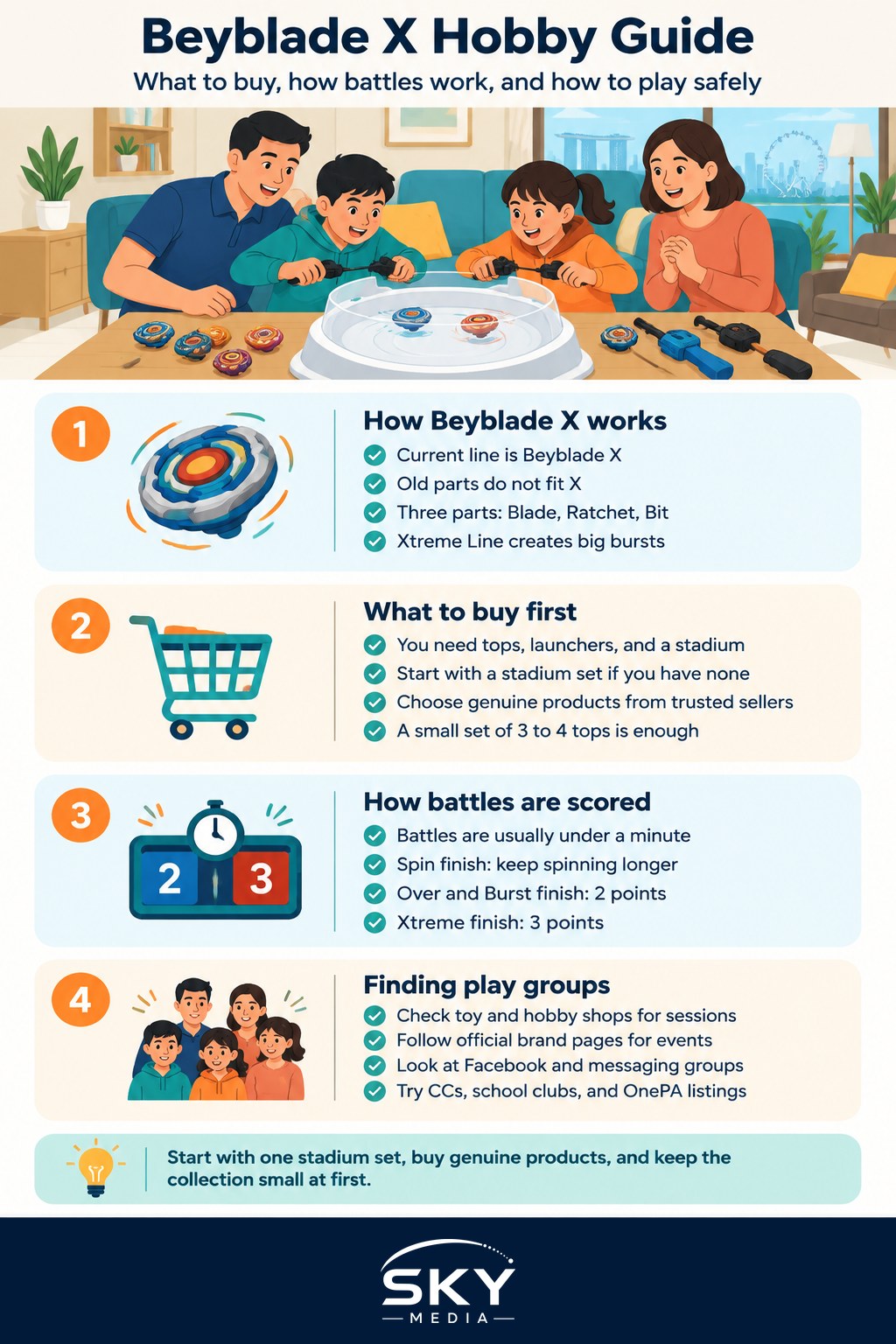
Beyblade has gone through several “generations” since the early 2000s, each with its own parts and rules. The current line is Beyblade X, made by the Japanese toy company Takara Tomy (Hasbro produces its own versions for some Western markets). Parts from older generations, such as Burst or Metal Fight tops, are not compatible with Beyblade X, so check the packaging before buying second-hand.
A Beyblade X top is built from three main parts:
- Blade: the outer ring that makes contact with opponents. Its shape and weight decide whether the top is aggressive, defensive or built to spin for a long time.
- Ratchet: the middle layer that locks the top together. Its number of points and height affect balance and how easily the top can be knocked apart.
- Bit: the tip at the bottom that touches the stadium floor. Flat bits move fast and aggressively; sharper or ball-shaped bits stay steadier in the centre.
The signature feature of the X system is the Xtreme Line, a gear rail around the edge of the stadium. When a top’s bit catches the rail, it suddenly dashes forward at high speed, which is what produces the dramatic hits kids love.
Tops fall into broad types: attack (fast, hard-hitting), defence (heavy, resists knock-outs), stamina (spins the longest) and balance (a mix). Mixing and matching parts to build your own combination is a big part of the hobby’s appeal, and it quietly teaches kids about weight, friction and trade-offs.
Stadiums, Launchers and What to Buy First
You need three things to play: tops, a launcher for each player, and a stadium. Many starter sets bundle a top with a launcher, and stadium sets often come with two tops so two people can play straight away.
Some practical buying tips for parents:
- Start with a stadium set if you have none. Playing on the floor or a table does not work well, and the official X stadium has the rail that makes the system work.
- Buy genuine products. Counterfeit tops are common online and can be poorly balanced, break easily or have sharp moulding edges. Buy from established toy retailers or official brand stores on e-commerce platforms, and be wary of prices that seem far below the norm.
- Check launcher types. String launchers and winder launchers feel different. Younger children often find winder launchers easier to use.
- Do not chase every release. New tops come out frequently. A small collection of three or four tops in different types is plenty for casual play.
Prices vary by set and retailer, so compare before buying and set a monthly or occasion-based budget with your child. Treating new tops as birthday or reward items helps keep collecting in check.
How a Beyblade X Battle Is Scored
Battles are short, usually under a minute, which makes Beyblade a good fit for short attention spans and quick sessions after homework. Under the commonly used rules, points are awarded based on how a battle ends:
| How the battle ends | What happens | Points (common rules) |
|---|---|---|
| Spin finish | Your top keeps spinning longer than the opponent’s | 1 |
| Over finish | Opponent’s top is knocked into a side pocket of the stadium | 2 |
| Burst finish | Opponent’s top breaks apart into its parts during play | 2 |
| Xtreme finish | Opponent’s top is knocked into the Xtreme pocket | 3 |
Matches are usually played to a set number of points, and official events may use slightly different formats or deck rules (for example, each player bringing three different tops). If your child joins an organised event, read that event’s rules sheet beforehand so there are no surprises.
Finding Local Play Communities in Singapore
Beyblade is more fun with other people, and Singapore has active players at many levels. Rather than recommending specific shops or groups, which change often, here is how to find a good fit:
- Toy and hobby shops: some stores that stock Beyblade host casual play sessions or small tournaments. Ask staff when you visit, or check the store’s social media pages.
- Official brand events: Takara Tomy and its local distributors sometimes run sanctioned tournaments or experience booths, often at malls during school holidays. Follow official brand pages for announcements.
- Online community groups: Facebook groups and messaging-app communities bring together local bladers to arrange meet-ups. Parents should join or monitor these with younger children rather than letting kids join alone.
- School and community clubs: some CCs (community centres) and school interest groups run occasional toy or games sessions. Check the OnePA portal (the People’s Association listing for CC activities) for what is on near you.
When trying a new group, go along first as a spectator. Look for organisers who explain rules clearly, keep younger players in their own bracket, and encourage good sportsmanship.
Beyblade for Adults and Families
Plenty of adults play too, some as collectors, some as competitive players and some simply because it is a fun thing to do with their children. For adults, the appeal is similar to other build-and-tinker hobbies: experimenting with combinations, tracking which parts perform best, and the social side of meet-ups. If you enjoy that kind of hands-on hobby, you might also like getting into Lego as an adult.
For families, Beyblade works well as a shared activity:
- Hold a weekly “family tournament” with a simple bracket drawn on paper.
- Let kids design their own combinations and explain why they chose each part.
- Keep a notebook of results so children can see which builds work best, which is an easy introduction to testing and recording.
Safety, Etiquette and Keeping It Healthy
Beyblade is designed for children, but a few precautions make play smoother:
- Check age guidance on the box. Small parts can be a choking hazard for toddlers, so keep tops away from younger siblings.
- Eye safety: tops can occasionally fly out of the stadium at speed. Keep faces back from the stadium when launching, and use stadium covers or side walls if your set includes them.
- Launch etiquette: players launch at the same time on a countdown (“3, 2, 1, go shoot!” is the common call). Do not reach into the stadium until both tops have stopped.
- Handle wins and losses well: short battles mean frequent losses. Teach kids to shake hands, and praise good building ideas as much as wins.
- Store parts carefully: a small tackle box or compartment organiser stops parts from going missing and makes swapping quicker.
- Balance screen and toy time: Beyblade has an anime series and apps, but the physical play is the main event. Let the toy be the hook for offline, social play.
Is Beyblade a Good Hobby for Your Child?
For many families, yes. It is affordable at a basic level, encourages face-to-face play, and teaches practical lessons about physics, strategy and handling competition. The main risks are overspending and counterfeit products, both of which a parent can manage with a budget and careful buying. Start small, play together, and let your child’s interest guide how far the hobby goes.
Explore more: if your child enjoys hands-on making, try adult colouring as a relaxing hobby side by side, or pick up learning to draw as an adult while they sketch their dream Beyblade designs.
Frequently Asked Questions
How do I spot a fake Beyblade X before buying? Compare the packaging, printing and price with what established toy retailers or official brand stores sell. Prices far below the norm are a warning sign. Fakes often feel unbalanced, have rough moulding edges or break easily, so buying from reputable sellers is the safest route.
What type of Beyblade is best for a beginner? A balance-type top is a sensible start because it mixes attack, defence and stamina, so a child can see how each style behaves. Pair it with a winder launcher if your child is young, since many find it easier to use. Add other types gradually once they know what they enjoy.
Are Burst and Metal Fight Beyblades still usable with the new X line? Not together. Parts from older generations are not compatible with Beyblade X, so mixing them will not work. Older tops can still be fun for collecting or casual play with other old sets, but check the packaging carefully when buying second-hand.
What age is Beyblade suitable for? Check the age guidance printed on the box first, since small parts can be a choking hazard for toddlers. Primary school children usually manage well, and teens and adults enjoy it too. Keep tops away from younger siblings and supervise launching so nobody gets hit.
How can I keep my child’s Beyblade spending under control? Set a monthly budget or treat new tops as birthday and reward items. A small collection of three or four tops in different types is plenty for casual play, and there is no need to chase every release. Playing with friends and swapping builds also keeps costs down.