

Polyclinics are often the first stop for older Singaporeans. They handle common illnesses, chronic conditions such as high blood pressure and diabetes, health screenings, vaccinations and referrals to specialists. For many adult children, though, the hard part is not the care itself. It is figuring out how to book polyclinic appointment slots for a parent who may not be comfortable with apps, may not hear well on the phone, or may simply prefer to “just go and wait”.
This step-by-step guide explains the main booking routes, how to manage appointments on a parent’s behalf, and how to prepare so the visit goes smoothly. It is general information, not medical advice. For anything about your parent’s health, follow the advice of their doctor, the polyclinic, the Ministry of Health (MOH) or HealthHub.
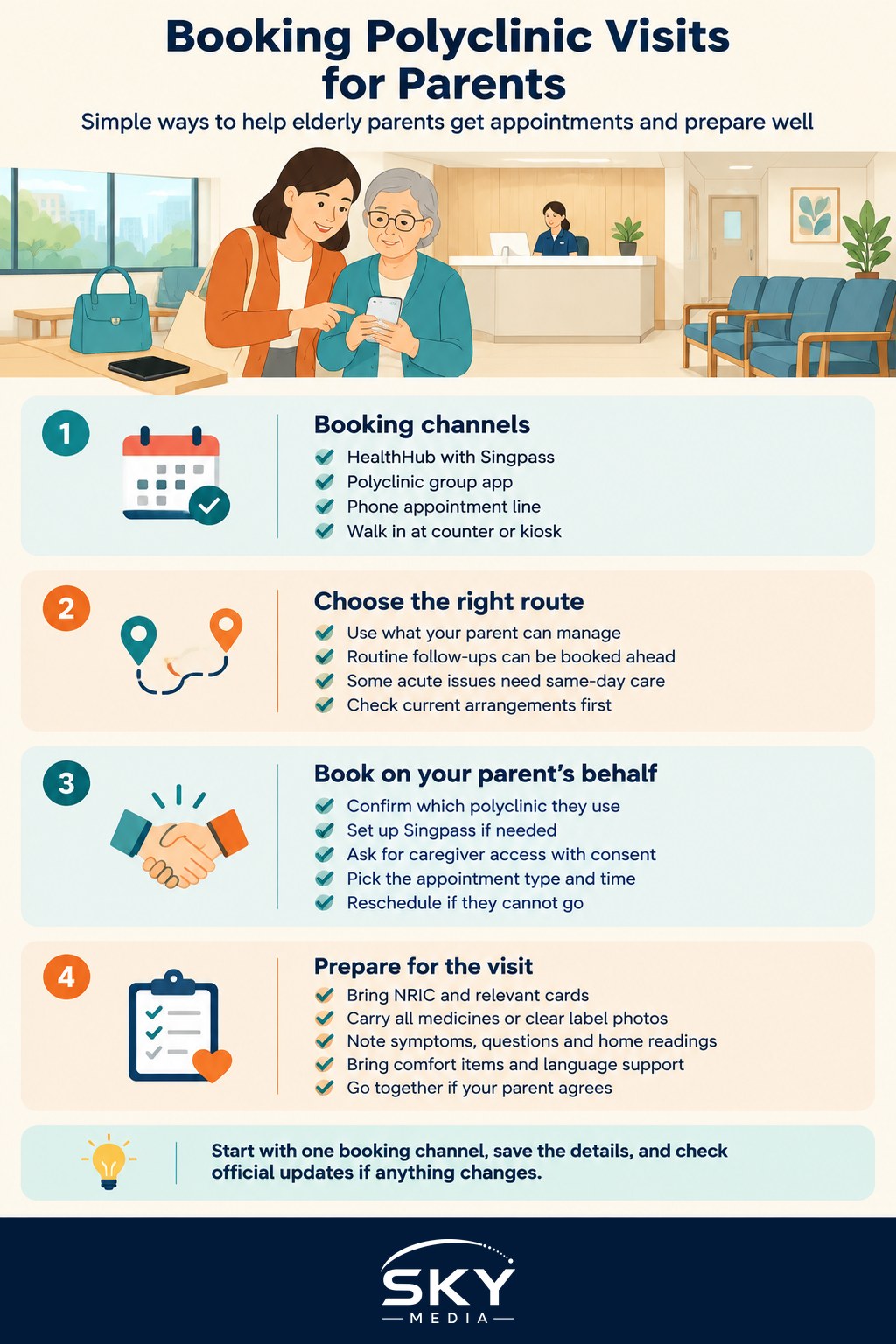
Understand How Polyclinics Are Organised
Singapore’s polyclinics are run by three public healthcare groups, each serving a different region. Each group has its own systems, though many services are also accessible through HealthHub, the national health app and portal run by the government.
What this means in practice:
- The booking channel may depend on the polyclinic. HealthHub works across many polyclinics, while each healthcare group may also have its own app or appointment line.
- Appointment types differ. Follow-ups for chronic conditions are usually scheduled in advance, while acute illnesses such as a fever or cough may be handled through same-day appointments or queue systems.
- Rules change. Booking windows, available services and app features are updated from time to time. Always check the polyclinic’s official website or HealthHub for current arrangements.
If you are new to helping a parent with healthcare in Singapore, our guide to caring for an elderly parent in Singapore gives the wider picture.
Booking Options Compared
There is no single best channel. The right one depends on your parent’s comfort with technology, how urgent the issue is, and whether you can be present.
| Booking channel | How it works | Best for | Things to note |
|---|---|---|---|
| HealthHub app or website | Log in with Singpass to view, book or change appointments | Adult children helping remotely, routine follow-ups | Needs Singpass; available services vary by polyclinic |
| Healthcare group’s own app | The polyclinic group’s app for bookings and queue updates | Families who use one polyclinic regularly | Features differ between groups |
| Phone appointment line | Call the polyclinic or its appointment centre | Parents who prefer speaking to someone | Waiting times on the line can vary |
| Walk-in or in person | Register at the polyclinic counter or kiosk | Simple acute issues when a parent cannot use apps | May involve longer waits; some services need an appointment |
Step-by-Step: Booking for a Parent
- Check which polyclinic your parent uses. Most people stay with one polyclinic, which holds their records and follow-up plans. If your parent has an appointment card or a letter, it will show the clinic name.
- Get Singpass sorted. HealthHub and most digital booking channels need Singpass. If your parent does not have the Singpass app set up, help them do so, or visit a ServiceSG centre for assistance.
- Set up caregiver access where available. HealthHub and some healthcare group apps offer ways for family members to view or manage appointments on someone’s behalf, with consent. Explore the app’s settings or help pages for the current process, and ask your parent’s permission first.
- Choose the right appointment type. Pick chronic follow-up, screening, vaccination or a new acute issue as the app or phone line prompts. If unsure, call the polyclinic and describe the need briefly.
- Pick a time that suits your parent. Morning slots can be busy. Consider your parent’s energy, meal times, medication schedule and transport.
- Confirm and save the details. Screenshot the confirmation, note the clinic address and time, and put a reminder in both your calendar and your parent’s phone.
- Reschedule rather than skip. If your parent cannot make it, change or cancel the appointment so the slot can go to someone else.
If your parent is resistant to apps, our guide on helping elderly parents with tech in Singapore has gentle ways to build their confidence.
Offline Options for Less Tech-Savvy Parents
Not every parent will ever be comfortable with apps, and that is fine.
- Phone booking. Write the polyclinic’s official appointment number on a card near the home phone. Practise a simple script with your parent: name, NRIC, reason for the appointment and preferred days.
- Book at the end of a visit. For chronic conditions, the next follow-up is often arranged at the end of the current consultation. Encourage your parent to ask for an appointment slip.
- Walk-in for minor acute issues. For problems such as a mild cough, going in person may work. Expect to wait and bring water and something to read.
- Ask family or neighbours. If you live far away, a trusted relative or neighbour may help on the day. For broader strategies, see long-distance caregiving for elderly parents in Singapore.
In an emergency, such as chest pain, sudden weakness on one side of the body or difficulty breathing, do not book a polyclinic slot. Call for emergency help immediately.
How to Prepare for the Visit
Good preparation saves time and makes the consultation more useful.
- Identity and cards. Bring your parent’s NRIC and any relevant cards, such as their Pioneer Generation or Merdeka Generation card if they have one, and their CHAS card (Community Health Assist Scheme, a government subsidy scheme) if applicable.
- Medication list. Bring all current medicines, including supplements and traditional remedies, or a clear photo of the labels.
- Symptoms and questions. Jot down what has changed since the last visit, when symptoms started, and two or three questions to ask.
- Readings. If your parent checks blood pressure or blood sugar at home, bring the record.
- Comfort items. A light jacket for air-conditioned waiting areas, water, reading glasses and a hearing aid if used.
- Language support. If your parent prefers a dialect or another language, go with them or ask whether interpretation help is available.
During and After the Appointment
- Go in together if your parent agrees. A second pair of ears helps, especially when discussing new medicines or test results.
- Take notes. Write down the doctor’s instructions, any changes to medication and when the next review is due.
- Ask about refills and follow-ups. Clarify how and when to get more medication and whether tests are needed before the next visit.
- Understand the bill. Ask the counter about subsidies and payment options if anything is unclear. Subsidy rules can change, so check with the polyclinic or MOH for the current position.
- Check the app afterwards. Many appointment details, results and medication records appear on HealthHub, which helps you keep track.
Booking appointments may seem like a small task, but doing it well gives your parents steady, continuous care and gives you peace of mind. Start with one channel that suits your family, set reminders, and build a routine that you and your parents can both rely on.
Frequently Asked Questions
Can foreign parents on a Long-Term Visit Pass use a polyclinic? Yes, polyclinics generally see non-citizens, but they usually pay non-subsidised rates. Check the registration requirements and what documents the polyclinic needs when you book. Review any insurance cover your parent has, as it may affect costs.
Should my parent see a private GP instead of a polyclinic? It depends on the condition, cost and convenience. A GP near home may be quicker to see and easier for short visits, while polyclinics are often used for chronic care and follow-ups. Participating GPs may offer subsidies through CHAS for eligible Singaporeans.
How does my parent get a referral to a specialist? The polyclinic doctor assesses your parent and, if needed, issues a referral to a specialist clinic at a public hospital. Ask which clinic and when to expect the appointment, and bring any letters. Referral rules and subsidies may change, so check with the polyclinic.
What help is available if my parent has trouble walking or uses a wheelchair? Tell the polyclinic when you book, and ask about accessible entrances, wheelchairs and where to be dropped off. Bring someone along to help with registration and moving between counters. Plan transport that gets close to the entrance.
Can I collect my parent’s medicine or records on their behalf? Arrangements vary, and clinics usually need your parent’s consent and identification details. Ask the polyclinic what they require before you go. Caregiver access on HealthHub, where available, can help with viewing records, with your parent’s permission.
Official sources: HealthHub
Further reading: What to Bring to a Specialist Visit as a Senior: A Practical Checklist