
When the day feels like too much, one of the simplest tools you have is already with you: your breath. Learning a few breathing exercises in Singapore can give you a quick, private way to steady yourself before a meeting, after a crowded commute or late at night when your mind will not switch off. This guide walks through gentle, practical techniques you can try anywhere, along with a few pointers on getting the most from them.
Before we begin, a quick note. This article is general wellbeing information, not clinical advice. Breathing exercises can help many people feel calmer, but they are not a treatment for anxiety, panic or any medical condition. If stress is affecting your sleep, work or relationships, or if it feels unmanageable, please speak to a doctor or a mental health professional for proper support.
Why Breathing Helps You Calm Down
When you feel stressed, your body shifts into a state of alertness. Your heart beats faster, your muscles tense and your breathing becomes quick and shallow. This is a normal response, but it can leave you feeling wound up long after the moment has passed.
Slow, deliberate breathing sends a different signal. By lengthening your out breath and breathing more from your belly than your chest, you gently encourage your body to settle. Many people notice their shoulders drop, their thoughts slow a little and their heart rate ease. The beauty of it is that you need no equipment, no app and no special place. A quiet corner of the office, a seat on the MRT or your own bedroom will do.
Simple Techniques to Try
You do not need to master all of these. Pick one that feels comfortable and practise it a few times. Over time it becomes second nature, so it is there for you when you really need it.
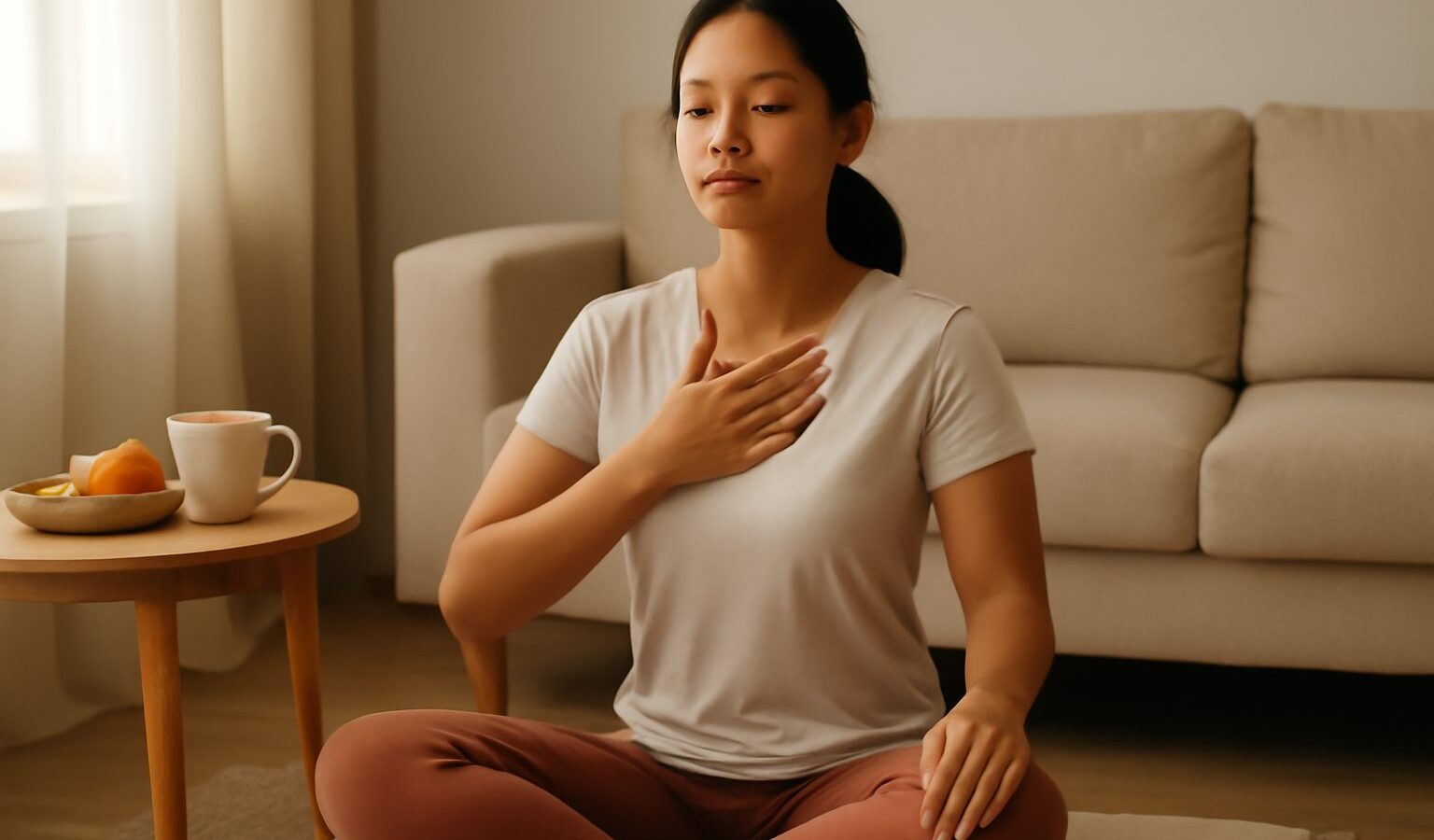
Diaphragmatic breathing, sometimes called belly breathing, is a good starting point. Sit or lie down comfortably. Place one hand on your chest and the other on your stomach. Breathe in slowly through your nose so that your stomach rises while your chest stays fairly still. Then breathe out gently through your mouth. Aim for a smooth, unhurried rhythm rather than deep, forceful breaths.
Box breathing is easy to remember and popular for good reason. You breathe in for a count of four, hold for four, breathe out for four and hold again for four, then repeat. Picturing the four sides of a square as you go can help you keep the rhythm. If holding your breath feels uncomfortable, shorten the counts or skip the holds.
Extended out breath works well when you want to unwind quickly. Breathe in for a count of four, then breathe out slowly for a count of six or more. Making the out breath longer than the in breath is the part that tends to bring the strongest sense of calm.
Pursed lip breathing can steady you when you feel flustered. Breathe in through your nose, then breathe out slowly through pursed lips, as though you were gently blowing out a candle. The slow, controlled release helps lengthen each breath naturally.
Here is a quick comparison to help you choose.
| Technique | Best for | Rough rhythm |
|---|---|---|
| Belly breathing | Everyday grounding | Slow in, slow out |
| Box breathing | Focus before a task | In 4, hold 4, out 4, hold 4 |
| Extended out breath | Winding down at night | In 4, out 6 or more |
| Pursed lip breathing | Feeling flustered | In through nose, slow out |
Building It Into Your Day
The most useful skill is not any single exercise but the habit of pausing to breathe. Many of us rush from one thing to the next without a break, so it helps to tie your practice to moments that already exist in your routine.
You might take five slow breaths before you get out of bed, at your desk before you open your inbox, or while the kettle boils. Some people set a gentle reminder on their phone once or twice a day. In Singapore’s fast pace, even a one minute pause between tasks can stop tension from building up over the course of a day.
If you enjoy a quieter setting, a park connector, a corner of the void deck in the early morning or a spot by the window at home can all work well. What matters is consistency rather than length. A short practice done often is far more valuable than a long one you rarely get around to.
A Few Gentle Cautions
Breathing exercises are safe for most people, but a little care goes a long way. If you feel light headed or dizzy while practising, that usually means you are breathing too deeply or too fast. Return to normal breathing, and next time keep it slower and gentler. There is no need to force big breaths.
If you have a heart or lung condition, or if you are pregnant, it is sensible to check with your doctor before trying breath holds or more intense patterns. And if a particular technique makes you feel more anxious rather than less, simply stop and try a different one. This is meant to feel soothing, not like a test.
Finally, remember that breathing is one tool among many. Regular movement, decent sleep, time with people you care about and limits on your screen time all support a calmer mind. If everyday stress keeps getting on top of you despite your best efforts, that is a sign to reach out for professional help rather than to push through alone.
Making It a Lasting Habit
Like any skill, breathing gets easier with gentle repetition. In the beginning it may feel a little awkward or self conscious, especially if you are counting in your head. That is completely normal. Give it a couple of weeks of light, regular practice and you may be surprised how naturally it comes when a stressful moment arrives.
Think of it as a small kindness you offer yourself several times a day. You are not trying to empty your mind or reach some perfect state of calm. You are simply giving your body a clear signal that, for this minute at least, it is safe to slow down. That small pause, repeated often, can make the daily grind feel a good deal more manageable.
Explore more
Understanding and Managing Everyday Stress
Mindfulness and Meditation for Beginners
Managing Anxiety in Singapore
Building Better Sleep Habits