
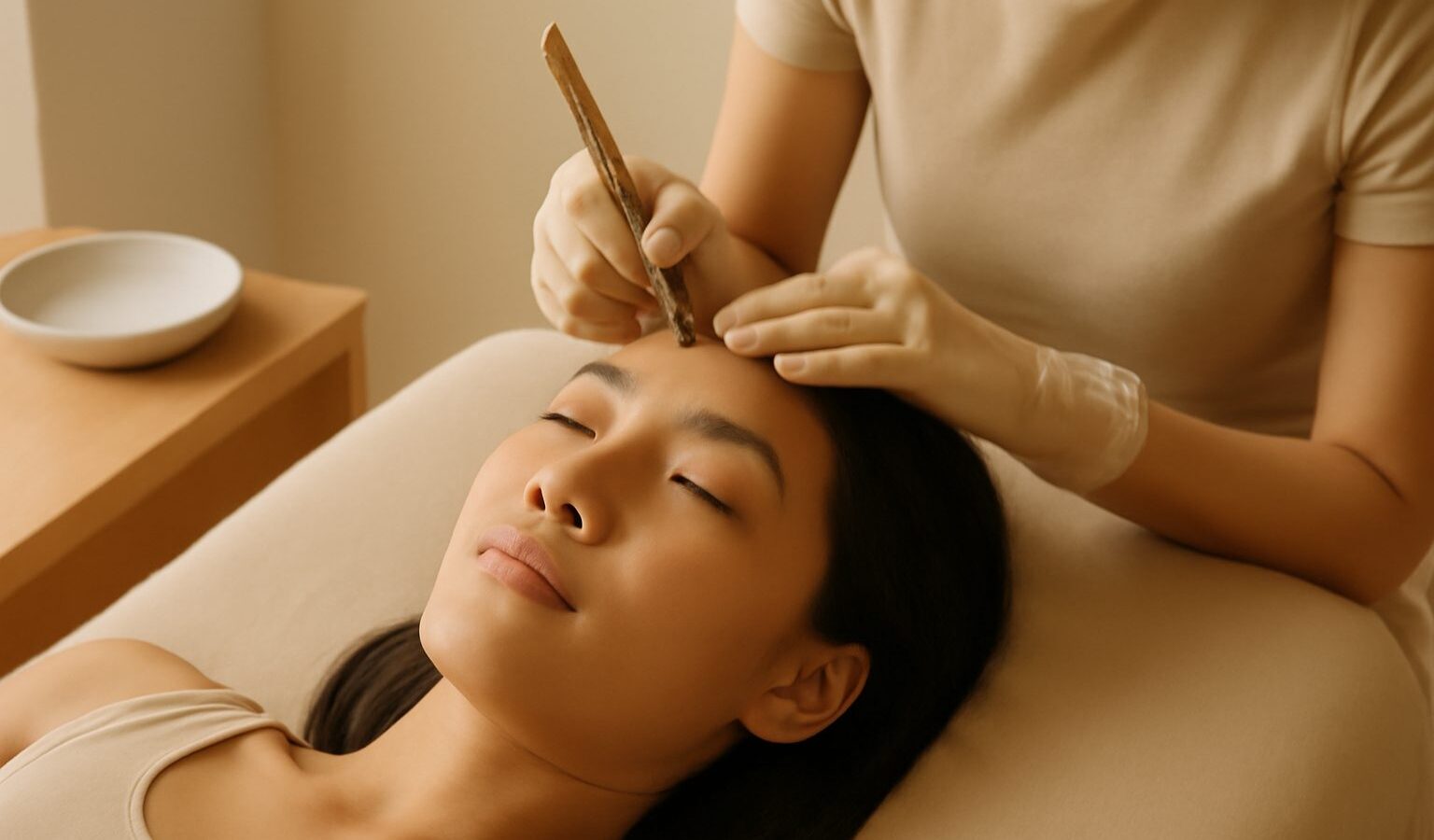
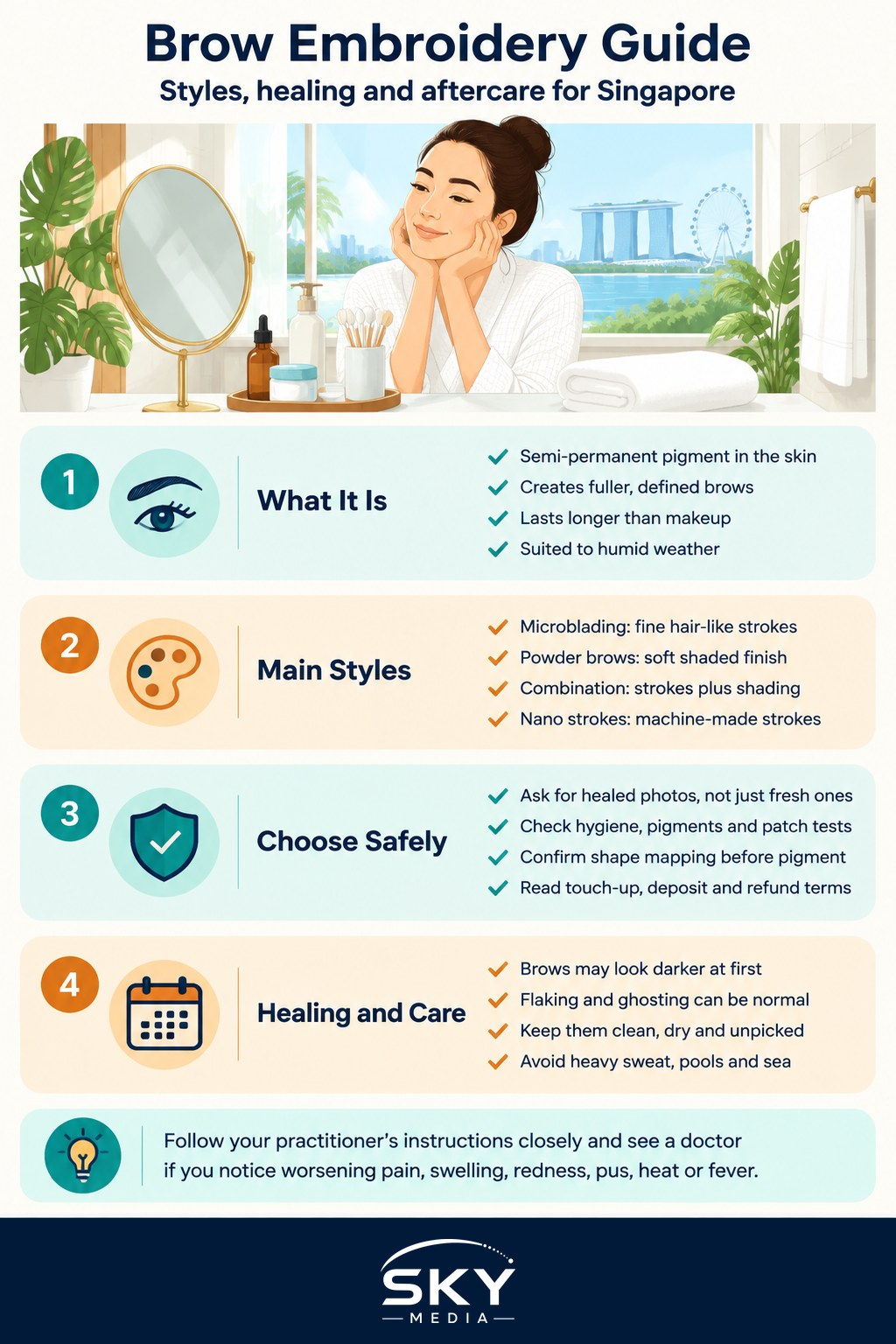
Brow embroidery is a semi-permanent cosmetic treatment that deposits pigment into the upper layers of the skin to create fuller, defined eyebrows that last far longer than makeup. It is popular here because it saves time every morning and does not melt off in the humidity. If you are researching brow embroidery Singapore options, this guide explains the main styles, what to ask before booking, how healing unfolds and how to care for your brows afterwards.
This is general information, not medical advice. If you have a skin condition, are pregnant, take blood-thinning medication or have a history of keloids or allergies, speak to your doctor before any cosmetic tattooing procedure.
How Brow Embroidery Differs From Other Brow Treatments
Threading, waxing and shaping remove hair. Brow lamination restyles your natural hairs for several weeks. Brow embroidery is different because it adds colour to the skin itself, so the effect lasts much longer and fades gradually rather than washing out.
Because pigment is placed with needles or a fine blade, it is a skin procedure that carries real risks such as infection, allergic reaction and unwanted results that are hard to reverse. That is why choosing a careful, hygienic practitioner matters more than chasing a trendy look. If you are not ready to commit, our guides to filling in and shaping your brows and brow lamination and brow trends cover non-permanent routes.
The Main Brow Embroidery Styles
Studios use different names for similar techniques, so ask to see healed results rather than relying on the label.
| Style | Technique | Look | Often suits |
|---|---|---|---|
| Microblading (hair strokes) | Fine manual blade draws hair-like lines | Natural, feathery strands | Normal to dry skin, people with some existing brow hair |
| Powder or ombré brows | Machine shading with tiny dots | Soft, filled-in, makeup-like finish | Oily or combination skin, those who like defined brows |
| Combination or hybrid brows | Hair strokes at the front, shading through the tail | Natural front with more definition | People wanting a balance of both |
| Nano or machine hair strokes | Machine creates fine hair-like strokes | Similar to microblading, often crisper | Those wanting strokes with a machine method |
Skin type matters. On oily skin, fine hair strokes can blur or fade faster, so many practitioners suggest shading or a combination style. Your practitioner should assess your skin and explain why they recommend a technique.
Choosing a Studio and Practitioner Safely
Brow embroidery is offered by beauty salons, specialist brow studios and some aesthetic clinics. Prices and touch-up policies vary, so compare written quotes rather than relying on ads. Questions worth asking:
- Experience: how long have they done brow work, and can they show healed photos (not just fresh results) on people with skin like yours?
- Hygiene: are needles and blades single-use and opened in front of you? Is the work area clean and are gloves changed?
- Pigments: what pigment brand do they use, and can they tell you what is in it? Ask about a patch test if you have sensitive skin or allergies.
- Consultation: do they map and draw the brow shape first, and let you approve it before any pigment goes in?
- Touch-ups: is a follow-up session included, and what happens if you are unhappy?
- Terms: what are the deposit, cancellation and refund terms? Get them in writing.
Be wary of heavy upselling, very large discounts that require immediate payment, or pressure to prepay for a long package. Read the terms carefully before signing. If something goes wrong with a medical complication, see a doctor promptly.
Preparing for Your Appointment
A few general steps help your session go smoothly. Your practitioner will give specific instructions, and theirs take priority.
- Avoid tanning or sunburn on your face before the session.
- Tell the practitioner about any medications, supplements, skin treatments (such as retinoids or recent peels) and health conditions.
- Ask whether you should pause certain skincare products before and after.
- Arrive without brow makeup if asked, so they can see your natural shape.
- Allow enough time for consultation, mapping and numbing, which can take longer than the procedure itself.
- Avoid booking just before a big event, holiday, or swim-heavy trip, since healing takes a while.
What the Healing Stages Usually Look Like
Healing varies by person and technique, but many people notice a broadly similar pattern:
- First few days: brows look darker, sharper and bolder than the final result. There may be mild redness, tenderness or swelling.
- Flaking stage: the skin begins to flake or scab lightly, and the brows may look patchy. This is when people panic, but it is commonly part of the process.
- Ghosting stage: after flaking, the colour can look very faint, as if it has disappeared, while the skin settles.
- Colour returns: over the following weeks the pigment usually resurfaces and softens into its healed shade.
- Touch-up: practitioners often schedule a follow-up after the brows have healed to fill gaps and adjust shape or colour.
Signs that need medical attention include increasing pain, swelling, spreading redness, pus, heat, or fever. See a doctor rather than waiting it out.
Aftercare Tips for Singapore’s Climate
Heat, sweat and humidity make aftercare a bit trickier here. Follow your practitioner’s specific instructions, but common general advice includes:
- Do not pick or scratch the flakes. Let them fall off naturally, or colour may come out unevenly.
- Keep brows clean and fairly dry in the early days. Gently blot sweat with a clean tissue.
- Limit heavy sweating where possible, such as intense workouts, saunas and long outdoor sessions under the midday sun.
- Skip swimming pools and the sea until your practitioner says it is safe.
- Apply only the aftercare product they recommend, and in thin layers.
- Avoid makeup and active skincare on the brow area during early healing.
- Use sun protection once healed, such as a hat or a sunscreen your practitioner approves, since sun exposure tends to fade pigment over time.
- Sleep carefully on your back if you can, so the pillow does not rub the area.
Gentle skincare habits after any treatment help, and our piece on skincare aftercare after a facial shares some of the same principles of patience and avoiding harsh products.
How Long Results Last and When to Top Up
Results are semi-permanent. Fading speed depends on skin type, sun exposure, skincare (especially exfoliating acids and retinoids) and the technique used. Many people book periodic colour boosts as the brows soften. Ask your practitioner how they handle future top-ups and whether old pigment affects new work.
If you ever want to remove or correct brow embroidery, that is a separate procedure and should be discussed with a qualified professional, often at an aesthetic or medical clinic.
Explore more: Filling In and Shaping Your Brows · Brow Lamination and Brow Trends
Frequently Asked Questions
Does brow embroidery hurt? Most people feel some discomfort rather than severe pain, and sensitivity varies from person to person. Practitioners usually apply numbing during the appointment. Mild redness, tenderness or swelling afterwards is common. Tell your practitioner beforehand if you are sensitive to pain or numbing products.
Can I get brow embroidery if I am pregnant or on blood thinners? Speak to your doctor first. Pregnancy, blood-thinning medication, keloid history, allergies and skin conditions are all reasons to get medical advice before any cosmetic tattooing, and some practitioners may decline to treat you.
Which brow style is better for oily skin? Powder or ombre shading is often suggested, because fine hair strokes can blur or fade faster on oily skin. Your practitioner should assess your skin and explain why they recommend a technique, so ask to see healed results on similar skin.
Why do my brows look patchy or faded a week after embroidery? That is commonly part of healing. Brows look darkest at first, then flake and can look patchy or very faint during the ghosting stage, with colour returning over the following weeks. See a doctor if you get increasing pain, pus, spreading redness or fever.
Can I remove or correct brow embroidery if I do not like it? Correction or removal is a separate procedure and is not always simple. Discuss it with a qualified professional, often at an aesthetic or medical clinic, and ask any practitioner beforehand how they handle unhappy results.
Further reading: Brow and Lash Tinting Explained: Results, Safety and Aftercare