

To catify an HDB flat means arranging your home so an indoor cat can climb, perch, hide, scratch and patrol, not just eat and sleep. In a three-room or smaller flat, floor space is the scarce resource, so the trick is to think upwards and to make every piece of furniture do double duty. The good news is that almost all of this can be done with free-standing pieces, tension poles and removable fixings, which suits renters and anyone who does not want to call in a contractor.
This guide focuses on space planning for cats. It assumes your windows and service yard are already secured with mesh, and that you have checked the current cat ownership rules for HDB flats with the Animal and Veterinary Service (AVS), the national body that handles pet licensing. Rules on how many cats you may keep and whether licensing applies can change, so confirm the latest position on the AVS website before you bring a new cat home.
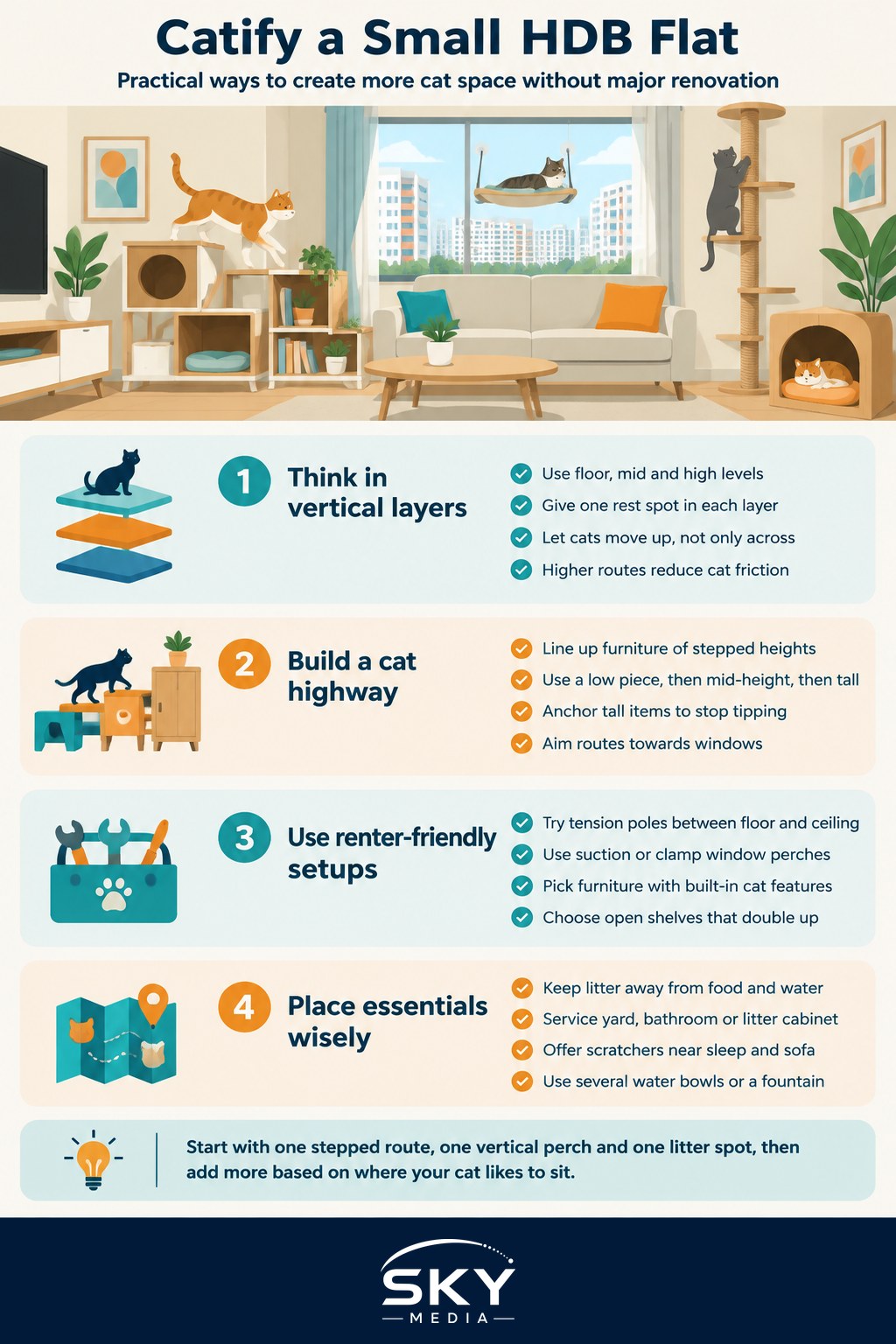
Why Vertical Territory Matters More Than Floor Space
Cats measure territory in three dimensions. A cat that can sit at head height, look down on the room and move between high points without touching the floor experiences a 60 square metre flat as far bigger than it is. Vertical space also reduces friction in multi-cat homes, because a less confident cat can retreat upwards instead of being cornered.
Think of your flat in three layers:
- Floor level: food, water, litter, toys and hiding spots such as a covered bed or a cardboard box.
- Mid level (roughly sofa to table height): window perches, the top of a low bookcase, a cat tree platform.
- High level (above head height): the top of a wardrobe, a high shelf or the highest platform of a floor-to-ceiling pole.
A well catified flat gives the cat at least one resting spot in each layer, and a route to move between them.
Planning a Cat Highway in a Compact Layout
A cat highway is a continuous route of perches that lets a cat travel around a room off the floor. In a small HDB flat you rarely need wall-mounted shelving to build one. Instead, line up furniture of stepped heights:
- Start with a sturdy low piece such as a shoe cabinet or storage bench.
- Place a mid-height bookcase or TV console next to it, leaving a gap the cat can step across comfortably.
- End at a tall wardrobe or a floor-to-ceiling cat pole, ideally near a window.
Anchor anything tall to stop it tipping when a cat launches off it. If you own your flat and want proper wall shelves later, the guide to HDB renovation rules and permits explains what generally needs approval, though drilling for light shelving usually does not. Check before you drill near concealed pipes or wiring.
Good places to aim the highway:
- Windows: HDB living rooms and bedrooms often look onto void decks, trees or corridors, which is free entertainment for a cat.
- The corridor-facing side: many cats like watching foot traffic, but frosted film on the lower pane can reduce stress if neighbours’ pets pass by.
- Away from the kitchen hob: keep the route clear of the cooking area so the cat is not tempted onto counters.
Renter-Friendly Fixes and Furniture
If you rent, or simply prefer not to drill, these options give most of the benefit with none of the permanent changes:
- Tension-mounted cat poles: a pole wedged between floor and ceiling with several platforms takes up less floor area than a bulky cat tree and works well in a bedroom corner.
- Suction or clamp window perches: choose ones rated for your cat’s weight and test them on clean glass. Recheck the grip regularly in humid weather.
- Over-the-door hammocks and scratchers: use bedroom doors as climbing surfaces.
- Furniture with built-in cat features: side tables with a cubby, benches with a hidden litter compartment, or bookcases where one shelf is left empty and lined with a mat.
When you choose shelving for yourself, pick open units that double as perches. Our piece on maximising storage in a small HDB flat has ideas for tall storage that can be shared with a cat if you keep one level clear.
Where to Put the Litter Box, Food and Scratchers
These three items decide whether a small flat feels pleasant for both of you.
Litter box. Cats want privacy, an escape route and distance from their food. In HDB flats the common options are the service yard, a corner of the common bathroom, or an enclosed litter cabinet in the living room. The service yard is popular, but it can get very hot and is near the washing machine, whose noise may put some cats off. A bathroom works if the door is always propped open. A good rule of thumb many vets suggest is one box per cat plus one extra, so plan the spaces before you add a second cat.
Food and water. Keep bowls well away from the litter box. A water fountain or several water bowls in different rooms encourage drinking, which matters in Singapore’s heat.
Scratchers. Place at least one scratcher next to where the cat sleeps and one near the front door or sofa, since cats like to mark the entrance and social areas. Offer both upright and flat scratchers to see which your cat prefers.
The table below sums up common placements in a typical small flat.
| Area of the flat | Good use for the cat | What to watch out for |
|---|---|---|
| Living room window | Perch or top of cat tree for watching outside | Secure mesh, direct afternoon sun |
| Service yard | Litter box in a ventilated cabinet | Heat, washing machine noise, chemicals left out |
| Common bathroom | Litter box with door kept ajar | Wet floor, door closing by accident |
| Bedroom corner | Floor-to-ceiling tension pole | Ceiling height and grip on false ceilings |
| Next to sofa | Upright scratcher to save upholstery | Choose a heavy base so it does not wobble |
| Kitchen | Not recommended for perches | Hot hobs, knives, food on counters |
Hiding Spots, Enrichment and Daily Routine
Furniture is only half of a catified home. A small flat also needs places to disappear and reasons to move.
- Hideaways: a covered bed under a desk, a cardboard box on a shelf, or a cubby inside a cabinet. Cats under stress need somewhere they cannot be seen.
- Rotating toys: keep most toys in a drawer and bring out a few at a time so they stay interesting.
- Puzzle feeders: let the cat work for part of its daily food, which uses energy that an outdoor cat would spend hunting.
- Short play sessions: two or three wand play sessions a day, ending with a meal, burn energy without needing more floor area.
Keeping a Catified Flat Clean and Neighbour-Friendly
Close living means smells and noise travel. A few habits keep the peace:
- Scoop litter at least daily and choose a low-dust litter, since fine dust settles quickly in small rooms.
- Wash cat beds and throws regularly and vacuum perches, which collect fur near airflow from fans and air-conditioning.
- Put rubber pads under cat trees and tension poles to reduce thumping sounds for the unit below.
- Avoid placing perches against the main door, where a cat may slip out when you collect a delivery.
- Keep lilies and household cleaners out of reach, and ask your vet if unsure whether a product is safe.
A Simple Weekend Plan to Get Started
You do not need to do everything at once. A realistic first weekend might look like this:
- Walk through the flat at cat height and note windows, high furniture and quiet corners.
- Move furniture to create one stepped route to a window.
- Add one vertical piece, such as a tension pole or tall cat tree.
- Settle the litter box location and add a second scratcher by the door.
- Watch where your cat chooses to sit over the next week, then add the next perch there.
Start with the spots your cat already favours and build up from there. A small HDB flat can become a comfortable, stimulating home without a single renovation permit.
Explore more: Renovating a Small Home
Frequently Asked Questions
Is a tension pole safe to use against a false ceiling? Not always. A tension pole needs a solid surface to push against, and a false ceiling may not bear the load or may be damaged by the pressure. Test the grip carefully, consider placing it where the ceiling is firmer, or choose a free-standing tree if you are unsure.
How do I get my cat to use a new cat tree? Place it where your cat already likes to sit, ideally near a window, and make it inviting with a familiar blanket or a few treats on the platforms. Do not force the cat on to it. Most cats investigate in their own time, and a stable, wobble-free base helps.
How can I stop my cat slipping out the front door? Keep perches and cat furniture away from the main door, and train a routine of checking where the cat is before opening it. A sturdy gate or screen at the entrance adds a second barrier, which matters most on collection days when deliveries arrive.
Is a cat tree or wall shelving better for a small flat? For most renters and small flats, a tension pole or compact tree is simpler because it needs no drilling and can move with you. Wall shelving gives more flexible routes and frees floor space, but light shelving still needs care near concealed pipes and wiring.
Further reading: Choosing a Cat Tree for a Small HDB Flat