

Doing business in a new country is as much about people as it is about paperwork. If you have arrived from mainland China to work, invest, or start something of your own, plugging into the right China business chamber Singapore network can shorten your learning curve and open doors you did not know were there. This guide gives a practical, general overview of the chambers, associations, and networking options that support China linked professionals and entrepreneurs here. It describes the landscape in broad terms rather than naming specific fees or making claims about any one organisation, so please verify the details directly with each body and with official sources.
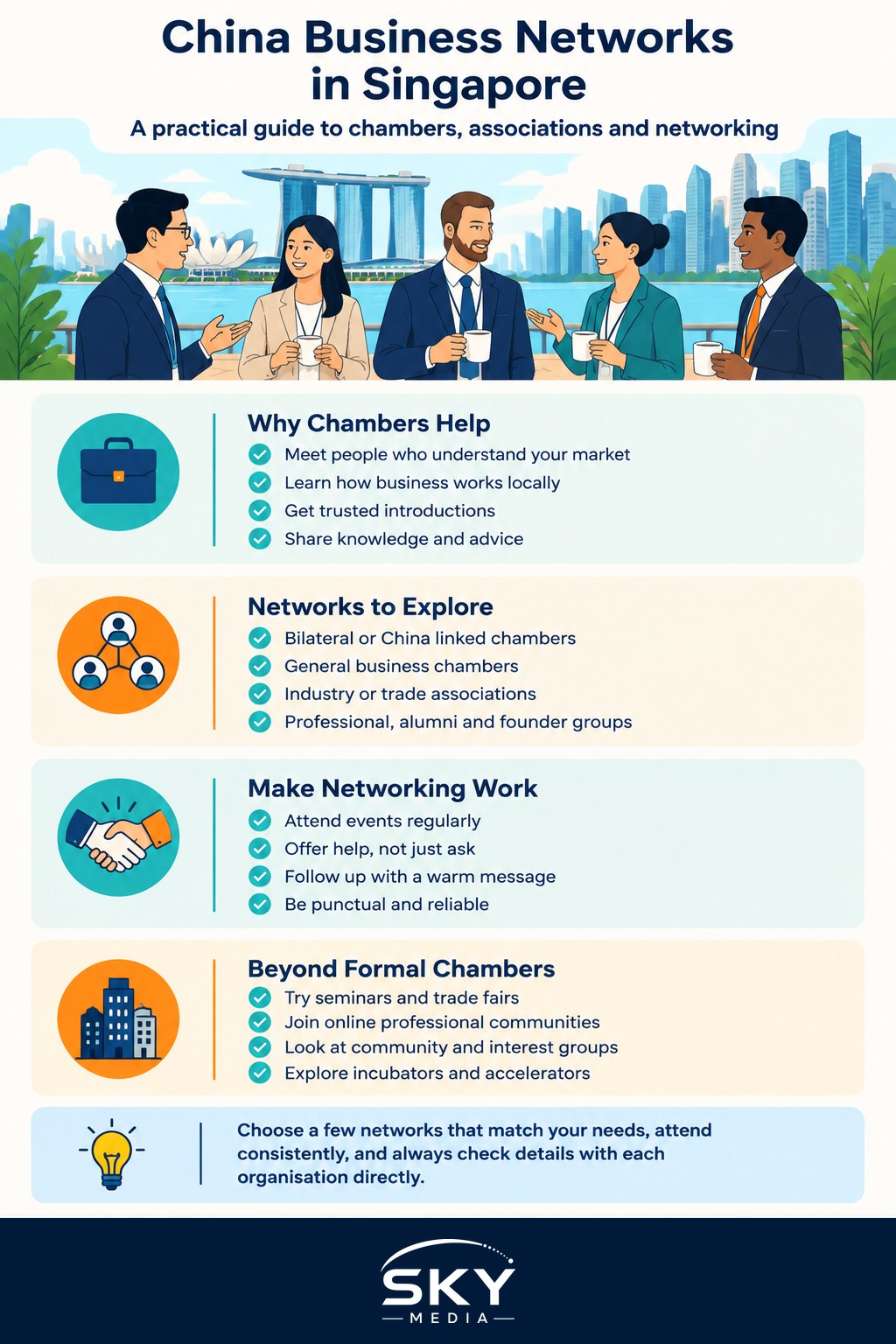
Why Business Chambers Matter
A business chamber is an organisation that brings together companies and professionals, usually to promote trade, share knowledge, and support its members. For a newcomer, the value is often less about grand deals and more about everyday help: understanding how business is done locally, meeting people who have solved the problems you are facing, and finding trusted introductions.
Chambers and business associations tend to offer a familiar mix of activities. These can include networking events, talks and seminars, industry briefings, and opportunities to connect with peers and potential partners. Some focus on particular sectors, some on particular communities, and some on the broader bilateral relationship between markets. For China linked professionals, chambers and associations that understand both the Singapore and China business environments can be especially useful, because they speak the language of both worlds, literally and culturally.
It is worth remembering that Singapore is a well connected business hub with a wide range of chambers, trade associations, and industry bodies. Some are broad and general, while others serve specific communities or sectors. Rather than trying to join everything, it helps to think about what you actually need at this stage and choose accordingly.
Types of Networks to Explore
Newcomers sometimes assume there is only one path, but the ecosystem is varied. The table below sketches the broad categories you might come across, purely to help you orient yourself. The specifics of any organisation, including what it offers and how to join, should always be checked with the body itself.
| Type of network | What it broadly offers | Good for |
|---|---|---|
| Bilateral or China linked chambers | Trade links and China oriented insight | Understanding both markets |
| General business chambers | Broad networking across sectors | Wide connections and local know how |
| Industry or trade associations | Sector specific knowledge and contacts | Depth in your field |
| Professional and alumni groups | Peer support and social ties | Community and mentorship |
| Entrepreneur and startup networks | Founder events and ecosystem access | Building or scaling a venture |
Seeing the categories side by side can make the choice feel less overwhelming. Most people end up belonging to a small handful of networks that together cover their needs, rather than one that does everything.
Making Networking Work for You
Joining a chamber is only the beginning. The real value comes from how you show up. Networking in Singapore tends to reward those who are steady, courteous, and genuinely interested in others. A few habits go a long way.
First, attend consistently. Relationships build over repeated, low pressure contact, so turning up regularly matters more than making a splash once. Second, come ready to give as well as to receive. Offer a useful introduction, share what you know, or simply listen well. Generosity is remembered. Third, follow up thoughtfully. A short, warm message after meeting someone keeps the connection alive far better than a stack of business cards left in a drawer.
For newcomers from China, a little cultural bridging helps too. Singapore’s business culture blends efficiency with politeness and values reliability and clear communication. Being punctual, keeping promises, and respecting people’s time will earn you a good reputation quickly. Many events run in English, so being comfortable in professional English is a real asset, while the ability to work across Chinese and English can make you a valuable connector between partners on both sides.
Beyond Formal Chambers
Not all useful networking happens through formal chambers. Government and enterprise support agencies, industry seminars, and community groups can all be rich sources of contacts and guidance. Trade fairs and conferences let you meet many relevant people in a short time. Online professional communities and alumni networks can keep you connected between events. Even informal gatherings, such as interest groups or community associations, sometimes lead to meaningful business relationships, because trust often grows fastest in relaxed settings.
If you are starting a company, look into the wider entrepreneurial ecosystem as well, including incubators, accelerators, and founder communities. These spaces are designed to help newcomers find mentors, collaborators, and early support. As always, check the details and credentials of any programme or organisation before committing time or money.
Getting Started Wisely
The best first step is usually the simplest. Decide what you most need right now, whether that is market knowledge, industry contacts, or fellow founders, and identify a couple of networks that fit. Attend an event or two before deciding to join anything, so you can feel whether the culture suits you. When you do consider membership, confirm the current details, offerings, and any costs directly with the organisation rather than relying on second hand information.
Because the business landscape and individual organisations change over time, treat this guide as a map rather than a directory. Use official sources and each body’s own information for anything you plan to act on. With patience, generosity, and steady effort, the right China business chamber Singapore connections can help you feel at home in the local business community and build the relationships that carry a venture forward.
Explore more
How to Budget for Life in Singapore
Understanding Employee Assistance Programmes
Booking Medical Appointments Online
Frequently Asked Questions
Should I join a chamber before attending any events? Not necessarily. It is sensible to attend an event or two first, so you can tell whether the culture and people suit you. When you do consider membership, confirm the current offerings and costs directly with the organisation rather than relying on second-hand information.
Do I need business English to network at these events? It helps a great deal, as many events run in English. Comfort in professional English is a real asset, and being able to work across Chinese and English can make you a useful connector between partners on both sides.
How should I follow up after meeting someone at a networking event? Send a short, warm message soon after, mentioning something you talked about. That keeps the connection alive far better than a stack of business cards in a drawer. Offer something useful, such as an introduction, instead of asking for a favour straight away.
Are chambers useful if I am just starting a small company? They can be, mainly for local know-how, introductions and peer support. Also look at the wider startup ecosystem, including incubators, accelerators and founder communities. Check the credentials and details of any programme before committing time or money.
Is it better to join one network or several? Most people end up in a small handful that together cover their needs, such as one sector body plus one community or alumni group. Joining everything spreads you thin. Work out what you need now, whether market knowledge, contacts or fellow founders, and choose to match.