
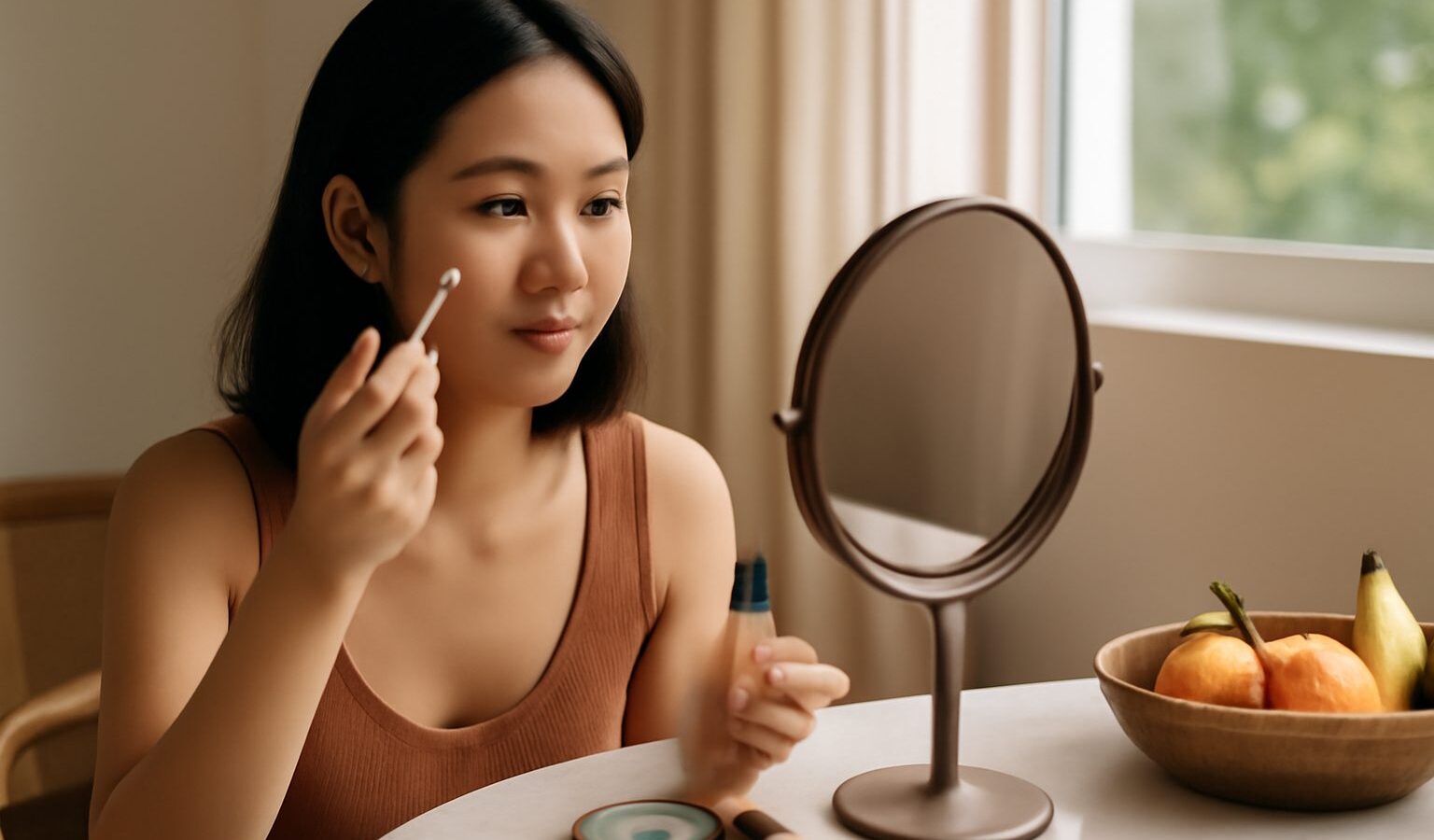
Concealer colour correcting sounds technical, but it is really just clever use of the colour wheel to cancel out the tones you would rather not see. A peachy shade warms up blue-grey under-eye circles, a green tint calms an angry spot, and a good concealer on top blends it all into your skin. Done lightly, nobody can tell you are wearing anything at all. Done heavily in Singapore’s heat, it can slide, crease and go patchy by lunchtime, so this guide keeps things realistic for our humidity, works for every skin tone, and shows you how to use the least product for the most natural finish.
Most people reach for concealer far too thickly and skip correcting entirely. Learn the two together and you will use less of both, because a whisper of the right corrective colour does what three layers of concealer cannot.
Concealer and Colour Correctors Are Two Different Jobs
It helps to separate what each product is for.
- Concealer matches your skin tone and hides or brightens. You use it under the eyes, over blemishes, around the nose and to tidy the edges of your lips or brows.
- Colour correctors are not skin coloured. They sit underneath concealer and neutralise a specific unwanted tone using its opposite on the colour wheel.
You will not always need a corrector. On a clear day, a single skin-tone concealer is plenty. Reach for correcting only when a stubborn tone, like deep dark circles or persistent redness, still shows through concealer alone.
Reading the Colour Wheel for Your Concerns
The whole system comes down to opposites cancelling each other out. Whatever unwanted colour you see, the shade across from it on the wheel neutralises it.
| Concern | Corrector colour | Best suited to | How to use it |
|---|---|---|---|
| Blue or purple dark circles | Peach or salmon | Fair to medium skin | A thin layer, then concealer on top |
| Deep brown or grey circles | Orange | Medium to deep skin | Dab only where the shadow sits |
| Redness, spots, rosacea look | Green | All tones, used sparingly | Tiny amount, press in, conceal over |
| Dullness or sallow, tired skin | Lilac or lavender | Fair to light skin | Sweep lightly, mostly on cheeks |
| Dark or yellow patches | Peach to orange | Light to deep skin | Match the depth to your circles |
The single most useful rule for our region is that deeper skin tones almost always want a warmer corrector, peach through to true orange, rather than a pale pink, which can leave an ashy, grey cast. Fairer tones with cool, bluish circles do well with soft peach or salmon.
Choosing Shade, Undertone and Formula
Two shades of concealer earn their place for most people. One that matches your skin exactly for covering blemishes, and one that is half a shade to a shade lighter for brightening under the eyes. Match undertone too. If your foundation leans warm or golden, your concealer should as well, or the under-eye area looks grey.
Formula matters even more here than shade:
- Liquid or serum concealers feel light and natural, ideal for under the eyes and for mature or dry skin where thick product creases.
- Fuller-coverage cream concealers hide blemishes and darker circles but need setting.
- Colour correctors come as liquids, creams and small pots. Sheer, blendable ones are the most forgiving for beginners.
Swatch on your jaw in daylight before buying. Sephora and department-store counters let you test, Watsons and Guardian carry affordable options worth trying first, and once you know your exact shade, Shopee or Lazada make repurchasing easy. Buy small and use it up, because concealer oxidises and dries out over time.
Applying It So It Lasts in the Heat
Order and restraint are everything. Here is a routine that survives a humid commute.
- Prep and hydrate. A little eye cream and a light moisturiser stop concealer from grabbing onto dry patches. Let it sink in for a minute.
- Correct first, only where needed. Take a tiny amount of corrector on a fingertip or small brush and press, do not rub, it onto the exact area. Less is more; you are neutralising, not painting.
- Layer concealer thinly on top. Pat a sheer layer over the corrector and blend the edges into your skin with a damp sponge or warm fingertip.
- Set softly. Press a fine, translucent powder over the under-eye and any oily areas with a small brush. In our climate this is what stops creasing and sliding. Setting spray helps lock it further.
- Build only if you must. Two thin layers always look better and last longer than one thick one.
If you wear foundation, apply most of it before concealer so you do not wipe your correcting away. A dab more concealer at the very end tidies anything the base disturbed.
Skin Tones, Ages and Everyday Reality
Correcting should flatter you, not fight your features. Deeper tones look best with warm, pigmented correctors and concealers that carry a golden or red undertone, never a chalky pale one. Fairer and cooler complexions can lean on peach and lilac. Mature skin usually prefers thin, hydrating formulas and the lightest hand with powder, since heavy product settles into fine lines. Younger, oilier skin benefits from long-wear formulas and a touch more setting powder through the T-zone.
On a rushed morning, skip correcting completely and use only a brightening concealer under the eyes and a spot of matching concealer on any blemish. That five-second version is genuinely enough.
A note on skin and safety. This is general beauty information, not medical advice. Colour correcting hides the look of redness, spots or dark circles, but it does not treat them. If a blemish is painful, spreading or not healing, if you have persistent dark circles, rosacea or any skin condition, or if a product stings or triggers a reaction, stop using it and see a doctor or dermatologist. Patch-test new products on your inner arm first, remove makeup gently every night, and remember that what suits you and how long it lasts vary from person to person.
Explore more
Correcting works best over a base that already matches you, so start with choosing the right foundation shade. Keep your daytime look soft and natural with everyday natural makeup, and if you are just beginning, our overview of makeup for beginners ties all of these steps together.