
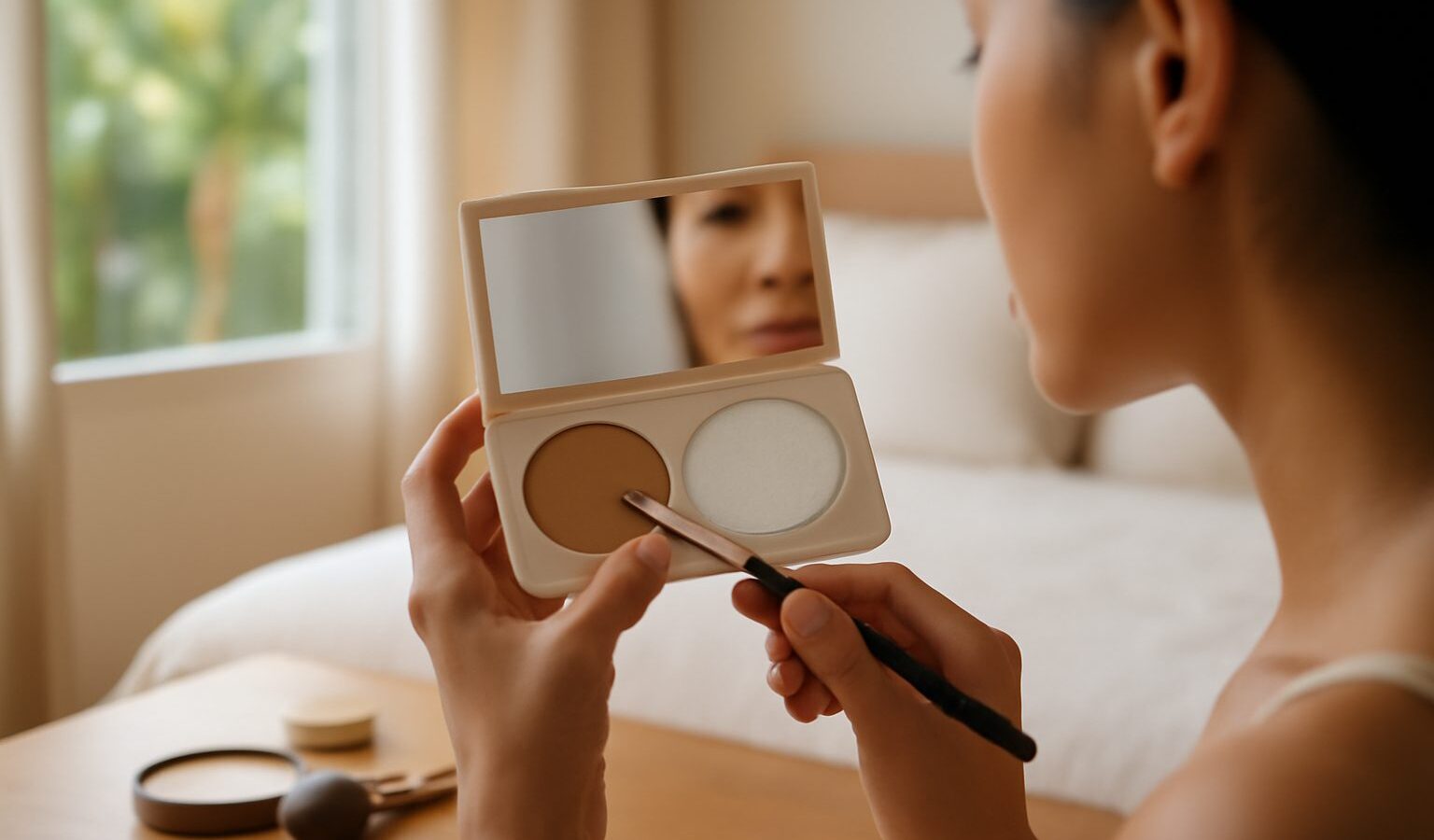
The cream vs powder makeup debate has no single winner, and in Singapore that is genuinely good news. Both formats can look beautiful and last a full day here, but they behave very differently once heat, humidity and sweat get involved. Knowing how each one performs, and on which parts of your face, is what stops a base from sliding by noon or going patchy on the cheeks.
This guide breaks down how cream and powder makeup each hold up in a tropical climate, which suits your skin type, and how to combine them so you get the best of both without a heavy, cakey finish.
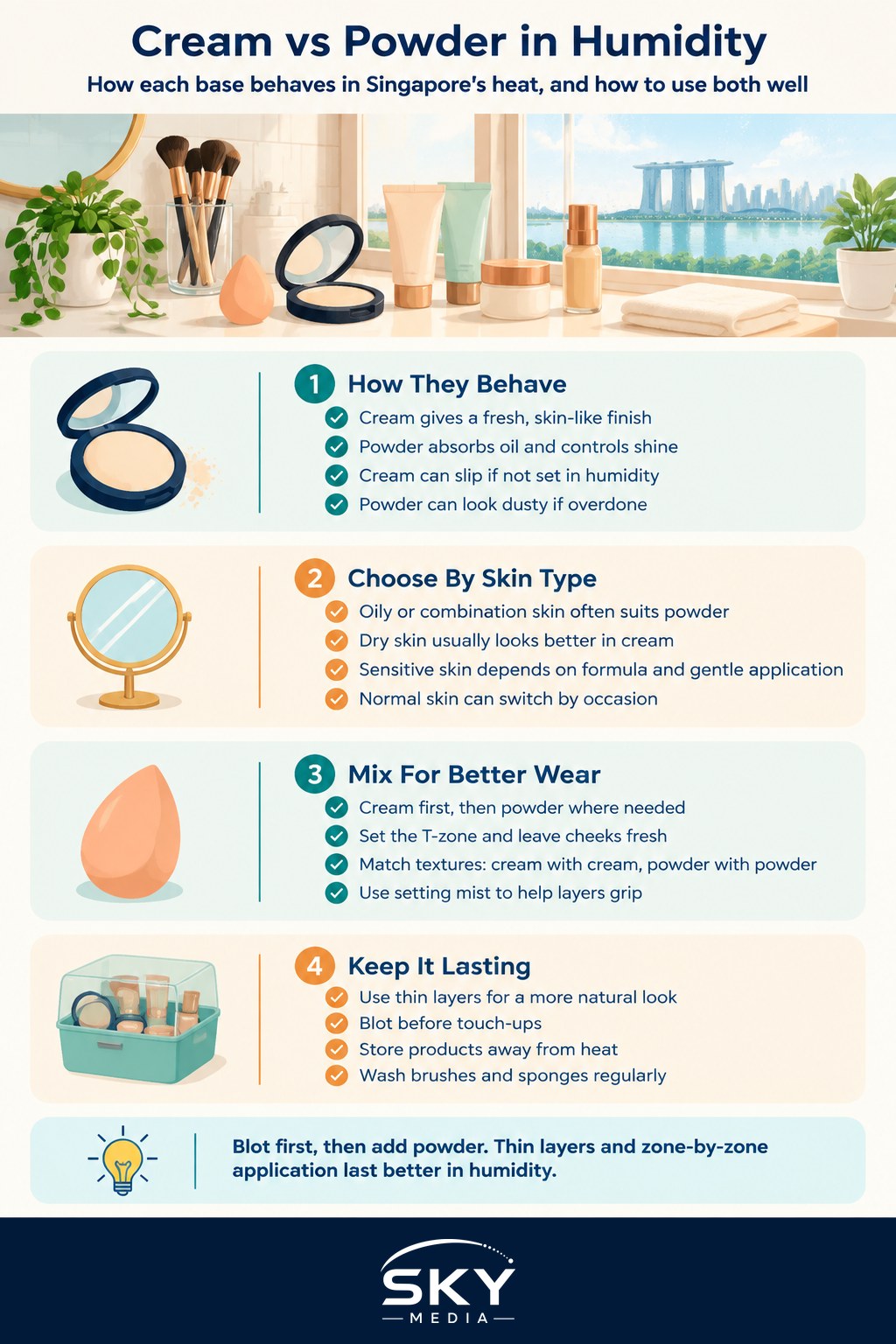
How cream and powder behave in the heat
Cream makeup, whether foundation, blush or bronzer, blends into the skin and leaves a fresh, skin-like finish. Because it moves with your face, it tends to look natural and rarely goes dry or dusty. The trade-off is that cream can slip on very oily skin or in high humidity, especially through the T-zone, if it is not set.
Powder makeup sits on top of the skin and absorbs oil, which is exactly why it feels reliable in the afternoon shine. It is quick to apply and easy to build, but too much can look flat or emphasise dry patches and fine lines, and it can go patchy if it lifts with sweat.
In Singapore’s climate, the honest answer is that neither format is automatically better. What matters is matching the finish to your skin, the occasion and the specific zone of your face. Oily areas often welcome powder, while drier areas usually look better in cream.
Cream vs powder makeup: a side-by-side comparison
The table below compares the two formats across the things that matter most in a humid climate. Use it to decide where each one earns its place in your routine.
| Factor | Cream makeup | Powder makeup |
|---|---|---|
| Finish | Fresh, dewy, skin-like | Matte, smooth, more coverage on demand |
| Oily skin in humidity | Can slip unless set | Absorbs oil, controls shine well |
| Dry or mature skin | Flattering, does not cling to dry patches | Can look dusty or settle into lines |
| Longevity when sweating | Good if set, otherwise can move | Strong on oil, but can lift if overapplied |
| Application | Fingers or a damp sponge, quick to blend | Brush, fast and buildable |
| Best for | Natural looks, drier skin, cheeks | Oily zones, touch-ups, longer wear |
Read the table as a guide, not a rule. Many people in Singapore end up using both, and the mix below is often the most durable approach of all.
Which suits your skin type
Your skin type is the first thing to consider, though humidity shifts the picture for everyone.
- Oily and combination skin. Powder helps here, especially over the T-zone where shine and sweat show first. A powder foundation or a cream base well set with powder tends to outlast cream alone. Blotting before you powder keeps it from going cakey.
- Dry skin. Cream is usually kinder. It gives a fresh finish without clinging to flaky areas, and it will not emphasise the dryness that strong aircon can cause. Set only the areas that need it, such as around the nose.
- Sensitive skin. Either can work; the deciding factor is usually the formula and how gently you apply it. Fewer, well-chosen products beat many layers. Patch test anything new on your jaw or inner arm for a few days before wearing it on a full face.
- Normal or balanced skin. You have the most freedom. Choose by occasion: cream for a natural everyday look, powder or a mix for long, hot days when you need staying power.
Whatever your skin type, remember that base makeup goes over sunscreen, not instead of it. Broad-spectrum sunscreen is the first step every morning, even on cloudy or hazy days, because UV still reaches your skin.
How to combine cream and powder for all-day wear
The most reliable base in Singapore is often not one or the other, but a thoughtful layering of both. The principle is simple: cream first for a natural finish, powder second only where you need control.
- Start with a cream or liquid base. Press a light layer into the skin with a damp sponge or clean fingers. Keep it thin, since a heavy cream base is the first thing to slide in the heat.
- Spot conceal. Dab concealer where you need it and tap to blend, rather than layering it all over.
- Set selectively. Dust a light powder over the T-zone, or wherever you get shiny, and leave the cheeks in their cream finish. This gives you the fresh look of cream with the staying power of powder where it counts.
- Add colour in the format that lasts for you. Cream blush melts into cream bases beautifully; powder blush layers better over powder. Match textures so they do not disturb each other.
- Finish with a setting mist. A light spray helps the layers grip in the humidity and knocks back any powdery flatness.
For touch-ups through the day, reach for powder rather than more cream. Blot away oil with a tissue first, then press a little pressed powder over the shine. Adding powder straight onto sweat is what turns a base cakey, so the blot comes first every time.
Making your base last in the humidity
A few habits help either format survive a tropical day:
- Less is more. Thin layers move less and look more natural than thick ones, whichever format you choose.
- Blot before you build. Press away oil and sweat before adding any powder for a touch-up.
- Keep formats consistent by zone. Cream over cream and powder over powder blend cleanly; mixing textures in the same spot can look patchy.
- Store makeup out of the heat. Cream products in particular can turn or separate if left in a hot car or bag. Keep them cool and clean, and wash brushes and sponges regularly to avoid breakouts.
If a product consistently irritates your skin, causes stinging, or triggers persistent breakouts, stop using it and see a doctor, dermatologist or pharmacist. This is general information, not medical advice, and a professional can help with anything that does not settle.
The takeaway on cream vs powder makeup is that you do not have to pick a side. Let cream give you a fresh, natural base, let powder control the shine, and let Singapore’s humidity be the reason you use each one exactly where it works best.
Explore more
To build on this, see our five-minute everyday makeup routine for a fast base that survives the heat, and learn undertones and colour matching so whichever format you pick disappears into your skin. When you want more glow, read about the dewy glass-skin look, and keep your products safe with our guide to makeup hygiene and storage.
Frequently Asked Questions
Can I put cream blush over powder foundation? It is better to match textures, since cream blush melts into cream bases beautifully while powder blush layers better over powder. Mixing textures in the same spot can look patchy. If you want cream blush, apply it before you dust powder.
What should I use for touch-ups, cream or powder? Reach for powder rather than more cream. Blot away oil and sweat with a tissue first, then press a little pressed powder over the shine. Powder straight onto sweat turns a base cakey, so the blot always comes first.
Is cream or powder better for mature skin? Cream is usually kinder for dry or mature skin, as it does not cling to dry patches or settle into fine lines, while too much powder can look dusty. Set only the areas that need it, such as around the nose.
Do I still need sunscreen under cream or powder makeup? Yes. Base makeup goes over sunscreen, not instead of it. Broad-spectrum sunscreen is the first step every morning, even on cloudy or hazy days, because UV still reaches your skin. Give it a minute to settle before you apply makeup.
How should I keep cream makeup from going off in the heat? Store cream products away from heat, as they can turn or separate if left in a hot car or bag. Keep them cool and clean, and wash brushes and sponges regularly to avoid breakouts. Stop using anything that irritates your skin.
Further reading: Sweatproof Makeup for Workouts