
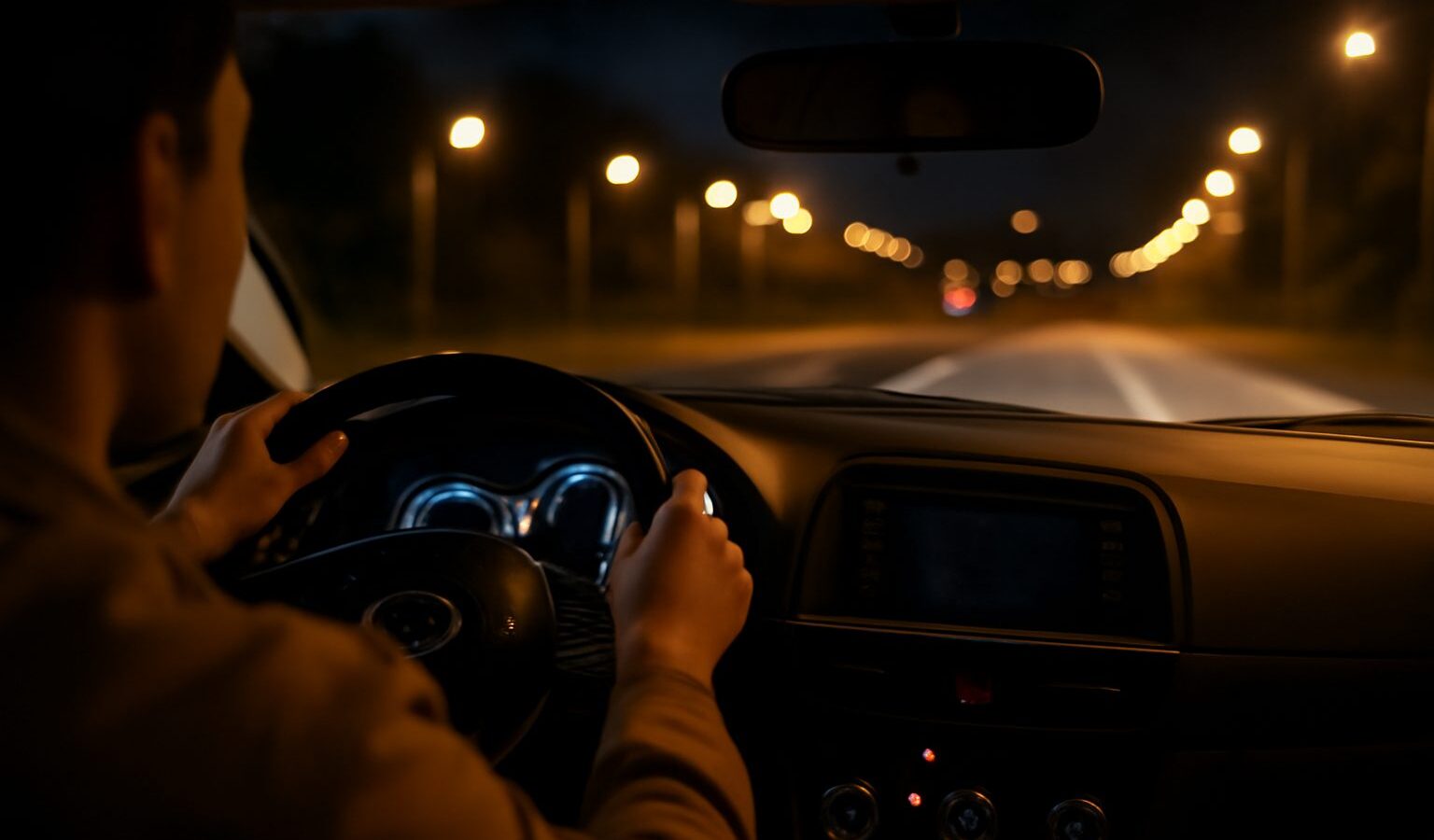
Driving at night is a different task from driving by day, even on roads you know well. You see less, judge distance and speed less easily, and your body is more likely to be tired. Singapore is well lit compared with many places, but our sudden downpours, busy junctions, and the mix of pedestrians, cyclists and motorcyclists still make darkness demanding. The good news is that a handful of simple habits, plus following the Highway Code and Traffic Police rules, make night journeys far safer. This guide covers the essentials for new and experienced drivers alike.
See and Be Seen: Using Your Lights Well
Your lights are your main tool after dark, so use them properly.
- Switch on at dusk and in poor weather. Turn your headlights on as light fades and during rain, not just full darkness. Side lights alone are not enough to see by or to be seen clearly.
- Use high beam where it is safe. On unlit stretches with no oncoming traffic and no car close ahead, main beam helps you see further. Dip it well before you meet another vehicle or come up behind one, so you do not dazzle other drivers.
- Keep everything clean and aimed right. A dirty or misted windscreen scatters light and worsens glare, so keep the glass clean inside and out and top up the washer fluid. Grimy headlights and tail lights cut how far you see and how well others see you. If your headlights point too high and dazzle others, or too low so you see little, have the aim checked at a workshop.
- Do not overload the cabin with light. A bright phone or dashboard screen tires your eyes and reduces how well you see out. Dim your instrument and screen brightness at night.
Well-maintained, correctly used lights are the single biggest factor in night visibility.
Managing Glare From Other Vehicles
Glare from oncoming headlights, and from bright lights behind you, is one of the most uncomfortable parts of night driving. It briefly reduces what you can see, so manage it deliberately.
- When a vehicle approaches with dazzling lights, do not stare into them. Glance towards the left edge of your lane and use the kerb or lane line to guide you until the vehicle passes.
- If lights behind you are glaring in your mirror, flick the rear-view mirror to its night or anti-dazzle setting, or nudge an auto-dimming mirror’s angle.
- Slow down if you are momentarily dazzled. It is always safer to ease off than to press on when you cannot see clearly.
- Keep your own glasses clean if you wear them, and mention night vision or glare troubles to an optician, since an outdated prescription makes glare worse.
Tiredness Is a Night-Driving Hazard
Fatigue is easy to underestimate and genuinely dangerous, because a tired driver reacts slowly and can even nod off for a second or two without realising. Late nights, a long day at work or a heavy meal all add to it.
Reduce the risk with a few honest rules:
- Do not start a drive already exhausted. If you are struggling to keep your eyes open, do not drive.
- On a longer drive, such as a trip up to Malaysia, take regular breaks, share the driving if you can, and stop at a safe place to rest when drowsiness sets in.
- Wind down a window for fresh air or have a short break, but treat these as ways to reach a safe stopping point, not a cure. The only real fix for sleepiness is sleep.
- Be extra careful in the small hours, when your body naturally wants to sleep and your alertness is at its lowest.
Recognising that you are too tired and stopping is a sign of good judgement, not weakness.
Watching for People and Cyclists in the Dark
At night it is much harder to spot pedestrians, cyclists and personal mobility device users, especially anyone in dark clothing or without lights or reflectors. Around HDB estates, bus stops, hawker centres and coffee shops, people may step out between parked cars or cross where you do not expect.
- Slow down and scan actively near junctions, pedestrian crossings, bus stops and carpark exits.
- Give cyclists and motorcyclists plenty of room and check your blind spots carefully before changing lanes or turning, as a single small light is easy to miss.
- Take extra care reversing in dim carparks. Use your reverse camera and sensors as aids, but still turn and look, since a child or low obstacle may not appear clearly.
- Follow LTA active-mobility and Traffic Police rules on sharing the road, and expect the unexpected in residential areas.
The table below sums up common night hazards and a sensible response to each.
| Night hazard | Why it is riskier after dark | What to do |
|---|---|---|
| Oncoming glare | Briefly reduces your vision | Look to the left edge; slow down |
| Driver fatigue | Slower reactions, microsleeps | Rest before and during; stop if drowsy |
| Pedestrians in dark clothing | Very hard to see early | Slow near crossings and estates; scan |
| Wet, reflective roads | Glare and less grip | Ease off; leave more distance |
Wet Roads and Sudden Downpours at Night
Rain and darkness together are the hardest combination on our roads. A wet surface reflects and scatters light, worsening glare and hiding lane markings and puddles, while grip drops and stopping distances lengthen. Our monsoon downpours can arrive fast and heavy.
- Switch your headlights on in rain so others can see you, and use wipers and demist to keep the windscreen clear.
- Slow down and increase your following distance well beyond what feels necessary in the dry, so you have time and space to stop.
- Watch for standing water and drive around large puddles where it is safe, since hitting water at speed can cause the tyres to lose contact with the road, known as aquaplaning.
- If a downpour is so heavy that you cannot see, do not stop in a live lane. Ease off and pull over somewhere safe, with lights on, until it eases.
- Never attempt to drive through a flooded road when you cannot judge its depth.
Night driving rewards patience above all. Give yourself more time, keep your speed sensible, look further ahead, and treat tiredness and bad weather as reasons to slow down or stop. Combined with well-maintained lights and steady habits, these simple measures make driving at night a good deal safer for you and everyone around you.