

Turning 65 does not mean you have to stop driving in Singapore. It does mean you need to show you are still medically fit to drive. The driving licence medical check 65 rule requires older drivers to see a doctor, pass a medical examination and have the result submitted to the Traffic Police, and then repeat it at regular intervals to keep the licence valid.
Many seniors and their families feel anxious about this check, often because they are unsure what happens in the consultation room. This guide walks through the process step by step, explains what the doctor typically looks at and sets out the possible outcomes. It is general information, not medical or legal advice. For the current rules, always check the Singapore Police Force (Traffic Police) website or speak to your doctor.
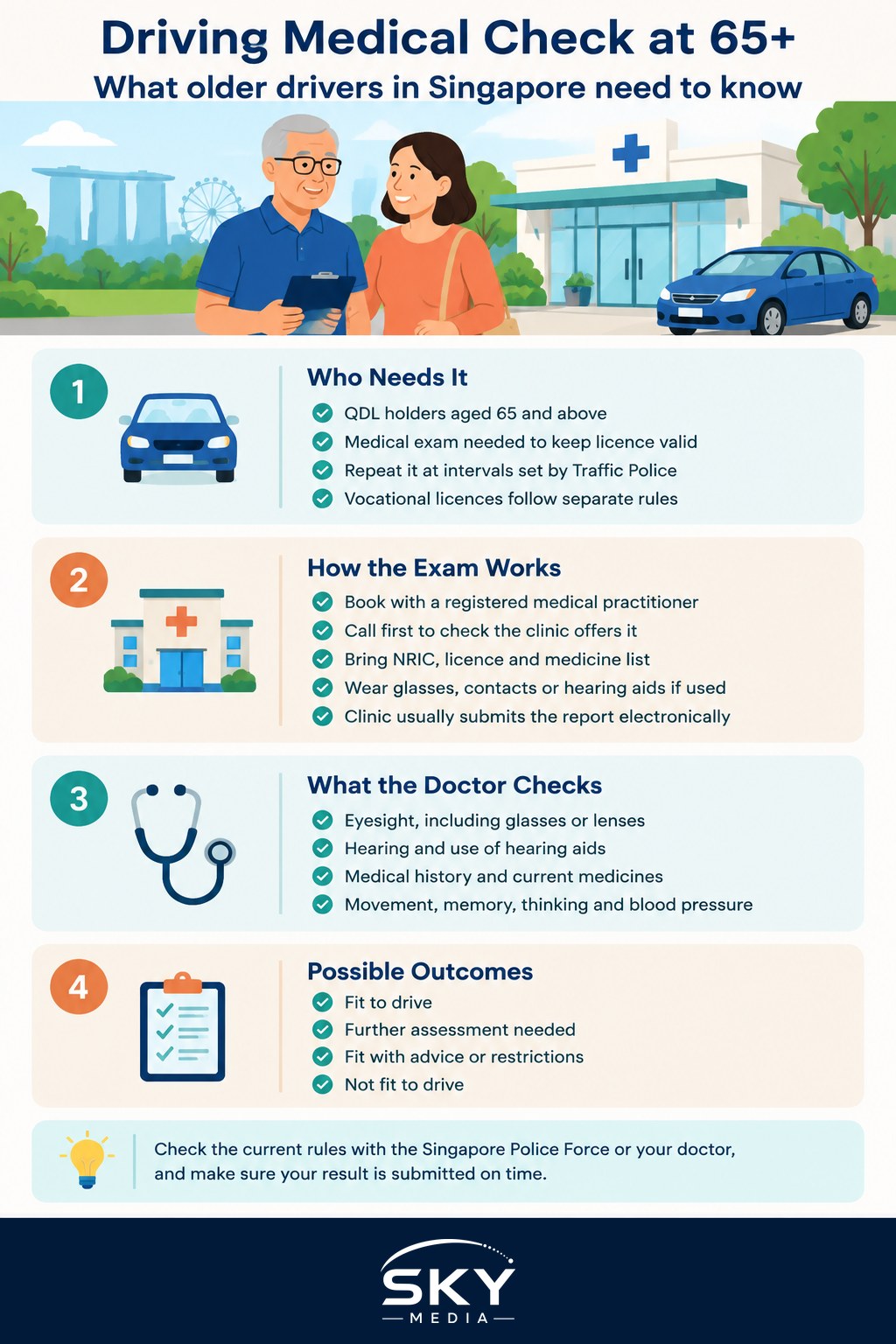
Who Needs the Medical Exam and When
Under Singapore’s rules, holders of a Qualified Driving Licence (QDL) aged 65 and above must pass a medical examination for their licence to remain valid. The exam is not a one-off. Drivers must go through it again at intervals set by the Traffic Police, so it becomes a regular part of driving in your later years.
A few points worth knowing:
- Reminders are usually sent. The Traffic Police typically notify drivers when their medical exam is due. Keep your contact and address details updated so you do not miss it.
- Do it before the deadline. If the exam is not done and submitted in time, your licence may no longer be valid for driving, even if you feel perfectly well.
- Vocational licences are different. Taxi, private-hire, bus and other vocational licence holders follow separate medical requirements set by the Land Transport Authority (LTA). Check with LTA if you hold one.
- Foreign licence holders. If you are driving on a converted or foreign licence, our guides on converting a foreign driving licence and renewing your Singapore driving licence explain the related rules.
Because the age thresholds, intervals and procedures can be updated, confirm the details that apply to you on the Singapore Police Force e-services pages.
Step by Step: How the Medical Exam Works
The process is designed to be simple, and most of it happens at a clinic you choose.
- Book an appointment with a registered medical practitioner. Many general practitioner (GP) clinics and polyclinics perform driving licence medical exams. Call ahead to confirm they offer it, since not every clinic does.
- Bring the right items. This usually includes your NRIC or identity document, your driving licence, your spectacles or contact lenses if you wear them, hearing aids if you use them, and a list of your current medicines.
- Attend the examination. The doctor takes your medical history and runs a series of checks, described below.
- The doctor submits the result. In Singapore, the medical report is generally submitted electronically to the Traffic Police by the clinic. Ask the clinic to confirm it has been sent.
- Check your licence status. After submission, you can verify your licence status through the Singapore Police Force e-services.
Clinic fees for the exam vary, so ask the clinic for the charge when you book.
What the Doctor Checks
The aim is to confirm you can drive safely, not to catch you out. While each doctor follows the official medical report requirements, the checks commonly cover these areas.
- Eyesight. Your visual acuity is tested, with your glasses or lenses if you normally drive in them. The doctor may also check your field of vision and look for conditions such as cataracts or glaucoma that affect driving.
- Hearing. A basic check to see whether you can hear adequately, with hearing aids if you use them.
- Medical history. Conditions such as diabetes, heart disease, stroke, epilepsy or seizures, sleep disorders, and neurological conditions can affect safe driving. Be honest about these.
- Medicines. Some medicines cause drowsiness or slow reaction times. The doctor will want to know what you take and when.
- Physical ability. Joint stiffness, weakness or limited movement in the neck, arms or legs can make checking blind spots or braking harder.
- Memory and thinking. The doctor may assess attention, memory and judgement, since these affect how you respond on the road.
- Blood pressure and general health. A quick check of your overall condition.
If anything needs a closer look, the doctor may refer you to a specialist, such as an eye doctor, before completing the report.
Possible Outcomes and What They Mean
| Outcome | What it usually means | What to do next |
|---|---|---|
| Fit to drive | You meet the medical requirements | Check the result has been submitted and keep driving safely |
| Further assessment needed | The doctor wants a specialist opinion or tests first | Attend the referral promptly so you do not miss the deadline |
| Fit with advice or restrictions | You can drive but should take precautions, such as always wearing glasses | Follow the advice carefully and discuss any concerns with your doctor |
| Not fit to drive | A condition currently makes driving unsafe | Stop driving, ask about treatment, and discuss whether a reassessment is possible later |
A “not fit” result can feel like a blow, but it is about safety for you and others. Some conditions, such as cataracts, can be treated, after which a doctor may reassess you. Ask your doctor what is realistic.
How to Prepare Without Stress
Most healthy seniors pass without difficulty. A little preparation keeps things smooth:
- Book an eye check first if your glasses are old or your vision has changed.
- Take your usual medicines as normal, and bring a written list or the packaging.
- Get a good night’s sleep before the appointment.
- Bring a family member if you would like support or help remembering the doctor’s advice.
- Ask questions. If the doctor raises a concern, ask what it means for driving and what you can do about it.
If you have not driven much recently, refresher lessons for rusty drivers can rebuild your confidence, which is helpful whatever the medical result.
A Word for Family Members
Adult children often worry about an older parent driving. The medical exam provides a neutral, professional check, which can make conversations easier. Offer to drive your parent to the appointment, help gather documents and listen to how they feel about the result. Treat driving as part of their independence and respect their decisions, while encouraging them to follow medical advice.
Key Points to Remember
Drivers aged 65 and above in Singapore must pass a medical exam to keep their licence valid, and repeat it at regular intervals. Book with a registered doctor, bring your glasses, hearing aids and medicine list, and make sure the result reaches the Traffic Police in time. Possible outcomes range from fit to drive, to referral for further tests, to advice to stop. For current requirements, rely on the Singapore Police Force and your own doctor.
Official sources: OneMotoring