
An architecture career in Singapore blends creativity, technical rigour, and a real say in how the city looks and works. Architects shape the spaces we live, work, and gather in, from homes and offices to schools, transport hubs, and public gardens. If you enjoy design, problem solving, and seeing ideas become something people actually use, this field is worth a serious look. This guide covers what architects do, the skills that matter, and the general pathways into the profession so you can weigh it up honestly.
Because education and professional registration are governed by official bodies and can change, treat this as an orientation, not a rulebook. Always confirm the current qualification, examination, and registration requirements with the Board of Architects (BOA) before you commit to a course or a career step.
What Architects Actually Do
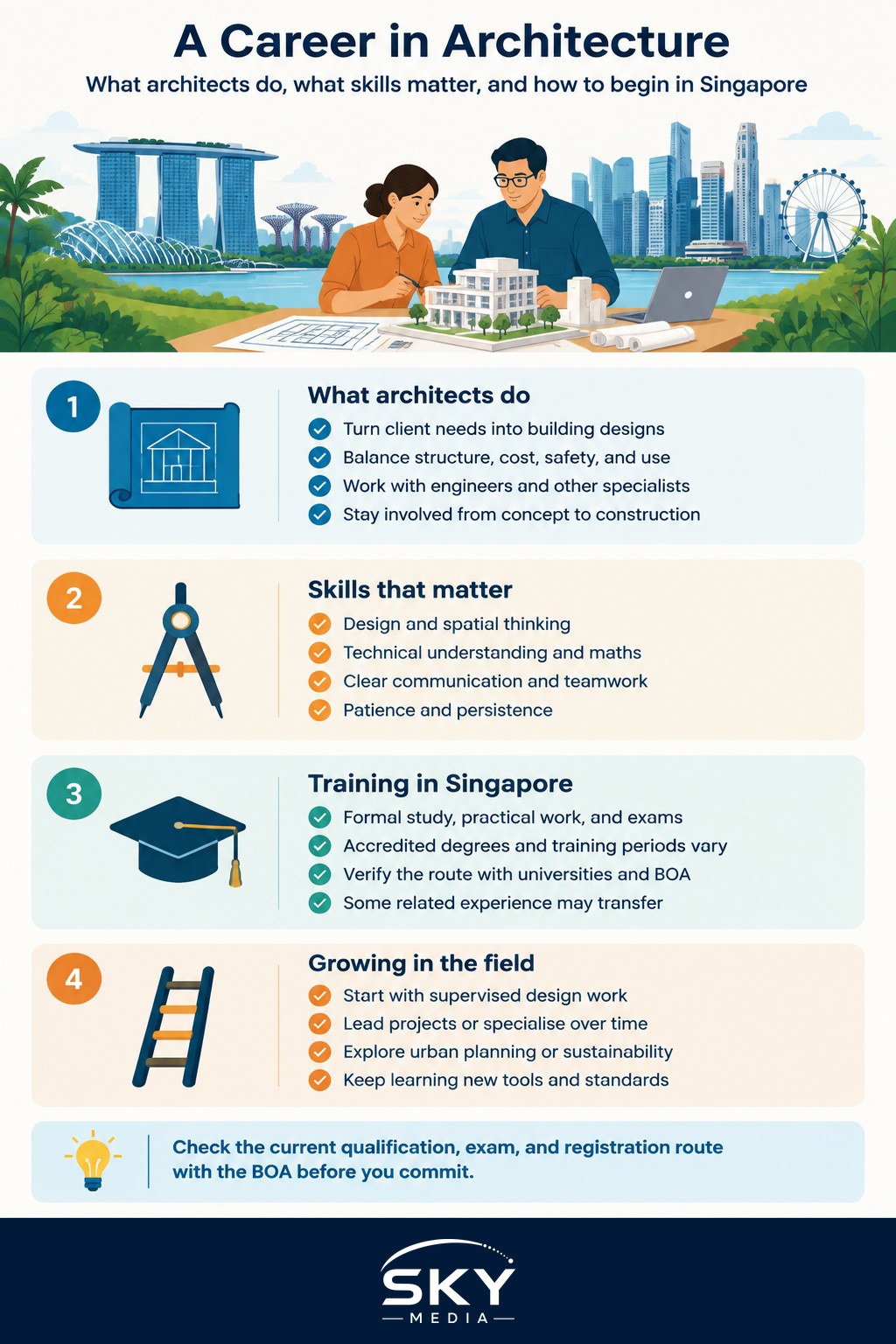
Designing beautiful buildings is only part of the picture. Architecture is a long collaboration between many people and many constraints. Architects translate a client’s needs into designs, then work through countless decisions about structure, materials, cost, sustainability, safety, and how people will move through a space. They coordinate with engineers, quantity surveyors, contractors, and authorities, and they stay involved as a project moves from concept to construction.
Day to day, the work mixes creative and practical tasks: sketching and modelling ideas, producing detailed drawings, using design software, checking that plans meet regulations, and managing timelines and budgets. In Singapore, that also means designing for a dense, tropical, high-rise environment where land is scarce and green, sustainable building is a growing priority.
The field is broad. Some architects focus on residential work, others on commercial towers, healthcare, education, conservation, interiors, urban design, or landscape. There is also room in research, sustainability consulting, and project management. If a particular direction appeals to you, look into what it involves and how people typically get there.
Skills and Qualities That Matter
Architecture rewards a distinctive mix of strengths:
- Design and spatial thinking. You need to imagine three-dimensional spaces and communicate them clearly through drawings and models.
- Technical understanding. Buildings must stand up, keep out the rain, and meet codes. Comfort with maths, materials, and regulations is essential.
- Communication and collaboration. Projects involve many stakeholders, so explaining ideas and listening well are daily skills. Our guide on giving effective work presentations can help you pitch designs with confidence.
- Patience and persistence. Projects can take years, and setbacks are normal. Resilience keeps you going.
Because so much of the work lives in your portfolio, learning to present your projects well is a genuine career advantage. You may find building a work portfolio a useful companion as you develop.
Training and Pathways in Singapore
Becoming a practising architect is a long-term commitment that typically combines formal education, supervised practical experience, and professional examinations before registration. The details of accredited degrees, the required period of practical training, and the examination and registration process are set by the relevant authorities and updated over time.
For that reason, do not rely on old timelines or hearsay. Speak directly to the universities that offer accredited architecture programmes, and verify the full route to registration, including any examinations, with the BOA. This is the profession’s official body, and it is the reliable source for what is required right now.
If you are considering architecture as a second career or moving in from a related field such as engineering, interior design, or construction, some of your experience may transfer. Our guide on transitioning to a new industry offers a practical way to think about that shift.
Growing Over a Long Career
Architecture offers many ways to grow. Early on, you build technical and design skills under supervision. Over time you may lead projects, specialise in an area you love, move into practice leadership, or branch into related fields like urban planning, sustainability, or property development. Some architects start their own firms; others build deep careers within established practices or the public sector.
Continuing education and staying current with new materials, technologies, and sustainability standards are part of the job. The field keeps changing, which keeps it interesting.
Is Architecture Right for You?
An architecture career in Singapore asks a lot. The training is long, the responsibility is real, and the balance of creativity and constraint can be frustrating as often as it is rewarding. But for people who care about the built environment and want work that leaves a visible, lasting mark, few careers compare.
If this excites you, take practical steps. Talk to working architects, visit exhibitions and buildings with a critical eye, build a habit of sketching and observing, and confirm the current education and registration pathway with the BOA. Requirements change, so start with the official sources, then let your own interests and temperament guide the decision. Architecture rewards those who are patient, curious, and genuinely delighted by good design.
Frequently Asked Questions
How long does it take to become a registered architect? It is a long road combining accredited education, supervised practical experience and professional examinations. Exact periods and requirements are set by the authorities and can change, so confirm the full route with the Board of Architects before you plan.
Is architecture worth it given the long training? It depends on what you value. The path is demanding and constraints can frustrate, but many find the creative work and lasting mark on the city rewarding. Talk to working architects about their day-to-day before deciding.
Do I need to be good at drawing to study architecture? Strong drawing helps, but design thinking, spatial imagination and persistence matter just as much. Much of the work uses software and models. Start a sketching habit and build a portfolio showing how you think.
Can an engineer or interior designer switch into architecture? Some experience can carry over, but becoming a registered architect still follows the formal education and registration route. Check with universities and the Board of Architects which parts of your background count.
What jobs can I do with an architecture degree besides designing buildings? Options include interior design, urban design, conservation, landscape, sustainability consulting, research, project management and property development. Whether a role requires registration varies from job to job, so confirm with the relevant body.
Further reading: Exploring a Career in Quantity Surveying in Singapore