
Extending appliance lifespan is one of the easiest ways to save money and reduce waste at home. Most appliances do not fail because they are old. They fail because small maintenance jobs were skipped for years. In Singapore, heat, humidity, and hard use put extra strain on machines, which makes good habits even more valuable. This guide runs through practical, appliance-by-appliance maintenance that keeps your home running smoothly and helps your investments last as long as they should.
Why maintenance matters more here
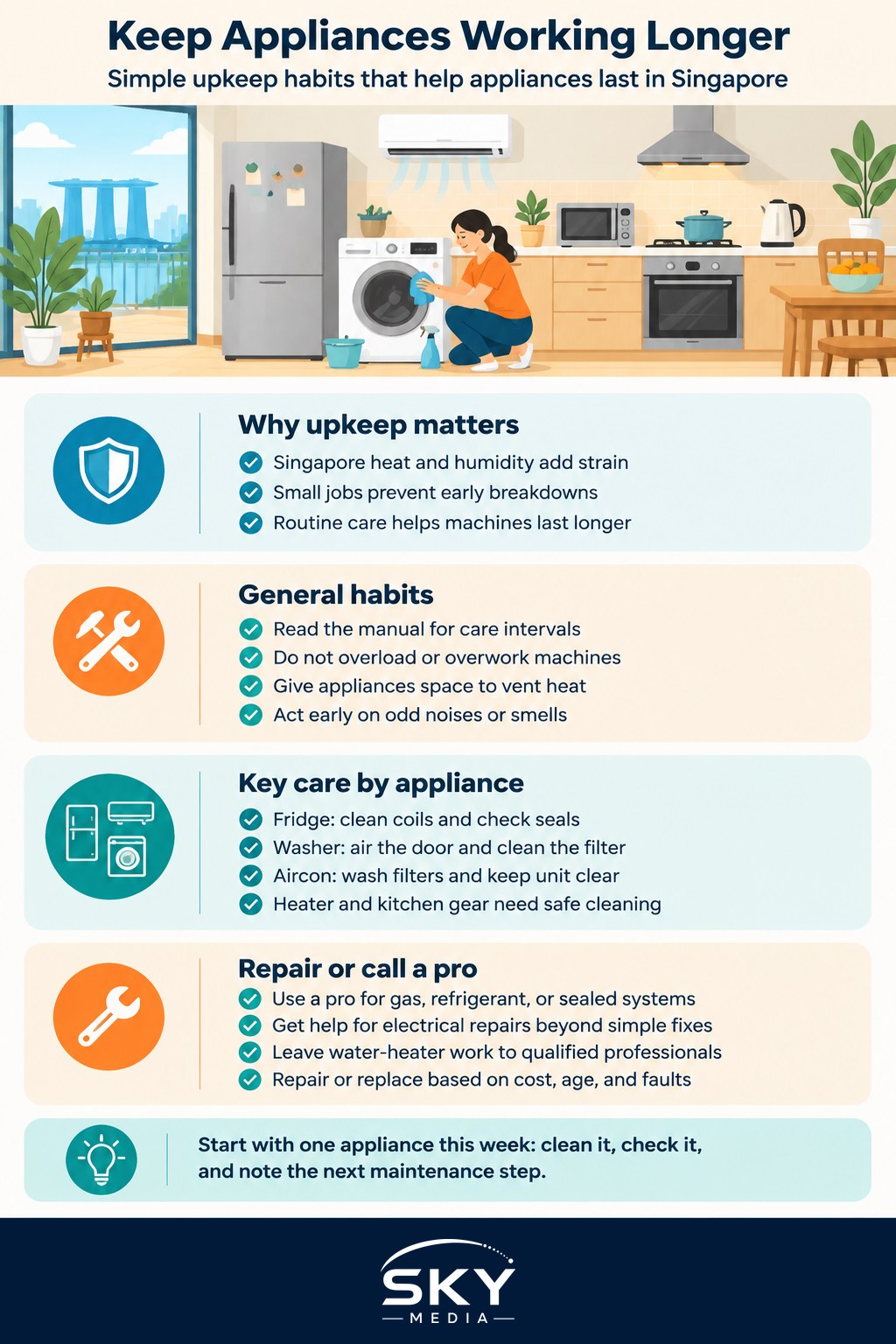
A humid, warm climate is tough on appliances. Moisture encourages corrosion and mould, dust builds quickly, and machines that run hard in the heat wear faster. The upside is that a little routine care goes a long way. Cleaning filters, clearing vents, and catching small problems early prevents the kind of breakdown that ends an appliance’s life prematurely. Think of maintenance as cheap insurance for expensive machines.
General habits that help every appliance
Some principles apply across your whole home, whatever the machine.
- Read the manual once. It tells you the cleaning intervals and the things the maker knows will cause trouble.
- Do not overload or overwork. Running machines beyond their rated capacity strains motors and seals.
- Give appliances air. Cramped installations trap heat, which shortens the life of motors and electronics.
- Act on odd noises and smells. Small symptoms are cheap to fix and expensive to ignore.
- Keep them clean and dry. Dust and moisture are the two biggest enemies in this climate.
Appliance by appliance
Each machine has its own weak points. Here is where to focus your effort.
Refrigerator
The fridge runs constantly, so small inefficiencies add up.
- Clean the condenser coils at the back or underneath so it can shed heat.
- Check and wipe the door seals, and replace them if they no longer grip. A poor seal makes the compressor work harder.
- Do not overfill, and let hot food cool before storing it.
- Defrost if your model needs it, and keep the interior clean and dry.
Washing machine
Humidity and detergent residue make washers a mould magnet.
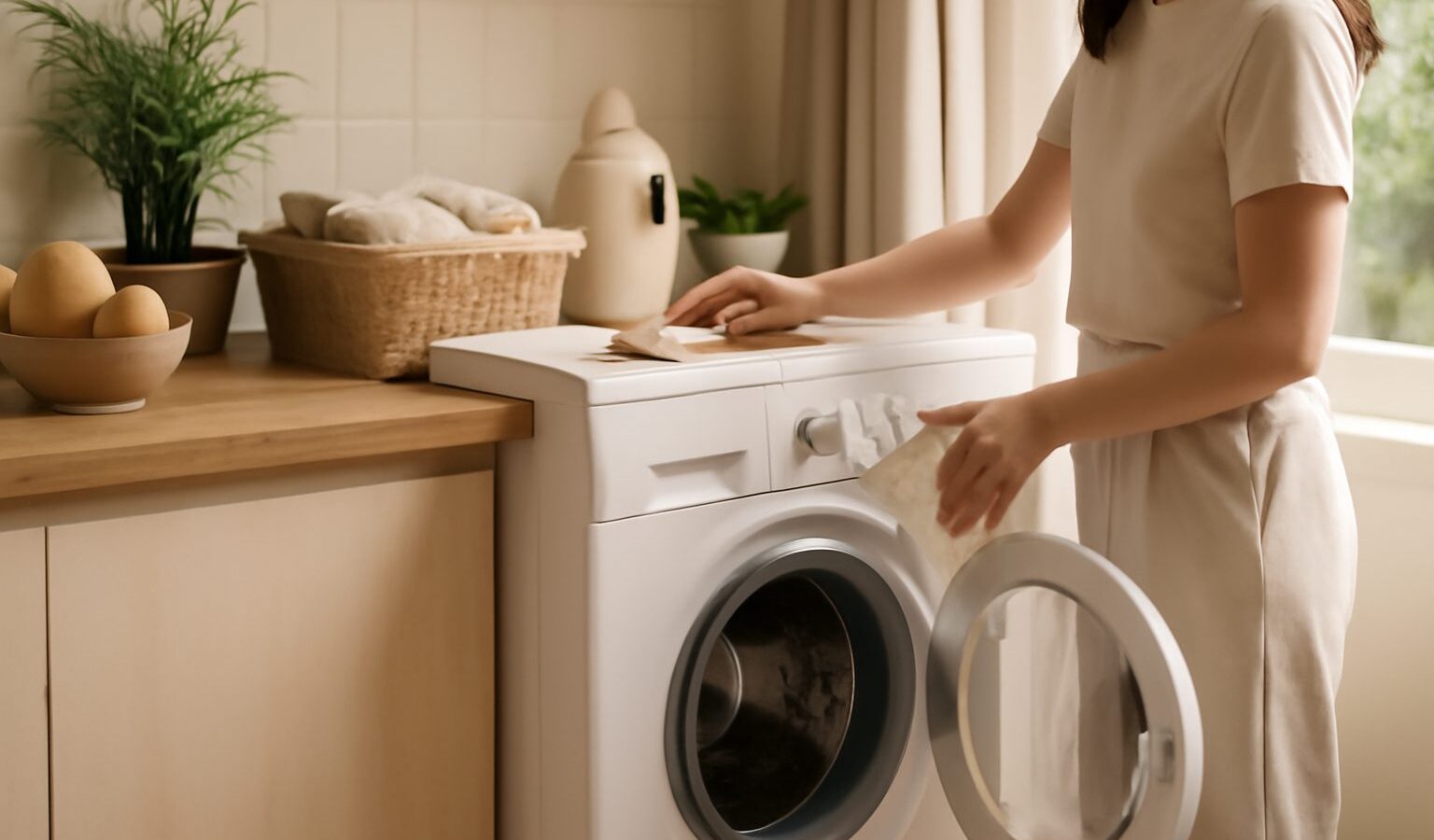
- Leave the door and detergent drawer open after a wash so the drum dries out.
- Run a hot maintenance wash periodically to clear residue and odour.
- Clean the filter, which catches lint and stray coins.
- Check hoses for bulges or leaks and do not overload the drum.
Air conditioner
In Singapore the aircon works hard, so it rewards regular care.
- Clean or wash the filters regularly, following your unit’s manual. Clogged filters cut cooling and raise power use.
- Arrange professional servicing on a sensible schedule, as gas top-ups and coil cleaning are best left to technicians.
- Keep the outdoor or condenser unit clear of obstructions.
- Watch for water leaks or weak cooling, which are early warnings.
Water heater
- Follow the maker’s guidance on servicing, and never ignore signs of leaks.
- Have electrical or storage heaters checked by a qualified professional, since water and electricity together are not a DIY area.
Kitchen appliances
- Descale kettles and coffee machines if your water leaves deposits.
- Clean oven and microwave interiors so grease does not bake on and strain the elements.
- Keep range hood filters clean so the fan is not fighting a layer of grease.
Compare the payoff of key habits
Not every task takes the same effort, and some deliver more than others. This table helps you prioritise.
| Habit | Appliances | Frequency | Payoff |
|---|---|---|---|
| Clean or wash filters | Aircon, washer, range hood | Regular | High, protects efficiency and motor |
| Check door and drum seals | Fridge, washer, oven | Occasional | High, prevents overwork and mould |
| Clear vents and coils | Fridge, dryer, aircon unit | Occasional | High, prevents overheating |
| Descale | Kettle, coffee machine, heater | As needed | Moderate, extends element life |
| Professional servicing | Aircon, water heater | Scheduled | High, catches hidden faults |
Know when to call a professional
Plenty of maintenance is safe to do yourself, but some jobs are not. Bring in a qualified professional when:
- The work involves gas, refrigerant, or opening a sealed system, such as aircon servicing.
- Electrical repairs go beyond changing a plug or fuse.
- A water heater or anything combining water and electricity needs attention.
- An appliance is under warranty and self-repair would void it.
Doing the safe maintenance yourself and leaving the technical repairs to experts is the sensible balance. It saves money without taking risks.
When repair beats replacement
Extending appliance lifespan sometimes means deciding whether to fix or replace. A few guiding questions:
- Is the repair cost a small fraction of a new unit, or close to it?
- How old is the appliance relative to its expected life?
- Is a much more energy-efficient model available that would pay back over time?
- Has this appliance failed repeatedly, or is this a one-off?
A well-built appliance with a single fixable fault is usually worth repairing. One that fails again and again, or guzzles power, may be better replaced.
Small habits, longer life
Extending appliance lifespan is not about complicated work. It is about a handful of steady habits: clean the filters, check the seals, give machines room to breathe, and call a professional for the technical jobs. Suited to Singapore’s demanding climate, these routines keep your appliances working reliably, cut your running costs, and spare you the cost and hassle of early replacement. Start with one appliance this week and build the habit from there.
Explore more: How to maintain your home appliances · When to DIY and when to hire a professional · Sustainable home ideas for Singapore
Frequently Asked Questions
How long should a typical aircon, fridge or washing machine last? Lifespan varies by brand, model, usage and upkeep, so there is no single answer. Well-maintained appliances often outlast neglected ones by years. Check the manual or the manufacturer for the expected service life of your model.
Does using a voltage stabiliser or surge protector help appliances last longer? A surge protector can shield electronics from power spikes, and may be worthwhile for sensitive equipment such as computers and TVs. Use a good-quality one rated for the load. Singapore’s supply is generally stable, so it is a precaution rather than a must for every appliance.
Is it worth buying an extended warranty for a major appliance? It depends on the cost, what it covers and how long, and the reliability of the product. Read the exclusions carefully and compare the price with a likely repair bill. Check what the manufacturer already covers before paying for more.
How can I tell when it is time to replace an appliance instead of repairing it? Consider replacing when repairs keep recurring, the repair cost is close to a new unit, or the appliance is old and uses much more electricity than modern models. A technician can give an opinion. A one-off fault on a good machine is usually worth fixing.
Where can I get a faulty appliance repaired or dispose of it responsibly? Start with the manufacturer’s service centre or a reputable repair shop, and ask for a quote before agreeing to work. For a unit beyond repair, use the retailer’s take-back service or an e-waste collection point. Check NEA for the current channels.