

Few things spoil a morning like a “fail” on your inspection report. Usually the result is fair and the fix is simple. Occasionally, though, an owner genuinely believes the verdict is wrong: the emissions reading seems off, or the report names a part the car does not even have. This guide explains how a failed vehicle inspection appeal or review usually works in practice, what evidence helps, and when it is smarter to simply fix the issue and go back.
This is general information, not legal advice. Inspection rules, fees and procedures are set by the Land Transport Authority (LTA) and can change, so always confirm the current process with LTA and the inspection centre that tested your vehicle.
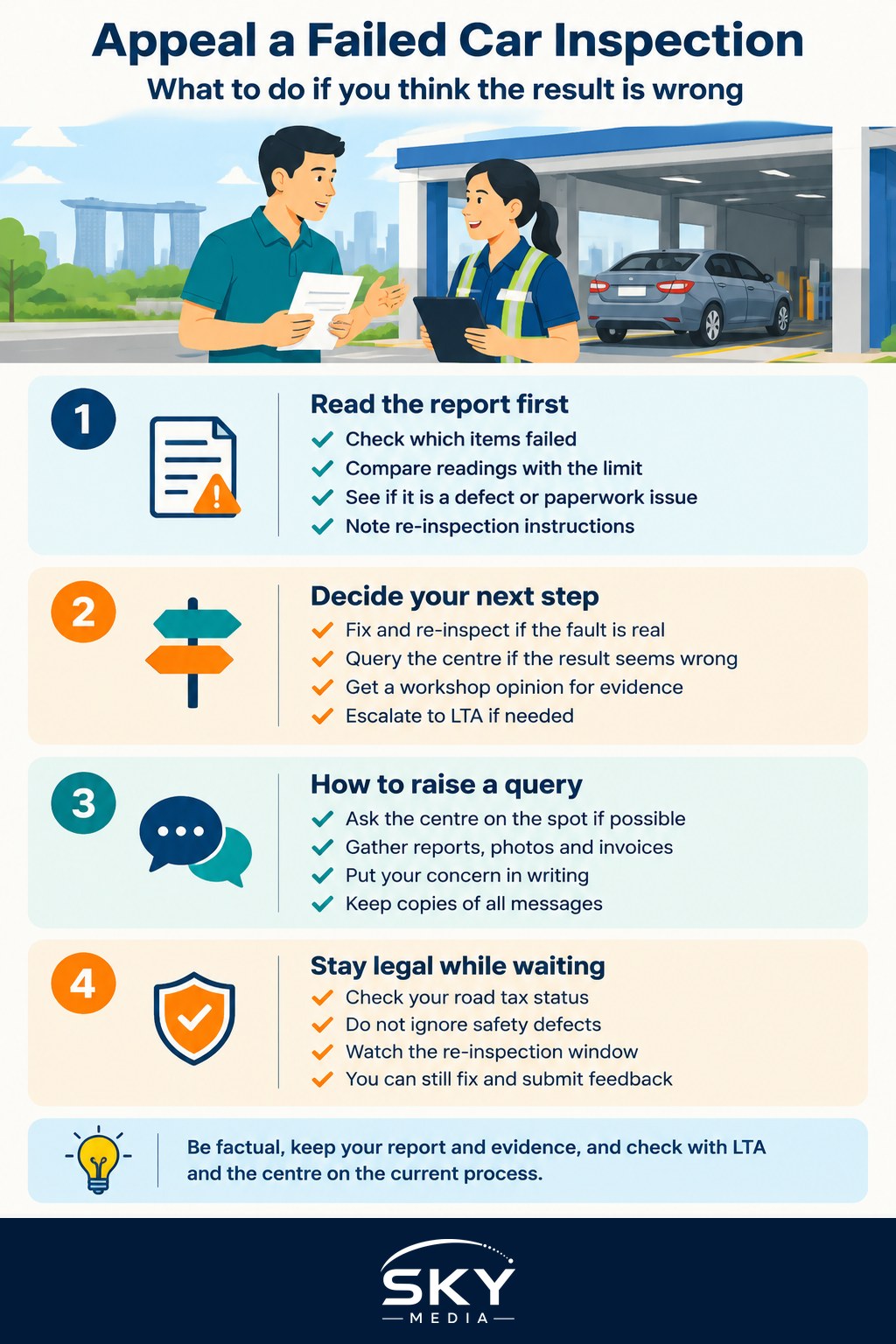
First, Understand What the Inspection Report Is Telling You
In Singapore, periodic vehicle inspections are carried out by inspection centres authorised by LTA. Older vehicles must pass a periodic inspection before road tax can be renewed, and some vehicles are also called up for inspection after modifications, accidents or enforcement checks. If you want a refresher on how the regular process works, our guide to car inspection and VICOM in Singapore covers the basics.
When a vehicle fails, the centre issues a report listing the items that did not meet the required standard. Before you think about disputing anything, read it carefully:
- Which items failed. Common categories include brakes, lights, tyres, emissions, smoke, noise, windscreen and window tint, and unapproved modifications.
- The measured value versus the limit. For emissions, noise or brake tests, the report often shows a reading. Compare it with the standard the centre applied.
- Whether it is a defect or a missing document. Some fails relate to paperwork or registration details rather than the mechanical state of the car.
- Re-inspection instructions. The report or the counter staff will usually explain how and by when you can bring the vehicle back.
Keep the original report and take clear photos of it. Everything that follows depends on it.
Deciding Whether to Dispute or Simply Rectify
Not every failed result is worth contesting. Ask yourself honestly whether the fault could be real. Worn bulbs, a tyre close to its wear limit or a loose exhaust can fail a car even if it drives fine. In those cases, getting the repair done and returning for re-inspection is usually faster and cheaper than any dispute.
A review is more reasonable when:
- The report describes a part or modification your vehicle does not have.
- You have a recent workshop record showing the item was in good order.
- An emissions or smoke reading looks inconsistent with a reading taken shortly before or after on the same vehicle.
- The vehicle details on the report (registration number, model, engine) do not match your car.
- You believe a procedural step was missed, such as a test being run while the engine was not at normal operating temperature.
The table below sums up the main routes and when each fits.
| Route | When it fits | What you need | Likely outcome |
|---|---|---|---|
| Fix and re-inspect | The defect is real or likely | Repair invoice, original report | Fastest path back to a pass |
| Query at the centre | You think the test or reading was wrong | Report, photos, calm explanation | Clarification or a re-check at the centre’s discretion |
| Independent workshop opinion | You want evidence before disputing | Written findings from a qualified mechanic | Supports or undermines your case |
| Escalate to LTA | The centre’s reply does not resolve it | Report, centre’s response, supporting evidence | LTA reviews the feedback under its own process |
Step by Step: Querying a Failed Result
1. Raise it at the centre, on the spot if possible
The quickest way to resolve a genuine mistake is before you leave. Politely ask the inspector or counter staff to explain the failed item, show you the reading or the defect, and confirm the standard applied. Ask whether a supervisor can take a second look. Many misunderstandings, such as a wrong vehicle record or a test that needs repeating, can be sorted out here.
Keep it factual, and note the date, time and names of the staff you spoke to.
2. Gather your evidence
If the centre stands by its result and you still disagree, build a short, organised file:
- The inspection report and photos of the vehicle at the time.
- Recent servicing or repair invoices for the item in question.
- A written assessment from an independent workshop, ideally one that can measure the same thing (for example, an emissions or headlamp alignment check).
- Any registration or modification approval documents if the fail relates to an approved accessory.
3. Put your concern in writing
Most inspection centres have a customer feedback channel. Write a clear, short message stating your vehicle number, the date of inspection, the item you dispute, why you believe the result is wrong, and what you are asking for, such as a re-test. Attach your evidence. Keep a copy of everything you send.
4. Escalate to LTA if needed
If the centre’s response does not resolve the matter, you can send feedback to LTA through its official feedback channels, explaining the issue and attaching the centre’s reply. LTA oversees authorised inspection centres and the standards they apply. It will assess the case under its own procedures, which may change over time, so check the LTA website for the current way to submit and what to include. The approach is similar in spirit to other formal reviews, as explained in how to check or appeal a government fine: be concise, factual and supported by documents.
Keeping Your Car Legal While You Wait
A dispute does not pause the rules. While you are querying a result:
- Check your road tax position. If road tax renewal depends on a pass, a pending query does not automatically extend your deadline. Look up your road tax status on LTA’s OneMotoring portal.
- Do not ignore safety defects. If the fail involves brakes, tyres, steering or lights, get it checked before driving any further than necessary. A dispute about paperwork is very different from driving a car that may be unsafe.
- Mind the re-inspection window. Centres generally explain how long you have to return for a re-inspection under the original booking terms. Missing it may mean booking and paying for a full test again. Confirm the current terms with the centre.
- Consider doing both. Sometimes the sensible move is to rectify the item, pass the re-inspection and still submit your feedback in writing, so the record is corrected for the future without leaving you off the road.
Tips That Make a Review More Likely to Succeed
- Be specific. “The emissions test was wrong” is weak. “The report shows a reading above the limit, but my workshop measured it within the limit on the same afternoon, see attached” is strong.
- Stay polite. Inspectors follow set procedures. Courtesy keeps doors open for a re-check.
- Avoid quick cosmetic fixes before a re-test. If you claim nothing was wrong, then replace the part, it becomes hard to show the original result was mistaken. Get your independent check done first.
- Ask about modifications early. If you have fitted accessories, check with LTA whether they need approval before your next inspection rather than after a fail. Owners of commercial vehicles should also check the rules covered in our guide to driving a van or large vehicle.
When the Result Stands
If LTA and the centre confirm the original result, have the defect repaired by a reputable workshop, keep the invoice, and book your re-inspection. For older vehicles, a fail can also prompt a look at whether continued repairs still make sense.
A failed inspection is rarely the end of the road. Read the report closely, raise genuine concerns early and politely, back them up with evidence, and use LTA’s official channels when needed.
Frequently Asked Questions
Does querying a failed inspection extend my road tax deadline? No. A pending query does not automatically extend your deadline, so check your road tax status on LTA’s OneMotoring portal. If renewal depends on a pass, you may need to rectify and re-inspect while your feedback is being looked at.
Can I keep driving a car that failed on brakes or tyres? Avoid it. A dispute about paperwork is very different from driving a car that may be unsafe. If the fail involves brakes, tyres, steering or lights, get it checked and fixed before driving further than necessary.
Should I replace the failed part before asking for a re-test? Get an independent check first. If you claim nothing was wrong and then replace the part, it becomes hard to show the original result was mistaken. If the defect is likely real, fixing it and returning for re-inspection is usually quicker.
What happens if I miss the re-inspection window? You may have to book and pay for a full test again. Centres generally explain how long you have to return under the original booking terms, so confirm the current terms with the centre before the date passes.
What details make a written complaint to the inspection centre stronger? Be specific: give your vehicle number, inspection date, the disputed item and why you think it is wrong, and attach evidence such as a workshop reading taken the same day. Stay polite and keep copies of everything you send.
Official sources: OneMotoring