

Ha Giang is the far northern frontier of Vietnam, a province of towering limestone peaks, hairpin passes and rivers that cut deep gorges into the karst. Its famous loop, a multi day circuit through the Dong Van Karst Plateau, has become one of the most talked about road journeys in Southeast Asia. It is spectacular, remote and genuinely wild in places, and it demands more planning and more respect than a typical holiday. This guide sets out how a Singapore traveller can reach it and enjoy it safely.
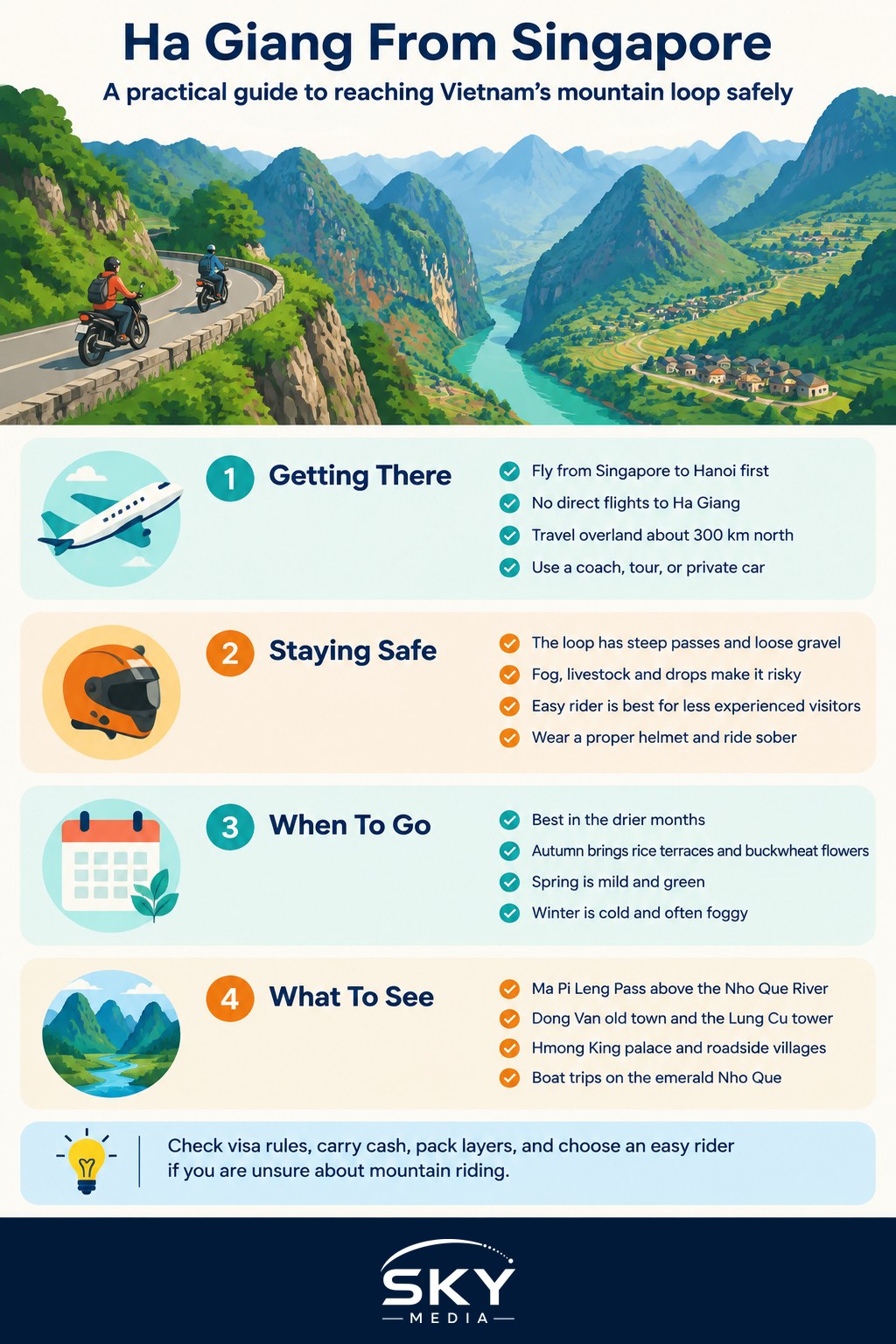
Getting There From Singapore
There are no direct flights from Singapore to Ha Giang, and the province has no passenger airport. Every route begins with a flight from Singapore to Hanoi, followed by an overland journey of roughly 300 kilometres north to Ha Giang city, the gateway to the loop.
From Hanoi, the usual approach is an overnight or daytime sleeper coach up to Ha Giang city. Many travellers book this as part of a tour package that includes the onward loop. Once in Ha Giang city, you begin the circuit itself, either riding your own motorbike, sitting behind an experienced local rider on what is known as an easy rider tour, or travelling by private car with a driver. I would not lock in specific coach times or fares ahead of your trip, because operators and schedules change frequently. Confirm current arrangements with a reputable agent or your Hanoi guesthouse. Since you pass through the capital regardless, our Hanoi from Singapore guide is a useful companion for the start of the trip.
Safety On The Loop
This section matters more than any other, so read it carefully. The Ha Giang loop is a motorbike route through steep mountain passes with sheer drops, loose gravel, sudden fog, livestock on the road and long stretches far from help. Accidents happen every season, and they are not always minor.
Be honest with yourself about experience. If you have never ridden a manual or semi automatic motorbike on mountain roads, this is not the place to learn. The safest and most popular option for less experienced visitors is to book an easy rider tour and travel as a passenger with a seasoned local driver who knows every bend. If you do choose to ride yourself, you need genuine off road and hill riding experience, a valid licence that is recognised for riding in Vietnam, and travel insurance that explicitly covers motorbiking, since many standard policies exclude it. Always wear a proper helmet, ride within your limits, never ride at night or after drinking, and check your machine and brakes before each day. Our travel insurance explained for Singapore guide covers the fine print you must read before relying on a policy. Before you travel, speak to a travel clinic about vaccinations and health advice for rural northern Vietnam.
Best Time To Visit
The loop is best in the drier months, when passes are clearer and roads less treacherous. Autumn brings golden rice terraces in the valleys and buckwheat flowers blooming across the plateau, a signature sight of the region. Spring is mild and green. Winter can be bitingly cold at altitude, with thick fog that reduces visibility on the passes, while the wettest months bring landslides and slick surfaces that raise the risk considerably. For the wider regional picture, see our best time to visit Southeast Asia overview, and pack warm, windproof layers whatever the month.
Highlights
The scenery is the star. The Ma Pi Leng Pass, high above the Nho Que River, is one of the great mountain viewpoints of Asia. Dong Van old town, the Lung Cu flag tower near the Chinese border, the Hmong King palace and countless roadside villages give the loop its rhythm. A boat trip on the emerald Nho Que through the gorge is a highlight for many. Along the way you pass markets, terraced fields and communities whose way of life is closely tied to the mountains. If dramatic landscapes are your reason for travelling, our guide to nature and adventure travel from Singapore suggests more in the same vein.
Food And Getting Around
Northern highland food is simple and warming. Expect thang co stew, grilled meats, sticky rice, fresh tofu, corn wine at village stops and endless cups of strong Vietnamese coffee. Homestays along the loop usually serve communal dinners that are part of the experience.
Getting around the loop means the loop itself. Options are your own motorbike if you are experienced and licensed, a passenger seat on an easy rider tour, or a private car with driver for those who prefer not to ride at all. Within towns you can walk, and short local hops are easy on foot.
A Realistic Itinerary Idea
A common plan spreads the loop over three to four riding days. Day one takes you from Ha Giang city towards Yen Minh through the first passes. Day two climbs onto the Dong Van plateau, taking in the flag tower and old town. Day three crosses the Ma Pi Leng Pass with a boat trip on the Nho Que before continuing to Meo Vac. Day four returns towards Ha Giang city to catch your coach back to Hanoi. Add a buffer day, because weather and fatigue often slow the pace, and rushing mountain roads is exactly what you must not do.
Practical Tips
Check the latest visa and entry requirements for a Singapore passport with the Vietnamese embassy and with ICA before booking, as rules change. Carry Vietnamese dong in cash, since card acceptance is rare once you leave the towns. Pack layers, a rain shell, gloves and good shoes. Keep a copy of your insurance and emergency contacts on you. Ride sober, ride within your ability, and if in any doubt, take the easy rider option and simply enjoy the view. Ha Giang is unforgettable when treated with the caution it deserves.
Frequently Asked Questions
How many days should I set aside for the Ha Giang loop? A common plan spreads the loop over three to four riding days, plus travel to and from Hanoi. Add a buffer day, because weather and tiredness often slow things down. Rushing mountain roads is exactly what you should avoid.
Is an easy rider tour safer than riding my own motorbike on the loop? For less experienced riders, yes. A seasoned local driver knows every bend, and you travel as a passenger. If you ride yourself you need genuine hill and off-road experience, a licence recognised in Vietnam, a good helmet and insurance that explicitly covers motorbiking.
Can I do the Ha Giang loop without riding a motorbike at all? Yes. You can travel by private car with a driver, which suits anyone who prefers not to ride. The scenery and viewpoints are the same, and you avoid the risks of steep passes, fog and loose gravel on two wheels.
When is the best season for the Ha Giang loop? The drier months are best, when passes are clearer and roads less treacherous. Autumn brings golden terraces and buckwheat flowers, and spring is mild and green. Winter can be bitterly cold and foggy, while the wettest months raise the risk of landslides.
Will my usual travel insurance cover riding on the Ha Giang loop? Possibly not. Many standard policies exclude motorbiking, so read the fine print before relying on one. Look for a policy that explicitly names motorbike riding and mountain areas, and keep a copy of your insurance and emergency contacts with you.