
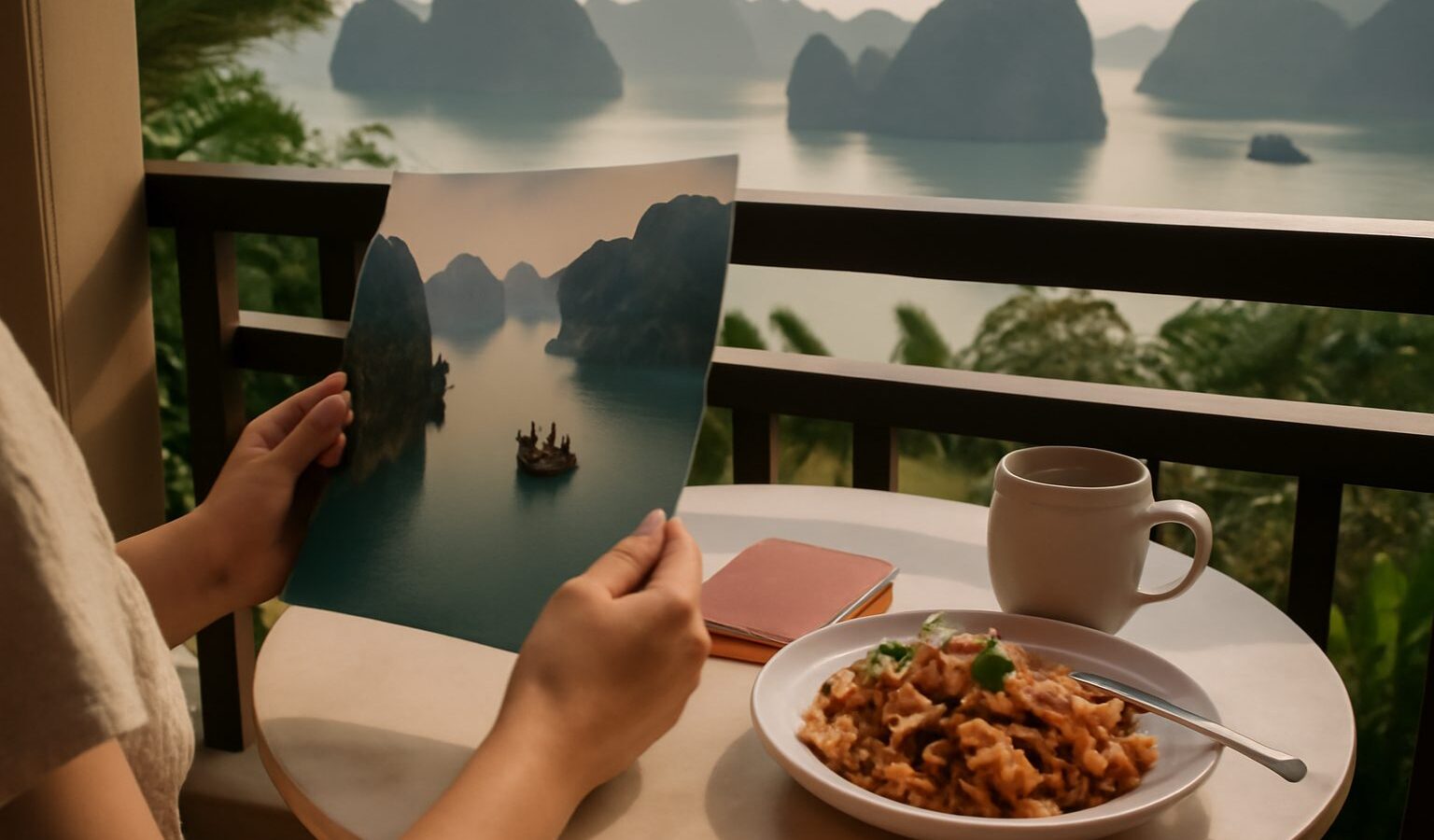
Few views in Southeast Asia are as instantly recognisable as Halong Bay, where thousands of limestone islands rise from emerald water in northern Vietnam. It is a UNESCO World Heritage site and, for many visitors, the highlight of a Vietnam trip. Planning Halong Bay from Singapore is refreshingly straightforward, since it pairs neatly with a few days in Hanoi and slots into a long weekend or a longer holiday. This guide covers how to get there, when to go, which cruise style suits you, and the practical details worth knowing before you sail.
Getting to Halong Bay From Singapore
Halong Bay has no airport of its own, so you fly to Hanoi first. Direct flights from Changi to Hanoi take roughly three to three and a half hours, which makes this one of the easier long weekend escapes from Singapore. From Hanoi it is a road transfer to the coast, and the modern expressway has cut the drive to around two and a half hours to the main cruise ports.
Most travellers book this transfer as part of a cruise package, which usually includes a coach or private car pickup from your Hanoi hotel. If you prefer to explore independently, buses and private cars run the route too. Two main gateways serve the area: the busier, more developed harbour near Halong City, and the quieter jetties that access neighbouring Lan Ha Bay from the Haiphong side. Confirm your departure port with your cruise operator, since pickup points differ. Check current transfer times and schedules when you book, as road works and demand can affect timing.
Best Time to Visit Halong Bay
Northern Vietnam has four distinct seasons, which is a real change of pace for Singaporeans used to year-round heat. The bay looks and feels quite different depending on when you go, so timing matters more here than for a tropical beach trip.
| Season | Months (approx) | Weather | Good for |
|---|---|---|---|
| Spring | March to April | Mild, some mist | Cooler cruising, fewer crowds |
| Summer | May to August | Hot, humid, occasional storms | Warm swimming, lower low-season rates |
| Autumn | September to November | Clear, dry, comfortable | Best all-round conditions |
| Winter | December to February | Cool, grey, misty | Atmospheric scenery, quieter bay |
Autumn is widely considered the sweet spot for clear skies and calm seas. Summer can bring dramatic storms that occasionally disrupt sailings, while winter trades warmth for a moody, mist-wrapped beauty. Whenever you go, remember the odd cancellation can happen if authorities close the bay for weather, so keep your itinerary flexible.
Choosing Your Cruise and Things to Do
The classic way to experience Halong Bay is an overnight cruise on a traditional-style junk boat. A one-night trip gives you a taste, while two nights lets you reach quieter waters and slow down. Day cruises exist for the time-pressed, but you miss the magic of sunrise and sunset over the karsts, which is really the point.
Onboard and on excursions, expect a mix of gentle activities. Kayaking or bamboo boating through lagoons and past floating fishing villages is a highlight, letting you glide close to the cliffs. Many cruises stop at a show cave, with Sung Sot among the most famous, and offer swimming from the boat or a small beach. Tai chi at sunrise, cooking demonstrations, and squid fishing at night are common add-ons.
For quieter, less crowded scenery, look at cruises that focus on Lan Ha Bay, the adjacent area that shares the same dramatic landscape with fewer boats. Whichever you choose, the star attraction is simply the view, so give yourself deck time to take it in.
Where to Stay
Because the experience is the cruise, your main accommodation decision is the boat itself. Options range from simple, budget-friendly vessels to plush cabins with private balconies and butler service, so match the standard to your comfort level. Couples often splurge on a balcony cabin, while families and friends can find roomy, good-value boats.
Many travellers also spend a night or two in Hanoi on either side of the cruise. The Old Quarter is the classic base, buzzing and walkable with endless food, while the French Quarter offers more polished hotels. If you would rather stay on land near the bay, resorts and hotels cluster around Halong City and Bai Chay, though the town itself is more functional than charming. Book cruises early for peak autumn dates and holiday periods.
Food and Halal Options
Cruise fares almost always include meals, and seafood takes centre stage, from fresh fish and prawns to squid and clams, often cooked simply and served with rice. Vietnamese staples such as spring rolls and pho appear too, and set menus mean you rarely go hungry.
Muslim travellers should flag halal needs when booking, as standard cruise menus are not certified and pork features in some Vietnamese cooking. Many operators can prepare seafood and vegetable meals without pork on request, so give advance notice and confirm in writing. In Hanoi, you will find a small number of halal-friendly and Muslim-owned eateries, particularly near the Old Quarter, which is worth researching before you travel. Vegetarians are generally well catered for, with tofu, vegetables, noodles, and rice dishes widely available, and Vietnam’s Buddhist tradition means meat-free food is understood.
Getting Around
Once you are on the cruise, getting around is handled for you, with tenders and small boats ferrying you to caves, beaches, and kayaking spots. There is little to arrange yourself beyond turning up on deck at the right time.
Before and after, in Hanoi, the Old Quarter is best explored on foot, with ride-hailing apps and metered taxis handy for longer trips. The airport transfer into the city takes around 45 minutes to an hour. Keep some small notes for tips and incidental buys at floating villages, and confirm what your cruise fare covers so there are no surprises.
Practical Tips for Singapore Travellers
Halong Bay is one of the more accessible bucket-list sights from Singapore, and pairing it with Hanoi makes for a rewarding four to five day trip.
- Visa and entry: Vietnam’s entry rules for Singapore passport holders can change, so check the latest requirements with the Vietnamese authorities and ICA before booking. Do not rely on outdated advice.
- Safety: Review the current MFA travel advisory for Vietnam. On the water, wear life vests during kayaking and follow crew instructions.
- Currency: The Vietnamese dong is used. Carry some cash for tips, drinks, and market buys, as small vendors may not take cards.
- Language: Vietnamese is the local language, and English is common in tourism, though a translation app helps in markets.
- Weather buffer: Because sailings can be affected by weather, avoid booking a cruise on the same day as your flight home.
- Health: For vaccinations or health precautions, see a doctor or travel clinic before departure. This is general information, not medical advice.
Come for the karsts, stay for the slow rhythm of life on the water, and you will understand why Halong Bay tops so many Vietnam wish lists.
Explore more
Halong Bay pairs perfectly with more of Vietnam. For a landlocked twin often called the bay on land, read our guide to Ninh Binh from Singapore. To cool off in the highlands, see Dalat from Singapore. And if you want another classic Southeast Asian heritage escape, our Luang Prabang from Singapore guide is a lovely next step.