
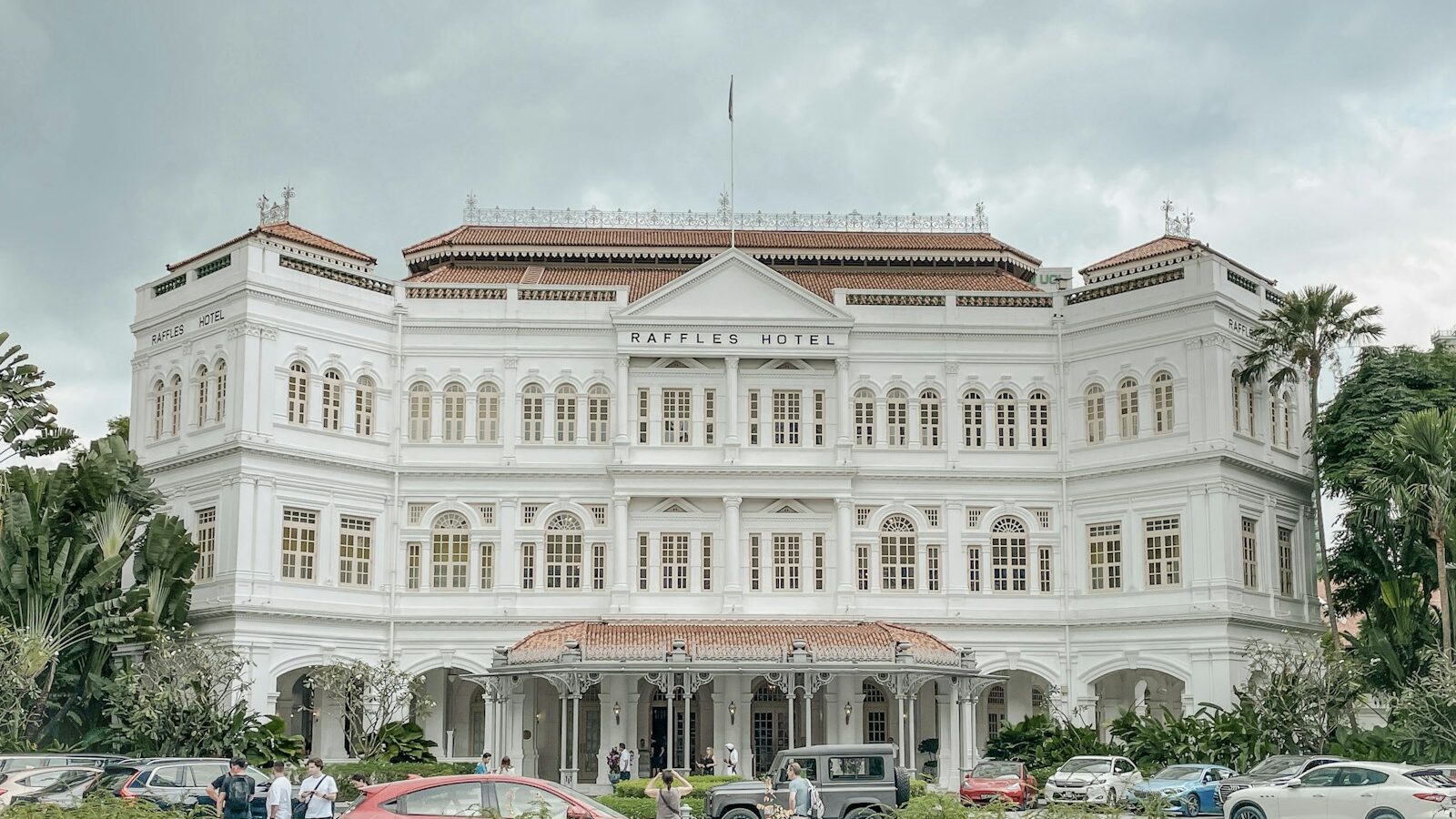
Hotel ballrooms and restaurant banquets are the default for many couples, and for good reason: they are predictable and packaged. But if you want photos with old shophouse tiles, a ceremony under tall rain trees or dinner beside a museum gallery, there are plenty of unique wedding venues Singapore offers beyond the ballroom. This guide looks at museums, conserved chapels, gardens and heritage houses, and the booking rules that come with them, which are quite different from a standard hotel package.
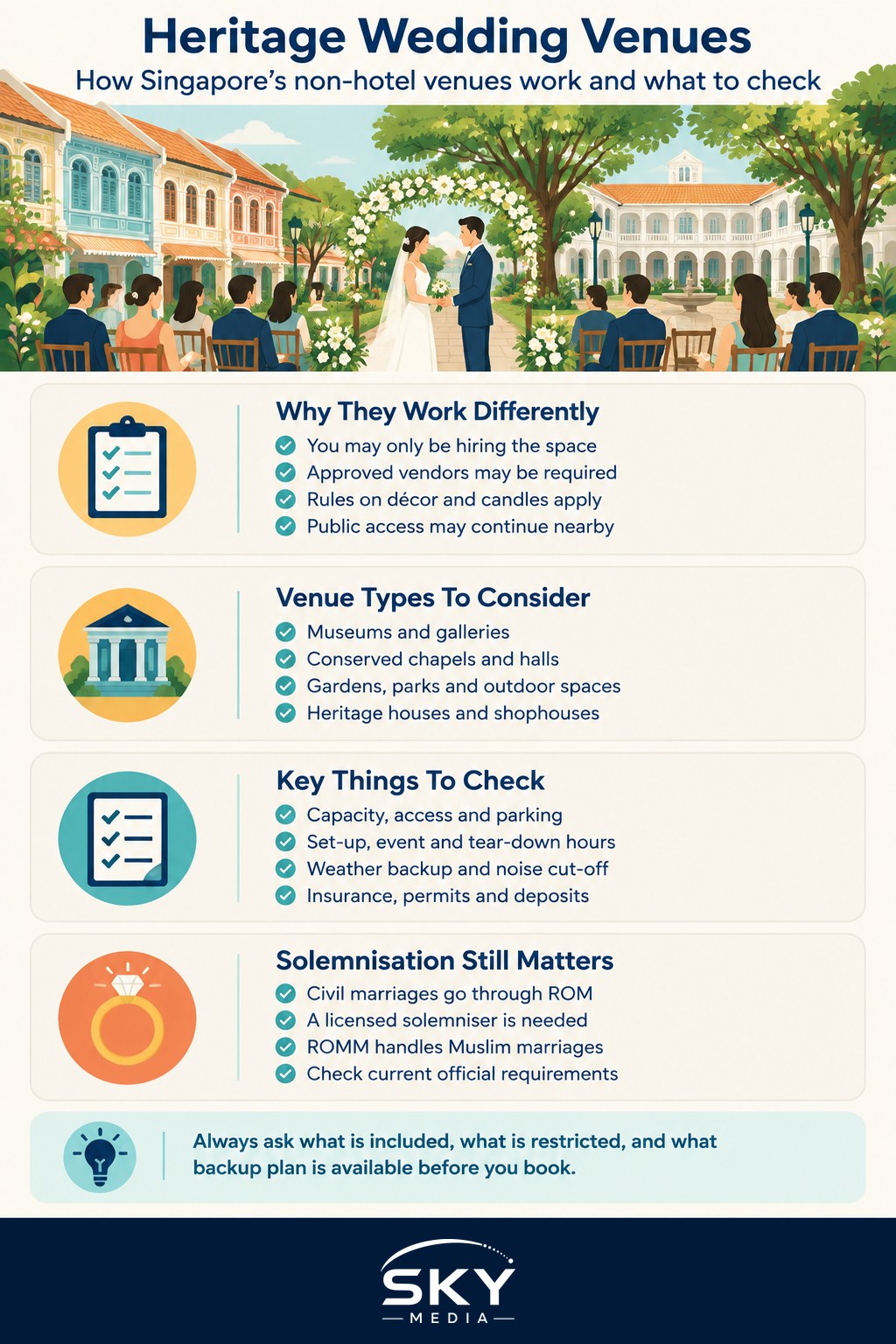
Why Heritage Venues Work Differently
A hotel sells you a complete wedding: room, food, tables, sound system and a banquet manager. A heritage or public venue usually sells you space, often with strict conditions because the building or grounds are protected or open to the public. That changes how you plan.
- You may need approved vendors. Many venues have a list of caterers, decorators or AV suppliers they allow, or require outside vendors to be vetted.
- Conservation rules apply. Expect limits on nails, tape, candles, confetti, smoke machines, heavy installations and rice throwing.
- Public access continues. Some gardens and museum spaces stay open to visitors, so your ceremony may have an audience of passers-by.
- Timings are tighter. Setup and teardown windows can be short, and noise cut-off times are common, especially near residential areas.
None of this makes them hard to book. It simply means asking more questions upfront. For a broader framework on comparing any venue, see Choosing a Wedding Venue in Singapore.
Types of Unconventional Venues and What to Expect
| Venue type | Best for | Typical considerations |
|---|---|---|
| Museums and galleries | Elegant cocktail receptions, intimate dinners, solemnisations in atriums or courtyards | Approved caterers, no open flames, guest numbers capped by fire safety, artwork protection rules |
| Conserved chapels and halls | Church-style or civil ceremonies with architectural character | Popular dates fill early, limited parking, restrictions on décor fixings |
| Gardens and parks | Outdoor solemnisations, garden tea receptions, photo shoots | Weather backup, heat, insects, permits for events or commercial photography |
| Heritage houses and bungalows | Small, personal weddings with a homely feel | Small capacity, neighbour noise limits, toilet and kitchen capacity |
| Waterfront, rooftop and island spots | Sunset ceremonies and relaxed parties | Wind, rain, ferry or transport logistics for guests |
| Converted industrial or creative spaces | Modern couples who want a blank canvas | You often bring everything: furniture, lighting, power and staff |
Museums and Galleries
Several of Singapore’s national museums and arts institutions rent out halls, courtyards and lawns for private events after hours. The appeal is obvious: grand architecture, an instant conversation starter and photos that look nothing like a ballroom.
What to check:
- Which spaces are actually available and when. Galleries with artwork are usually off limits for food and drink; courtyards, foyers and function rooms are more likely.
- Catering arrangements. Ask whether you must use an in-house or approved caterer, and whether halal catering is available if you need it.
- Capacity. Fire safety rules set firm maximums for seated dinners versus standing receptions.
- Insurance and deposits. Some venues ask for event insurance or a refundable damage deposit.
Contact the venue’s events or venue hire team directly. Rates and packages change, so ask for the current terms in writing.
Conserved Chapels and Heritage Halls
Former convents, mission chapels and colonial-era halls offer stained glass, high ceilings and old-world charm without needing a religious ceremony. Many now operate as event venues for civil solemnisations as well as church weddings. For one well-known example, read CHIJMES Chapel: From Catholic Convent to Heritage Venue.
Points to clarify:
- Whether the space is booked for the ceremony only or also allows a reception on site or nearby.
- Sound rules. Acoustics in old halls can be lovely for live strings but harsh for amplified speeches.
- Décor limits. Many conserved buildings ban anything fixed to walls, pillars or pews.
- Air-conditioning. Some older halls are fan-cooled or partially open, which matters at midday.
Gardens, Parks and Outdoor Spaces
A garden ceremony feels very Singapore: green, bright and relaxed. Options range from botanical gardens and park lawns to resort grounds and private estates.
Practical realities:
- Permits. Events, structures and commercial photography in public parks managed by NParks (the National Parks Board) may need permission. Check NParks guidance or the venue manager before booking vendors.
- Weather plan. Sudden afternoon storms are common. Always have a covered backup, whether a tent, a nearby pavilion or an indoor room on standby.
- Heat. Schedule the ceremony for early morning or late afternoon, provide water, fans and shade, and keep it short for elderly guests.
- Respect the space. Do not damage plants, trees or lawns, and follow park rules on music, decorations and litter.
Heritage Houses and Shophouses
Black-and-white bungalows, restored shophouses and old family homes converted into event spaces suit small weddings of family and close friends. They feel personal, and the setting does a lot of the decorating for you.
Ask about the guest limit, toilets, kitchen access for caterers, parking, wheelchair access and neighbourhood noise curfews. If the venue is in a residential area, end amplified music at a reasonable hour.
Solemnisation Rules Still Apply
Wherever you hold the ceremony, a civil marriage in Singapore is handled through the Registry of Marriages (ROM). Couples typically file a notice of marriage online, and the solemnisation can take place at the ROM building or at a venue of your choice with a licensed solemniser. Requirements such as witnesses, documents and notice periods are set by ROM, so check the current rules on the official ROM website well before your date. For Muslim marriages, the Registry of Muslim Marriages (ROMM) handles the process.
For more on holding the ceremony outside the ROM building, see Wedding Solemnisation Venues Outside ROM in Singapore.
Questions to Ask Before You Sign
Bring this checklist to every site visit:
- What exactly is included in the hire fee, and what must we bring ourselves?
- Is there a minimum spend, and are there approved vendor lists?
- What are the setup, event and teardown hours, and the noise cut-off?
- What is the wet weather plan, and is the backup space guaranteed?
- Which décor items are banned (candles, confetti, tape, fog, sparklers)?
- Is there parking, accessible entry and enough toilets for our guest count?
- What are the deposit, cancellation and postponement terms?
- Do we need event insurance, permits or any licences for music or alcohol?
Get answers in writing and keep a copy with your contract. Heritage venues reward couples who plan early: popular dates, especially auspicious ones, can be booked many months ahead.
Making It Work on the Day
Assign one trusted person, or a day-of coordinator, to liaise with the venue staff. Brief your photographer and vendors on the venue rules, share the loading bay and timing details, and walk the space together beforehand. With the logistics handled, the setting does the rest.
Explore more: Hotel vs Restaurant Wedding Banquet in Singapore