

If you are single in Singapore and ready to try online dating, the question usually comes down to three apps: Hinge, Bumble and Tinder. All three are widely used here, all three are free to download, and all three can lead to a great first date or a lot of dead-end chats. The difference is in how each one shapes conversation and who tends to use it. This head-to-head comparison of Hinge vs Bumble in Singapore, with Tinder in the mix, will help you choose the app that matches what you are actually looking for. For the wider field, see our guide to dating apps in Singapore, and once you have picked one, these tips on writing a dating profile that works and staying safe while dating online will help.
Features and pricing change often, so treat the details below as a general picture and check each app’s current version before paying for anything.
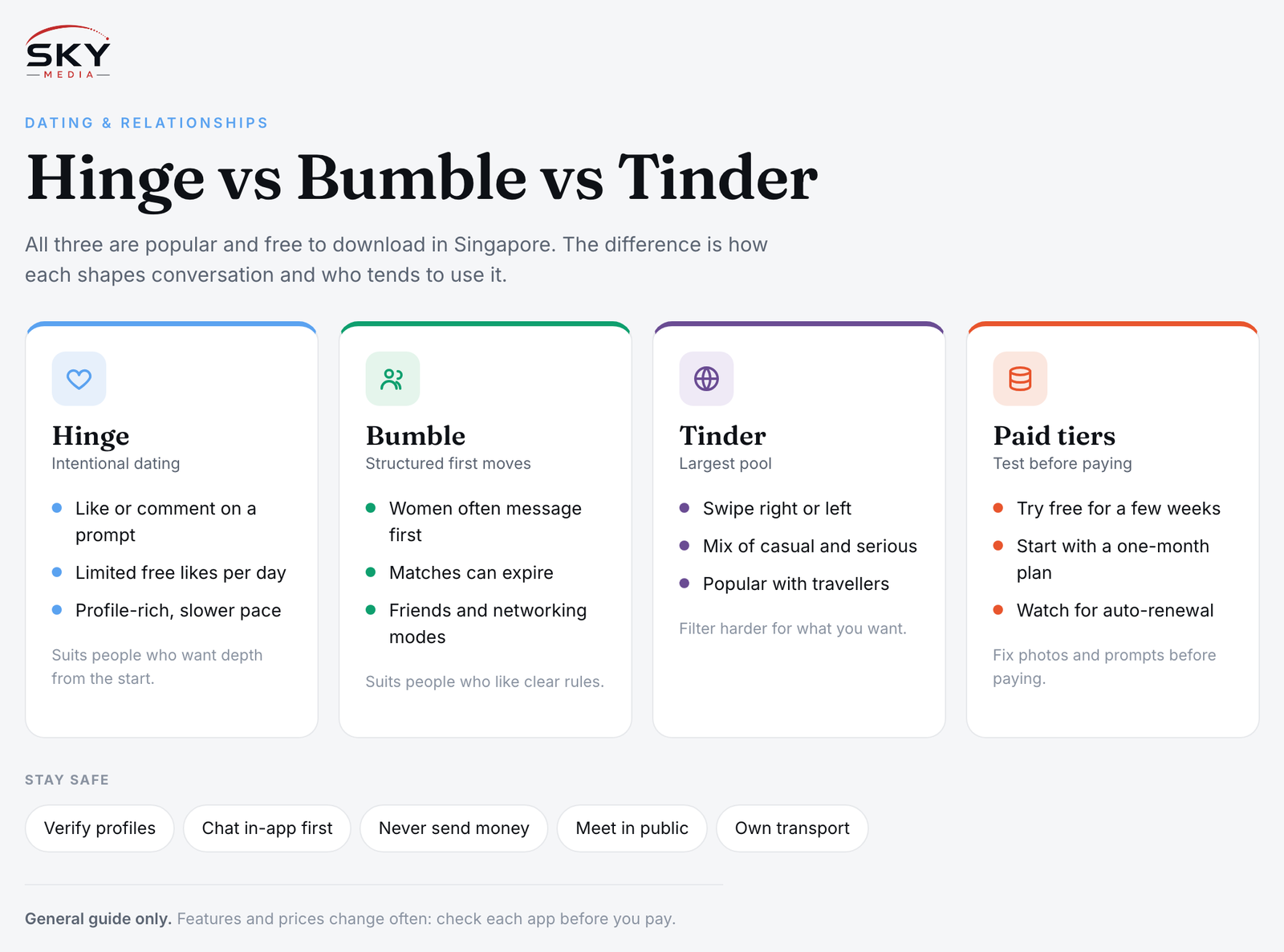
The Short Answer
- Choose Hinge if you want something more intentional and prefer to start conversations about a specific detail in someone’s profile.
- Choose Bumble if you want a bit more structure around who makes the first move, or you also want to use the app for friends or networking.
- Choose Tinder if you want the largest pool, quick swiping and flexibility, whether that is casual dating, something serious or meeting people while travelling.
Many people in Singapore run two apps at once for a few weeks and then keep the one that produces better conversations. That is a perfectly sensible approach.
How Each App Works
Hinge
Hinge profiles are built around photos and written prompts, such as a fun fact or what you are looking for. Instead of a simple swipe, you “like” or comment on a specific photo or prompt, which gives the other person an easy opening line. The app promotes itself as being designed for people who want to date seriously, and the profile format rewards effort. Free users get a limited number of likes per day, which nudges you to be selective.
What it feels like: slower, more deliberate, more conversation-led. Profiles tend to say more about the person, which makes first messages easier.
Bumble
Bumble became known for its rule that in matches between men and women, the woman sends the first message, with a time limit for the conversation to start. The app has since added options that loosen this, such as letting users set an opening question their match can answer, so check how it currently works. Bumble also offers separate modes for finding friends and professional contacts, depending on the market and version.
What it feels like: a little more structured. Many women find it less overwhelming, and matches expire if nobody acts, which keeps the inbox tidy.
Tinder
Tinder popularised the swipe right to like, swipe left to pass format. Profiles are photo-led with a short bio and optional interests and prompts. It has the broadest mix of users and intentions, from casual to serious, and is popular with travellers and newcomers because of its size.
What it feels like: fast and high-volume. You will see more profiles, but you will also need to filter harder for people who want what you want.
Side-by-Side Comparison
| Feature | Hinge | Bumble | Tinder |
|---|---|---|---|
| Main way to show interest | Like or comment on a specific photo or prompt | Swipe, with women often starting chats in opposite-sex matches | Swipe right or left |
| General reputation | Relationship-minded, profile-rich | Balanced, more structured first moves | Largest pool, mix of casual and serious |
| Conversation starters | Built in through prompts and comments | Opening questions and profile badges | Bio, interests and your own opener |
| Pace | Slower, limited free likes | Medium, matches can expire | Fast, high volume |
| Extra modes | Dating only | Dating plus friends and networking (varies by version) | Dating, with travel-friendly features on paid tiers |
| Best for | People who want depth from the start | People who like clear rules for first contact | People who want reach and flexibility |
Paid Tiers: Are They Worth It?
All three apps have subscription tiers and one-off paid boosts. Paid features commonly include seeing who has liked you, more daily likes, advanced filters and ways to be shown to more people. Prices differ by age, location and promotions, and they change often, so check in-app before subscribing.
A few practical tips:
- Use the free version for a few weeks first. If your profile is not getting matches on the free tier, paying for visibility rarely fixes the underlying problem. Improve your photos and prompts first.
- Avoid long commitments at the start. A one-month plan lets you test whether the extra features change anything.
- Watch for auto-renewal. Subscriptions bought through the App Store or Google Play renew automatically unless you cancel in your account settings.
- Set a dating budget. Between app fees, drinks and dinners, costs add up. Decide what you are comfortable spending each month.
Which App Suits the Singapore Dating Scene
Singapore is small, so the same faces can pop up across apps, and your colleague’s cousin may well be in your stack. A few local realities shape the choice:
- Intentions vary by age. Many users in their late twenties and thirties say they want something long-term, which suits Hinge. Younger users and newcomers often start on Tinder because of its reach.
- Expats, students and new arrivals tend to be well represented on Tinder and Bumble, which can help if you are new to the city and want to meet people from different backgrounds.
- Language. All three apps are mostly used in English here. You can mention languages you speak, such as Mandarin, Malay or Tamil, in your profile, which helps you find people with shared backgrounds.
- Distance settings matter less. Because the island is compact and public transport is good, a wider radius is usually fine, though cross-island dates can still take an hour each way.
- Busy schedules. Long working hours mean many matches go quiet. Apps that encourage a clear opening, like Hinge prompts or Bumble’s first-move system, can help conversations move to a real date sooner.
Staying Safe Whichever App You Choose
The basics apply on every platform:
- Use the verification features offered by the app, and favour matches who have verified profiles.
- Keep chat in the app until you are comfortable. Be cautious if someone pushes quickly to move to another messaging app.
- Never send money, investment tips or gift cards to someone you have not met. Romance and investment scams are a well-known problem in Singapore, and the Singapore Police Force and ScamShield regularly warn about them.
- Meet in public for the first few dates, such as a busy cafe, mall or hawker centre, and tell a friend where you are going.
- Arrange your own transport to and from the first date.
- Trust your instincts. If a profile or conversation feels off, unmatch and report it in the app.
Getting More From Whichever App You Pick
Once you have chosen, a few habits help on any of the three:
- Use recent, clear photos, including at least one where your face is easy to see and one that shows something you enjoy doing.
- Fill in prompts or bios with specifics, such as your favourite hawker stall dish or a hike you love, rather than general lines.
- Open with something specific to their profile, not just “hi”.
- Suggest meeting within a reasonable number of messages if the chat is going well, so momentum does not fade.
- Take breaks when swiping starts to feel like a chore.
In the end, the Hinge vs Bumble Singapore question, with Tinder as the wildcard, has no single right answer. Pick the app whose style matches how you like to meet people, give it a fair try, and focus on real conversations rather than match counts.
Frequently Asked Questions
How can I use a dating app without my colleagues or relatives seeing me? Singapore is small, so familiar faces can appear. Check each app’s privacy settings, such as hiding your profile from contacts or limiting who sees you, and think carefully about the photos and details you share. No setting is foolproof, so only post what you would be comfortable with someone you know seeing.
Are there dating apps for specific communities or interests? Yes, apps and groups exist for particular faiths, cultures, ages and interests, alongside the big three. Check reviews, how the app verifies users and whether it fits your values before you sign up. Treat unfamiliar apps cautiously, and never pay or share financial details early.
How can I spot a fake profile or bot on a dating app? Warning signs include very polished photos, vague bios, quick requests to move to another chat app, and conversations that turn to money or investments. Verified profiles are a good first filter. Report and unmatch suspicious accounts, and never send money to someone you have not met.
What should I do if someone harasses me on a dating app? Stop replying, take screenshots, then block and report the user in the app. If you feel threatened, are being blackmailed or are asked for money, make a police report. Tell a friend what is happening, and take a break from the app if you need one.
How do I politely end a conversation or turn down a second date? Be honest, brief and kind, such as thanking them and saying you do not feel a match. A clear message is better than ghosting, and you do not owe a long explanation. If the person pushes back or becomes rude, you can unmatch and block.
Further reading: Are Paid Dating App Subscriptions Worth It? Hinge+, Bumble Premium and Tinder Gold