
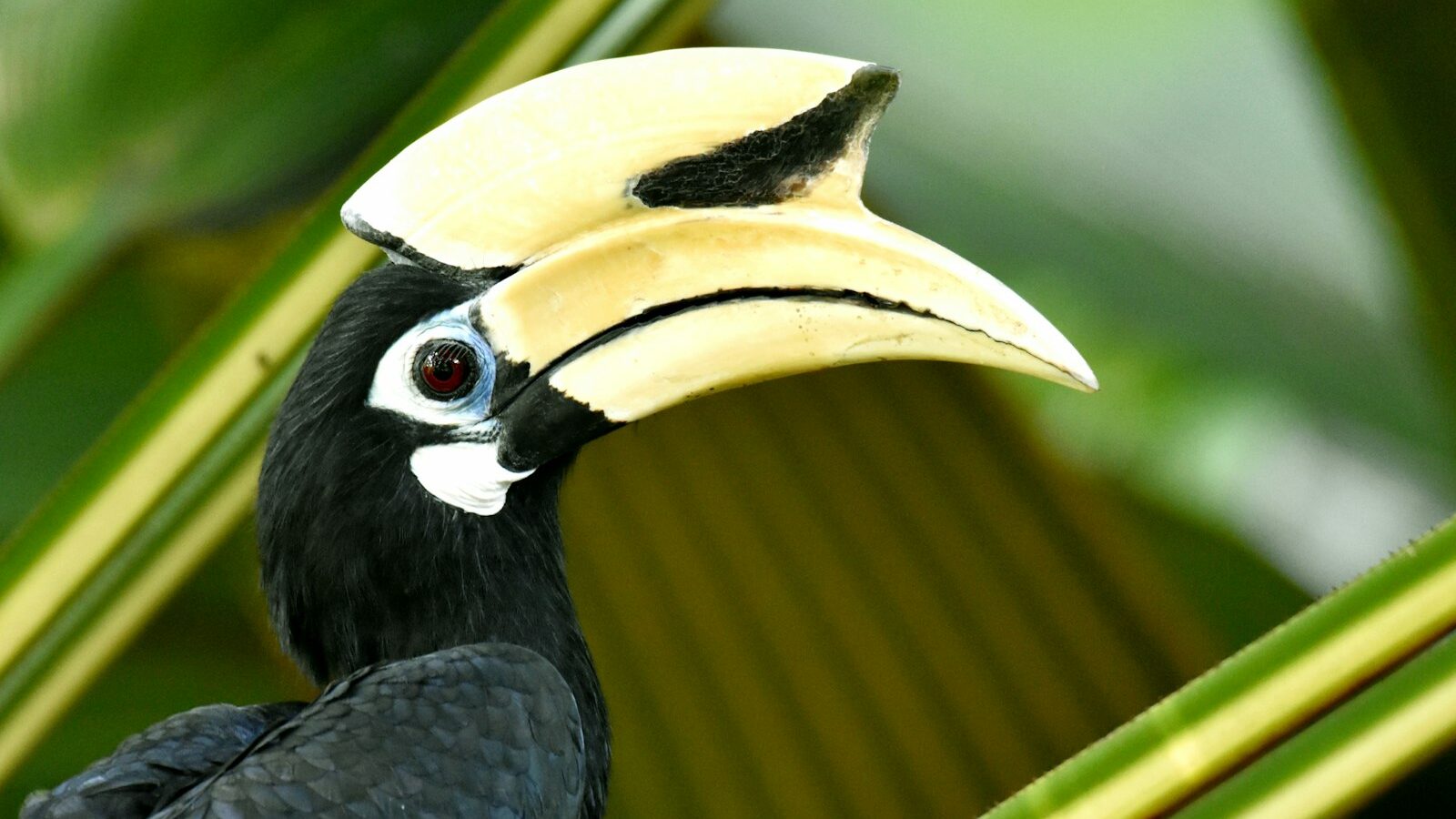
Few birds make people stop and stare like a hornbill. With its oversized curved bill, the bony casque on top and a loud, cackling call, it looks like something out of a rainforest documentary, yet it now turns up in parks, coastal estates and even the odd HDB corridor. Spotting hornbills in Singapore has become one of the most rewarding wildlife outings on the island, and it does not need specialist gear or a long trek.
This guide focuses on one bird and one goal: giving you the best chance of seeing hornbills, both in the wild and up close, while watching them in a way that keeps them wild.

Meet the Oriental Pied Hornbill
The hornbill you are most likely to see is the oriental pied hornbill. It is a medium-sized hornbill with a black back and wings, a white belly, white edges on the wings and tail that flash when it flies, and a pale yellow bill topped by a casque. Males tend to have a larger, cleaner casque, while females often show darker markings on the bill.
For many years the species had disappeared from mainland Singapore. A small population held on in the offshore islands, and a long-running conservation effort, often referred to as the Singapore Hornbill Project, worked with researchers and the National Parks Board (NParks) on nest boxes and monitoring. Over time the birds spread from the islands to the eastern coast and then across more of the main island. Today they are a genuine conservation success story, which is part of what makes a sighting feel special.
A few traits help you find them:
- They are noisy. The call is a loud, harsh cackle that carries a long way. Often you hear hornbills before you see them.
- They follow fruit. Fig trees in fruit attract them, along with other birds, so a busy fruiting tree is worth watching.
- They are opportunistic. Besides fruit, they take insects, small lizards and sometimes eggs or chicks of other birds.
- They nest in cavities. The female seals herself into a tree hollow during nesting and the male brings food through a narrow slit, so nesting trees are especially sensitive.
Where to See Hornbills in the Wild
Hornbills move around, so no location comes with a guarantee. These are the types of places where sightings are regularly reported.
Pulau Ubin. The island is the historic stronghold, and its mix of secondary forest, old kampong orchards and quiet tracks still makes it the classic place to look. Cycle or walk slowly along the main tracks and listen for the cackle around fruiting trees near the village and the old plantation areas.
Eastern coastal parks. Changi, Pasir Ris and the parks around Punggol and the northeastern coast sit close to the island populations. Mature trees along park connectors and the edges of mangroves are good places to scan, especially early in the day.
Coney Island (Pulau Serangoon). This rustic park in the northeast has casuarina woodland and a wilder feel than most city parks. Hornbills are among the birds that visitors report here.
Residential estates in the east and northeast. Some of the most surprising sightings happen in housing estates, where hornbills visit tall trees, rooftop ledges and even windowsills. If you live in these areas, keep an eye on large trees near your block.
Larger green spaces in central Singapore. As the population has spread, hornbills have been reported in gardens and nature parks further west and in the centre. Sightings here are less predictable, so treat them as a bonus rather than the main plan.
Where to See Hornbills Up Close
If you want a guaranteed look, or you are visiting with young children, a wildlife park is the reliable option. Bird Paradise, part of the Mandai Wildlife Reserve, keeps several hornbill species, including large species from the wider region that you will not see wild in Singapore. It is a good way to learn the differences between species before you head out to look for wild birds. Check the current exhibits, ticketing and opening details on the Mandai website, as these can change.
Comparing Your Hornbill Spotting Options
| Location type | What to expect | Best for | Things to note |
|---|---|---|---|
| Pulau Ubin | Wild birds in a rustic island setting | A half or full day outing with a bike | Bumboat crossing, heat, few shops away from the village |
| Eastern coastal parks | Regular wild sightings near mature trees | Easy weekend walks and families | Busy on weekends, so go early |
| Coney Island | Wild birds in quiet woodland | Nature lovers who like rustic parks | Limited shade and facilities, bring water |
| Residential estates | Chance encounters near tall trees | Residents keeping a casual lookout | Do not feed or approach birds near homes |
| Bird Paradise | Several captive species, guaranteed views | First timers and young children | Paid entry, check the latest exhibits |
When to Go and What to Bring
Time of day. Early morning is usually the most productive time, as birds are active and feeding before the heat builds. Late afternoon can also be good. Midday tends to be quieter for birds and harder on people.
Weather. Singapore weather changes fast. Bring a light rain layer and check the forecast before you head to an island or exposed coastal park.
What to pack:
- Water, sun protection and insect repellent
- Binoculars if you have them, even a basic pair helps a lot
- A camera with some zoom, or a phone with a clip-on lens
- Comfortable shoes for walking or cycling
- A small bag for your rubbish, since bins can be sparse in wilder areas
If photography is part of the appeal, it helps to plan around light and backdrop. Our guide to the best places to photograph in Singapore has tips on timing and composition that apply to wildlife shots too.
How to Watch Hornbills Responsibly
Hornbills have done well partly because people left them alone. Keep it that way:
- Never feed hornbills. Feeding changes their behaviour, can make them bold around people and harms their health. NParks advises against feeding wildlife, and feeding wild animals is an offence under Singapore law. Check NParks for the current rules.
- Keep your distance. Use binoculars or a zoom lens rather than walking closer. If a bird stops feeding, calls in alarm or flies off, you are too close.
- Leave nests alone. If you notice a sealed tree cavity or a male making repeated visits to one spot, watch briefly from far away and move on. Do not share exact nest locations publicly.
- No flash, no playback. Avoid flash photography and do not play recorded calls to lure birds in.
- Stay on paths. Keep to marked trails and park connectors, and respect any closed areas.
- Report problems. If you find an injured hornbill or one trapped indoors, contact NParks or a wildlife rescue group rather than handling it yourself.
If a hornbill lands on your balcony or window ledge, stay calm, keep pets and children back, close windows if you do not want it inside, and let it leave on its own.
Pairing a Hornbill Outing With Other Wildlife
A hornbill outing fits nicely with other nature plans. On Pulau Ubin or the eastern coast you may also see kingfishers, herons, monitor lizards and mangrove life. If you enjoy targeted wildlife trips like this one, our guide to the best places to see turtles in Singapore uses a similar approach for another species worth seeking out.
Start with one location, go early, listen for that unmistakable cackle and give yourself time. Most people who keep looking do eventually get their moment with a hornbill.
Frequently Asked Questions
Is it illegal to feed hornbills in Singapore? Yes, feeding wild animals is an offence under Singapore law, and NParks advises against it. Feeding changes hornbill behaviour, can make them bold around people and harms their health. Check NParks for the current rules and penalties.
What should I do if a hornbill lands on my balcony? Stay calm, keep pets and children back and do not try to touch or feed it. Close windows if you do not want it inside and let it leave on its own. If it is injured or trapped indoors, contact NParks or a wildlife rescue group.
How can I tell a male hornbill from a female? Males usually have a larger, cleaner casque on the bill, while females often show darker markings on the bill. The difference can be subtle, so binoculars help. Watching a pair together makes the contrast easier to see.
Are hornbills dangerous to people or pets? They are wild birds that generally keep their distance, but a strong bill means they should not be provoked or cornered. Keep small pets away, avoid approaching nests and do not feed them. If a bird seems aggressive, back away quietly.
Is the hornbill outing suitable for young children? Yes, with some planning. Bird Paradise offers guaranteed views of captive hornbills in a more comfortable setting, while wild sightings suit patient families. Bring water and sun protection, go early, and teach children to watch quietly from a distance.
Further reading: Best Places to See Otters in Singapore Responsibly · Best Places to Watch Ships in Singapore · Koels Calling at Dawn: Why the Bird Wakes You Up in Singapore