

Moving house is exciting and exhausting in equal measure, and it is almost always more expensive than the number people first picture. Most of us think of the mover’s fee and stop there, forgetting the dozen smaller costs that arrive alongside it. Budgeting for moving house in Singapore means seeing the whole picture: the move itself, the setup of the new place, the little essentials that vanish from your wallet in the first week, and the buffer for surprises. Plan for all of it, and the move feels like a fresh start rather than a financial shock.
The trick is to build your budget in layers, because a house move is really several projects happening at once. When you name each layer in advance, nothing catches you off guard on moving day.
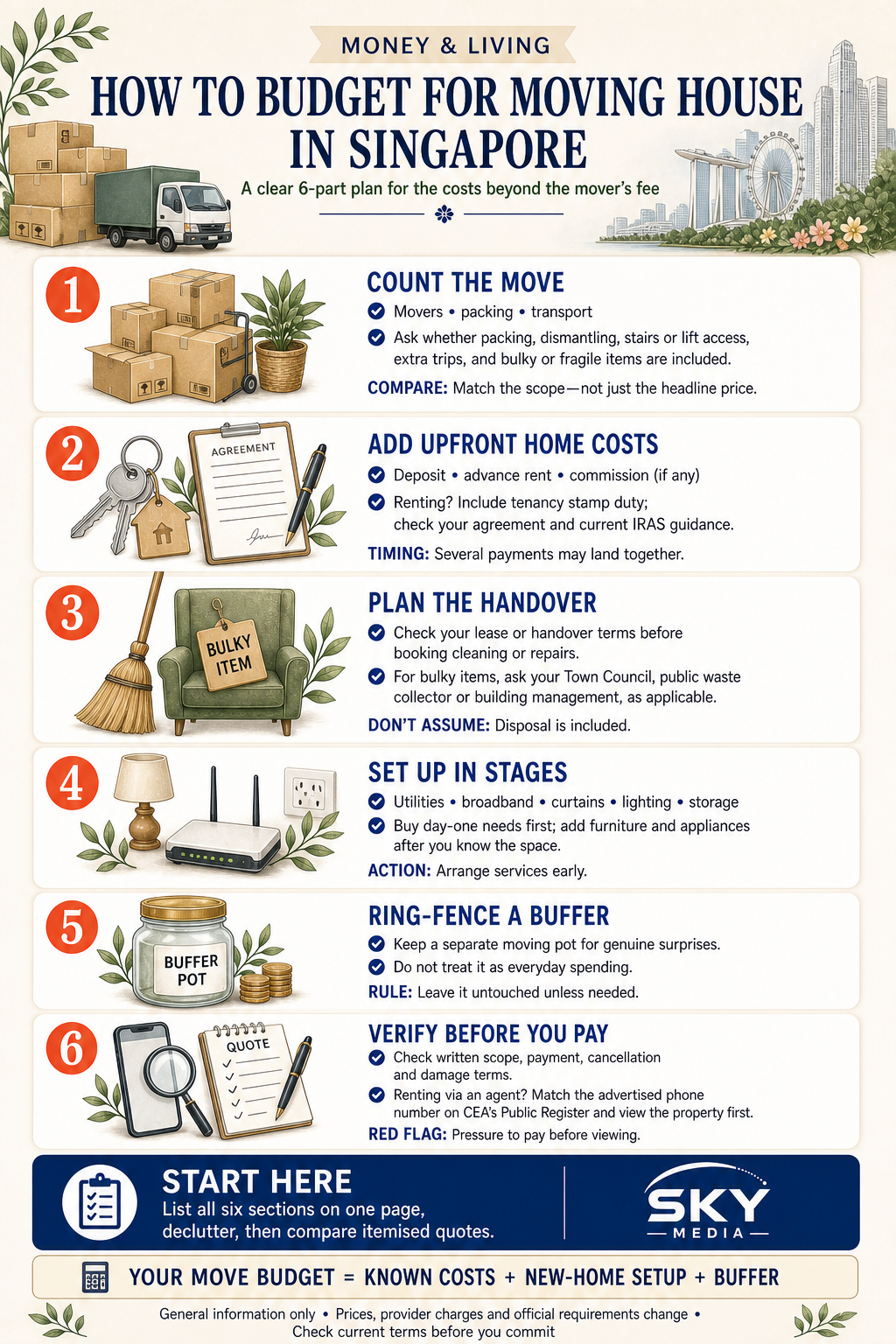
Look Beyond the Mover’s Fee
The mover is the obvious cost, but it is often a smaller share of the total than people expect. Around it sit deposits and upfront payments for the new home, cleaning of both the old and new places, any minor repairs or touch-ups, and the connection or transfer of utilities and internet. Then come the setup buys: curtains and blinds, lighting, storage, and the everyday household items that turn an empty unit into a home. Each is modest on its own, but together they form a second budget as real as the moving fee itself.
Seeing these layers clearly is the whole game. Here is a way to lay them out without inventing any figures.
| Cost layer | What it covers | Easy to forget because |
|---|---|---|
| The move itself | Movers, packing materials, transport | It feels like the only cost |
| Upfront home costs | Deposits, agent fees, first payments | They land all at once, early |
| Cleaning and fixes | End-of-tenancy clean, minor repairs | You focus on the new place |
| New essentials | Curtains, lighting, storage, appliances | Small buys add up fast |
| Setup and admin | Utilities, internet, address changes | They slip through the cracks |
Once the layers are on one page, you can decide which to spend on and which to keep simple, and you will not be blindsided by a cost you never counted.
Plan the Move to Spend Less
A little planning trims a surprising amount off a move. Movers often charge more at peak times, so if your dates are flexible, avoid the busiest weekends and the end of the month when demand and prices tend to rise. Get more than one quote and compare what each actually includes, since the cheapest headline figure sometimes leaves out packing or stairs.
You can also cut costs with your own effort:
- Declutter before you pack, so you move less and may sell or give away what you no longer need.
- Collect free boxes from supermarkets and shops instead of buying new packing materials.
- Do your own packing where you can, leaving only the heavy or fragile items to the professionals.
- Book utilities and internet transfers early to avoid rushed setup fees and gaps in service.
Decluttering deserves special mention because it saves money twice. You pay to move less, and selling unwanted items through online marketplaces can put a little cash back toward your setup costs. A move is one of the rare natural moments to reset what you own, so use it.
Budget the New Home Setup Realistically
The setup phase is where budgets quietly blow out. An empty home reveals every missing thing at once, and the temptation is to buy it all immediately and buy it new. Resist that. Prioritise what you genuinely need from day one, such as a working kitchen, a place to sleep, and window coverings for privacy, and let the rest come gradually as you live in the space and learn what it needs.
Spreading the setup over the first months has real benefits. You can wait for seasonal sales and ordinary promotions rather than paying full price in a panic. You can accept hand-me-downs and borrow from friends who are upgrading. You can also make better choices, because living in a home for a few weeks tells you far more about what furniture and storage actually fit than a rushed first-day shopping spree ever could. Secondhand and marketplace finds furnish a home beautifully for a fraction of the cost, and the patient approach almost always ends up cheaper and better.
Keep a Buffer and Protect Your Guard
Every move has surprises, so build a buffer into your budget from the start. A comfortable cushion set aside for the unexpected, from a repair the previous occupant missed to an essential you forgot, keeps a small hiccup from becoming a stressful one. Set this aside before the move, in a separate pot, and treat it as untouchable until a genuine surprise appears.
Two more guards are worth naming. First, front-loaded costs like deposits and the first round of setup land close together, so make sure your cash flow can handle that cluster rather than assuming it spreads out. Second, moving season is a target for scams and dodgy listings, especially where deposits and rentals are involved. Never rush a payment under pressure, verify who you are dealing with, and if something feels off, check current official advisories through ScamShield or the Police rather than trusting a link or message.
Where to start this week: list your cost layers on one page, get a couple of mover quotes for off-peak dates, and open a separate buffer pot for surprises. Begin decluttering now, because everything you let go is something you will not pay to move. This article is general information rather than financial advice, and MoneySense offers further general guidance if a decision feels large. With the layers named and a buffer ready, your move can feel like the fresh start it is meant to be.
Explore more
A move often means a new household setup, so pair this with splitting shared costs with housemates if you are moving in with others. For couples and families settling in, managing money as a family keeps the new home’s budget steady, and if a baby is part of the next chapter, see budgeting for a new baby.