
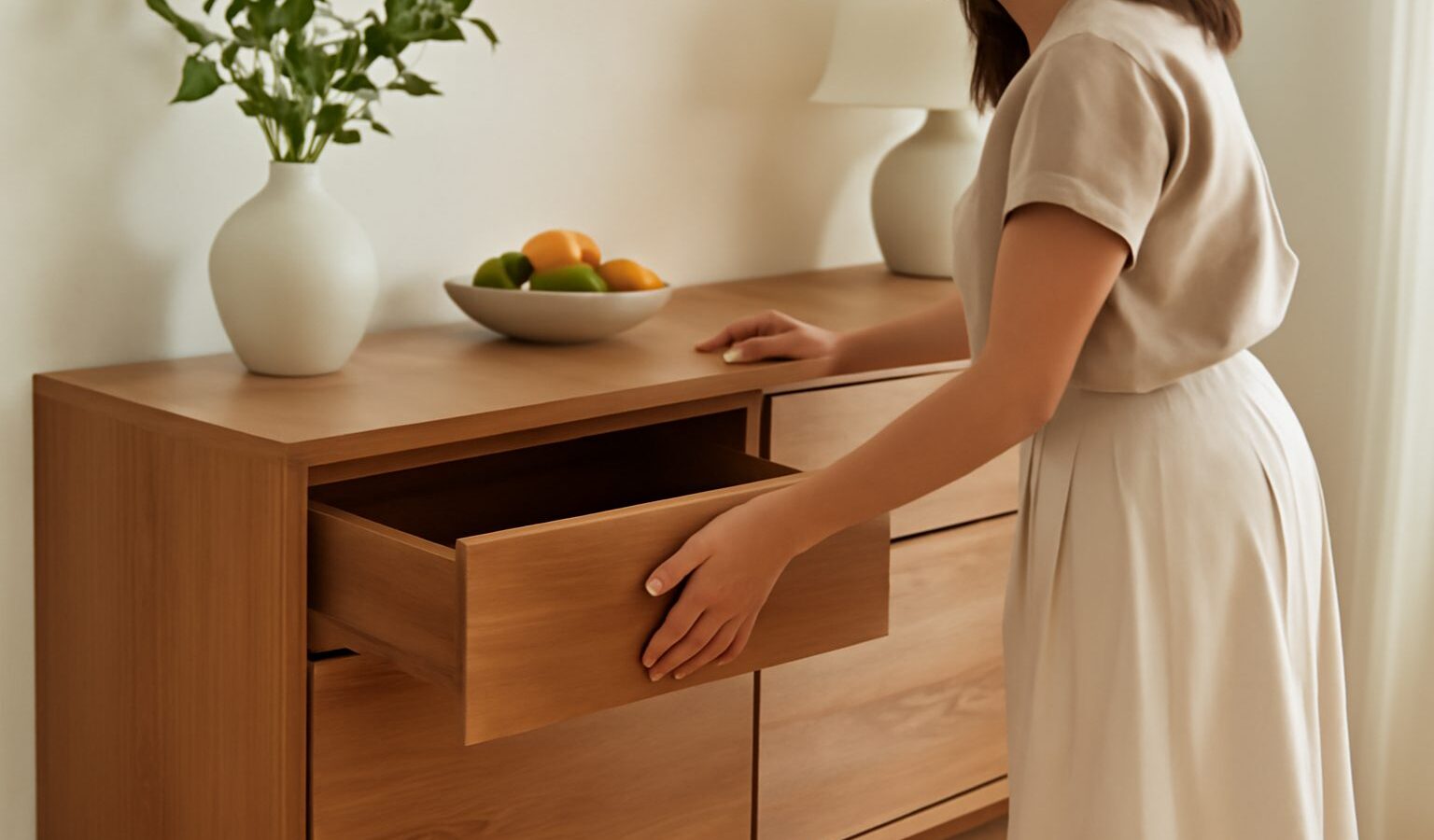
A sideboard, sometimes called a buffet, is one of the hardest working pieces of furniture in a home. It hides clutter, gives you a surface to serve or display on, and anchors a dining or living area without dominating it. For a Singapore home where storage is always in short supply, the right sideboard singapore families choose can absorb everything from spare crockery to charging cables and paperwork. The trick is matching the piece to your space, your climate and the way you actually live.
This guide covers how to size a sideboard, which materials cope with our humidity, and how to make one work in a compact flat.
Sizing, placement and function
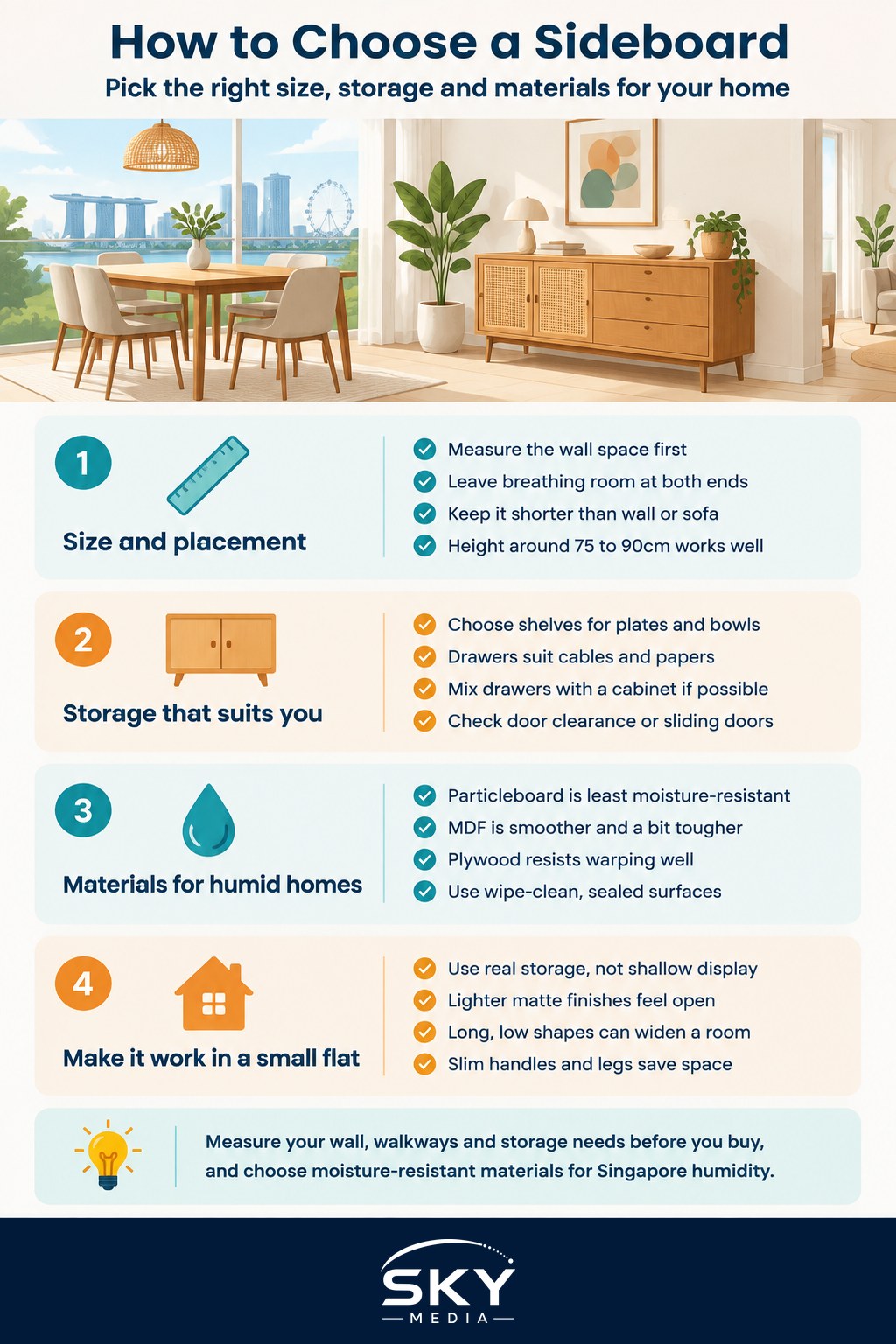
Begin with where the piece will go. A sideboard is usually placed against a wall in the dining area, behind a sofa, or along a hallway, so measure the available run of wall and leave breathing room at each end. As a rough guide, keep the sideboard shorter than the wall or the sofa it sits behind, so it looks balanced rather than crammed in. Height matters too. Most sideboards sit around 75 to 90cm tall, which is comfortable for serving and for displaying items on top without the surface feeling out of reach.
Depth is the measurement people forget. A deeper sideboard stores more but eats into walkways, and in a narrow HDB dining area even a few extra centimetres can make the space feel tight. Measure the walking clearance you need to pull out dining chairs or pass behind seated guests, then choose a depth that leaves that path clear.
Next, think about what will actually live inside. If you want to store dinner plates and serving bowls, you need adjustable shelves and enough internal height for stacks. If you are hiding documents, chargers and everyday clutter, drawers are more useful than open shelving because they keep small items contained and dust-free. A mix of drawers on one side and a cabinet on the other suits most homes. Doors that swing open need clearance in front, while sliding doors save that space in a tight room, a trade-off worth weighing before you buy.
Do not overlook the top surface. A sideboard doubles as a serving counter during gatherings and as a display shelf the rest of the time, so a durable, wipe-clean top earns its keep. If you plan to place a lamp, a diffuser or anything electrical on it, think about where the nearest socket sits so cables can be routed neatly through the back.
Materials and humidity care
Singapore humidity is unforgiving to furniture, and a sideboard often sits near the kitchen or dining area where spills, steam and heat add to the strain. The material you pick decides how well it ages.
Engineered wood dominates the market. Particleboard is the most affordable but the least moisture-resistant, so look for units with well-sealed laminate edges, since exposed board swells the moment water reaches it. MDF gives a smoother, paintable finish and handles moisture a little better when properly sealed. Plywood is stronger and more resistant to warping, making it a solid mid-range choice. Solid wood is beautiful and long lasting but reacts to humidity by expanding and contracting, and it needs regular care, which our guide to caring for wood furniture in a humid climate explains fully.
Whatever the core, prioritise a laminate or melamine surface that wipes down easily and shrugs off the occasional splash. Check the back panel and interior, because these hidden surfaces are where damp and mould tend to start in a closed cabinet. Leave a small gap between the sideboard and the wall so air can circulate, rather than trapping moisture against a cool surface. If the piece stores crockery or linen you rarely touch, drop in a couple of moisture absorber packs and open the doors occasionally to let it air. When damp is a persistent issue in your home, our article on preventing mould and mildew at home is worth a read.
Metal legs and frames add durability and lift the cabinet off the floor, which helps during a mopping session and keeps the base away from any water that pools on tiles. If you go for metal accents, a powder-coated or stainless finish resists the rust that our humid air can encourage over time.
Fitting a sideboard into a small home
In a compact flat, a sideboard needs to pull double duty. Look for one that offers real internal storage rather than shallow decorative shelving, and choose a design where the top can serve as a workspace, a coffee station or a display shelf depending on the day. Pieces that combine functions are especially valuable in small homes, an idea we cover in our guide to space-saving and multifunctional furniture.
Finish and colour shape how the room feels. A lighter, matte surface keeps a small dining area feeling open, while a low, long sideboard can make a room read as wider than it is. Keep handles slim so the piece does not catch as you move around it in a tight walkway, and consider legs over a solid plinth base, since a little visible floor underneath makes the furniture feel lighter.
Choose a sideboard by weighing size, storage layout, material and humidity resistance together rather than buying on looks alone. Measure your wall and your walkways, pick a moisture-resistant build, and plan the interior around what you genuinely need to store. Do that and your sideboard will quietly organise your home for many years.