
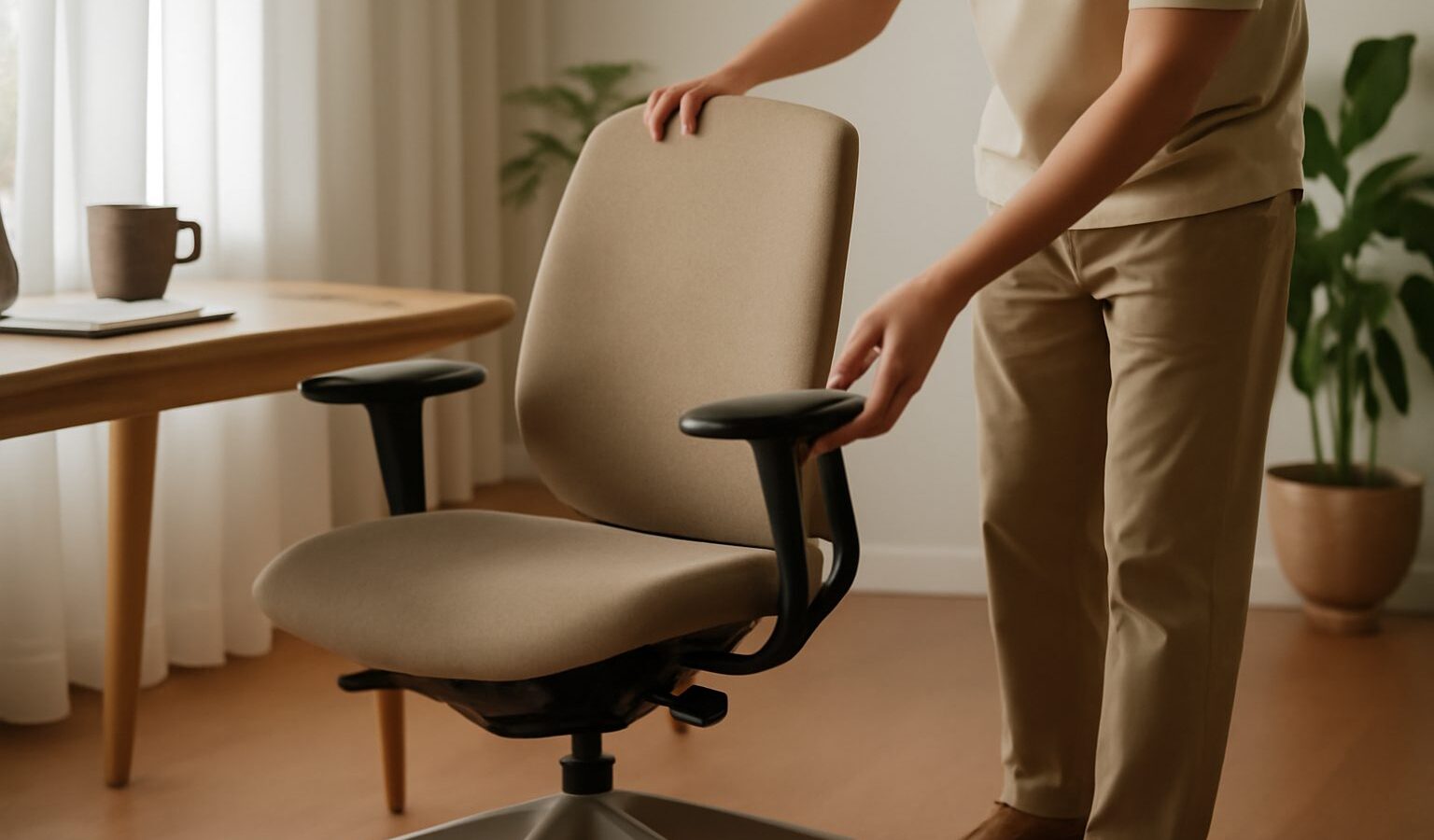
Finding the right office chair singapore desk workers can sit in all day is really a question of ergonomics, because the chair either supports your body or slowly wears it down. With so many of us working from home, a spare dining chair no longer cuts it for eight-hour days. A well-chosen chair supports your lower back, keeps your posture neutral and adjusts to your body rather than forcing your body to adjust to it. This brand-neutral guide covers the ergonomic features that matter, how to size a chair to you, materials that suit our humid climate, and how to judge value, plus a reminder that no chair replaces taking regular breaks.
Ergonomics and Support First
The point of a good chair is to hold you in a neutral posture, so start with support rather than looks.
Lumbar support is the priority. Your lower spine curves inward, and a chair should fill that gap so you are not slumping. Adjustable lumbar support, where you can move the pad up, down, in or out, beats a fixed bulge that may or may not land in the right spot for your back. Seat height should let your feet rest flat on the floor with your thighs roughly parallel to the ground and knees at about a right angle. Seat depth matters too: aim for a two to three finger gap between the front edge of the seat and the back of your knees, so the seat does not dig in.
Armrests ease the load on your shoulders and neck, and adjustable ones that move up, down and ideally inwards let your elbows rest at around 90 degrees while your shoulders stay relaxed. A recline or tilt function with a lockable range encourages you to shift position through the day, which is healthier than sitting rigidly upright for hours. A headrest is optional but useful if you recline or take calls, supporting your neck when you lean back.
A useful way to think about it is that the chair should adjust to you, not the reverse. Cheaper chairs often fix one or two of these features in a compromise position that suits an average build, which is why they feel fine for ten minutes and uncomfortable after an hour. The more of these adjustments you can make independently, the more likely you are to find a genuinely neutral posture and hold it without strain through a long day.
Sizing the Chair to You
A chair that fits someone else is not ergonomic for you, so match the key measurements to your body.
| Feature | What to look for | Why it matters |
|---|---|---|
| Seat height | Adjustable, feet flat on floor | Keeps knees and hips at neutral angles |
| Seat depth | Gap behind the knees | Prevents pressure on the legs |
| Lumbar support | Height and depth adjustable | Fills the curve of your lower back |
| Armrests | Adjustable height and width | Relaxes shoulders and supports elbows |
| Backrest | Follows the spine, reclines | Distributes weight, eases the lower back |
Taller users should check the maximum seat height and backrest height, while shorter users want a low minimum seat height and a footrest if their feet dangle. If several people share the chair at home, prioritise wide adjustment ranges.
Materials and Our Humid Climate
Comfort in a warm, humid room depends heavily on breathability. A mesh backrest lets air pass through, so your back stays cooler and drier during long sessions, which is a real advantage without constant air-conditioning. Fabric seats are comfortable and grippy but can trap heat and absorb sweat, so they need occasional vacuuming and airing to avoid a musty smell. Leather and faux leather look smart and wipe clean, but they can feel hot and sticky in our climate and, in the case of cheaper faux leather, may peel and flake after a couple of years of humidity. For the base and frame, look for a sturdy metal or nylon star base with smooth-rolling castors suited to your floor, and check that any metal parts have a protective finish so they do not corrode.
Cleaning also plays into material choice in our climate. Mesh and wipeable surfaces dry quickly and rarely hold smells, while padded fabric absorbs sweat over long working days and needs airing to stay fresh. If the room has little cross-ventilation, a breathable seat and back make a bigger difference to comfort than any single luxury feature, since staying cool keeps you focused and stops the seat feeling clammy by mid-afternoon.
Comfort Habits and Taking Breaks
Even the best chair is not a licence to sit still all day. Ergonomics experts widely suggest moving regularly, so stand up, stretch or walk for a short spell roughly every half hour to an hour, and change your seated position through the day. A common reminder is the 20-20-20 idea for your eyes: every 20 minutes, look at something around 20 feet away for about 20 seconds to rest them. Set your desk and screen so the top of the monitor is near eye level and your keyboard lets your elbows stay relaxed. The chair does a lot, but your habits and a few short breaks do the rest.
Judging Value
Judge an office chair by its adjustability and build, not the price tag or the number of features listed. A cheaper chair with genuinely adjustable seat height, lumbar support and armrests can serve you better than a pricier one that only reclines. Sit in it if you can, test every lever, and feel whether the mechanism moves smoothly and locks firmly. Check the weight rating, the stability of the base, and whether the castors suit tile or timber flooring. Ask about a warranty on the gas lift and mechanism, since these are the parts that tend to fail first. A chair that fits your body and keeps you comfortable through a full working day is the best value of all, especially paired with good habits and regular breaks.
Explore more
Home Office Ergonomics and Desk Setup
How to Choose a Sofa
Space-Saving and Multifunctional Furniture
Best Furniture Stores