

Project work in Singapore shows up everywhere, from primary school group tasks to the graded Project Work module in junior college. It asks you to do more than memorise facts. You have to research a real question, work with a team, manage your time, and present what you found in a way that others can follow. That mix of skills can feel messy at first, but doing well in project work is very learnable once you understand what markers are actually looking for.
The good news is that a strong project rarely comes from one burst of last-minute effort. It comes from steady habits: a clear plan, honest teamwork, careful research, and a rehearsed presentation. Below is how to build each of those without turning your group into a source of stress.
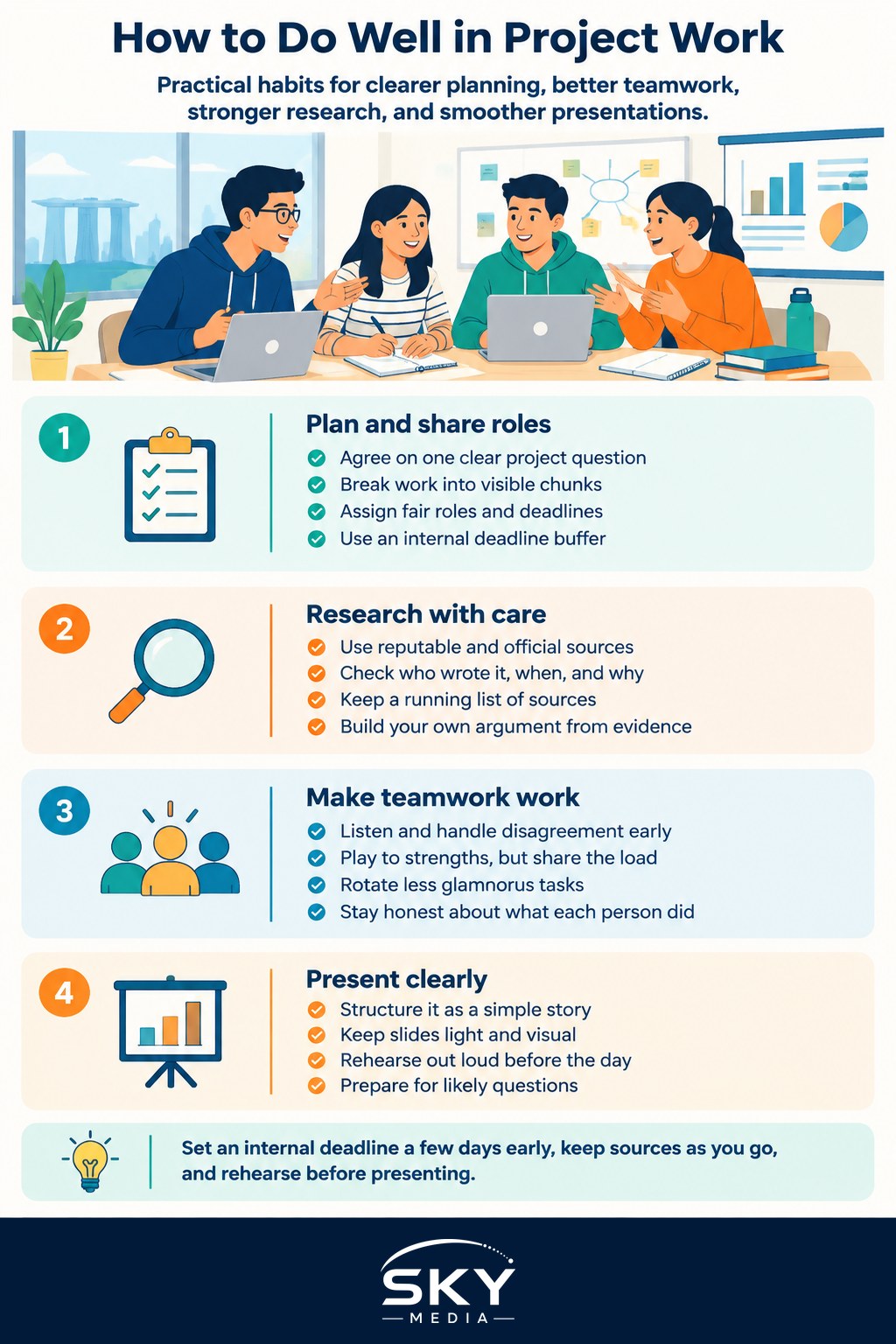
Start With a Clear Plan and Fair Roles
Before anyone opens a slide deck, get the whole group to agree on what you are trying to answer. Rephrase the task in your own words and write a single sentence that captures your focus. If your teammates cannot repeat that sentence back, the project is not yet clear enough. A sharp question saves you from collecting piles of information you will never use.
Next, break the work into visible chunks. A simple shared document with tasks, owners, and dates keeps everyone honest and reduces the awkward “who was supposed to do that” moment near the deadline. When you assign roles, play to strengths but also share the load fairly. Common roles include a researcher, a writer or editor, a slides and visuals person, and a coordinator who tracks deadlines and chases loose ends. Rotate the less glamorous tasks so no one always gets stuck with them.
Set your own internal deadline a few days before the real one. That buffer absorbs the printer that jams, the teammate who falls sick, or the section that needs rewriting. Treating time management for students as a group habit, not just a personal one, is what keeps a project calm in its final week.
Agree early on how you will make decisions and handle disagreement. It is normal for a team to clash over direction. The teams that do well are not the ones that never argue, but the ones that listen, test ideas against the evidence, and move on without holding grudges.
Research Deeply, Then Make It Your Own
Weak projects skim the surface of a topic and repeat what anyone could find in five minutes. Strong projects dig for better sources, compare different viewpoints, and draw a conclusion the group genuinely believes. Use the national library databases, reputable organisations, and official Singapore sources rather than the first search result you land on. Always check who wrote something, when, and why, because a confident website is not the same as a trustworthy one.
Keep a running list of every source as you go. This is not busywork. Proper attribution protects you from accidental plagiarism and lets your marker see the quality of your reading. If you are unsure how to do this cleanly, our guide to referencing and citing sources walks through the basics. Remember the golden rule of academic honesty: use ideas and evidence to build your own argument, and never pass off someone else’s words as yours.
Once you have your evidence, spend real time making sense of it. Ask what surprised you, what patterns appear, and what the evidence does not settle. This thinking stage, sometimes helped by teaching kids critical thinking style questions, is where an average project becomes a memorable one.
Present So People Actually Understand
A brilliant project can still lose marks if the presentation is muddled. Structure it like a story: here is our question, here is what we found, and here is why it matters. Keep slides light, with a few words and a strong visual rather than paragraphs you read aloud. Your audience should be listening to you, not racing to finish reading a wall of text.
Rehearse out loud, ideally in front of someone outside the group who can tell you where they got lost. Time yourselves so no single member overruns and leaves others rushing. Decide who handles which likely questions, and agree that it is fine to say “that is a good question, let me think” rather than bluffing. If public speaking makes you nervous, our tips on preparing for oral exams and presentations will help you steady your voice and pace.
Finally, keep the whole thing in healthy perspective. Project work rewards curiosity, cooperation, and effort, and those are skills you will use long after the grade is forgotten. Aim to do good, honest work with people you have learned to trust, and the marks will usually follow.
Official sources: SEAB