
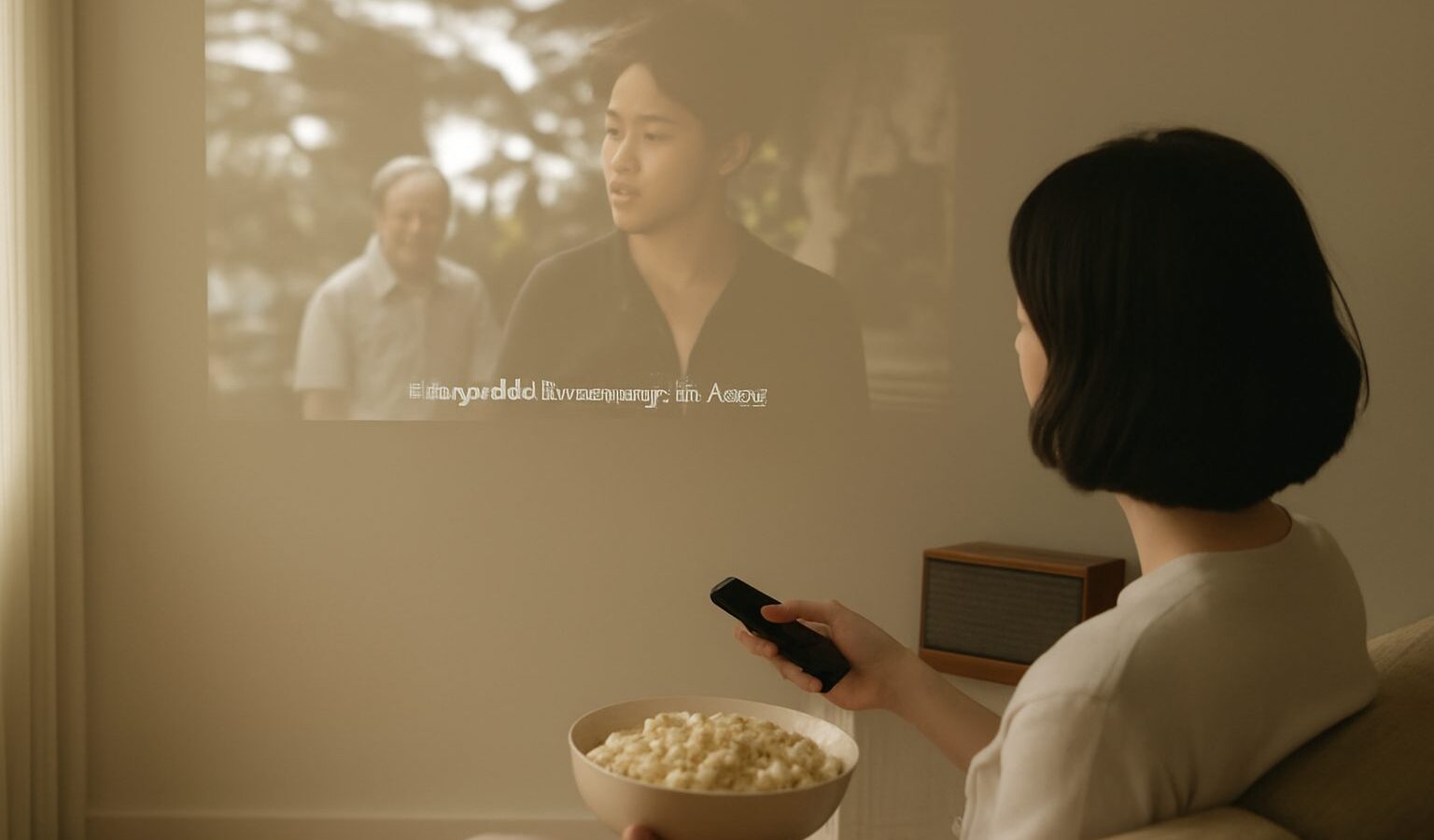
There is a whole planet of storytelling waiting on the other side of a subtitle. World cinema simply means films made outside the mainstream English-language machine, from Iran to South Korea, Senegal to Sweden, and it holds some of the most moving, surprising and beautiful work ever put on screen. If you have only ever watched films in English, stepping into world cinema can feel like discovering a second life of the imagination.
The good news is that you do not need a film degree, a fancy home cinema, or any particular taste to begin. You need curiosity and a willingness to read a few lines at the bottom of the screen. Singapore is one of the best places in the world to start, because we sit at a crossroads of cultures and languages, and both our festivals and our libraries are unusually rich. This guide will ease you in gently, from getting over the subtitle hurdle to finding your first favourites.
Why World Cinema Is Worth the Leap
Watching films from other countries does something quietly wonderful. It shows you how a family argument sounds in Tokyo, how grief is carried in Iran, how young people fall in love in Buenos Aires. You begin to notice that human feeling is universal, even as the details of daily life shift from place to place. For a curious viewer, that is a lifetime of travel from the comfort of a sofa.
There are practical rewards too. Directors working outside the big commercial system often take bolder creative risks, so you encounter fresh storytelling, unusual pacing, and images that linger for days. You also build a genuine cultural literacy that enriches everything else you watch. Once you have seen how a Korean thriller builds tension or how an Italian neorealist film finds drama in ordinary streets, you start to see all cinema with sharper eyes.
Best of all, world cinema is welcoming rather than exclusive. Nobody worth listening to will quiz you on obscure names. The scene, here and everywhere, is full of enthusiasts who simply want more people to share what they love.
Getting Over the Subtitle Hurdle
The single biggest thing that stops beginners is a fear of subtitles. People worry that reading will pull them out of the story or that they will miss the visuals. In practice, your brain adapts astonishingly fast. Within twenty minutes of your first subtitled film, the reading becomes automatic and you stop noticing it at all.
A few gentle habits make the adjustment easier:
- Start with a film you already want to see, not one you feel you ought to admire. Enjoyment builds the habit.
- Choose a calm evening without distractions, so you can give the screen your full attention for the first hour.
- Turn the lights down and the phone away. Subtitled films reward focus, and they punish half-watching.
- Do not panic if you miss a line. Meaning usually carries through the acting, the music, and the images.
- Give it three films before you judge. The skill of watching, like any skill, gets comfortable with a little practice.
If reading fast is genuinely hard for you, look for the pause button as a friend, not a failure. There is no prize for finishing in one sitting, and nobody is marking you.
Where to Watch in Singapore
You are spoilt for choice here, and much of it is free or cheap. The trick is to know where to look, because great world cinema rarely sits on the front page of a big streaming app.
- Streaming services. A broad international library will carry a rotating selection of acclaimed foreign films, while more specialist services focus on particular regions or on arthouse and classic titles. Catalogues, prices and availability change often and vary by region, so check what is currently offered before you subscribe.
- The public libraries. Our national library system lends an excellent range of world and classic cinema, often including box sets and restored editions you will not easily find to stream. It is the single most underused resource for film lovers in Singapore.
- Film festivals and special screenings. Singapore hosts several festivals and regular themed seasons through the year, some at major venues and some run by smaller film societies. These are the best way to see world cinema on a big screen with an audience, which is how much of it was meant to be seen.
- Cultural institutes and embassies. Various national cultural bodies host occasional free screenings of films from their countries, a lovely and low-pressure way in.
- Local film clubs and societies. Community groups often organise regular screenings followed by a relaxed discussion, perfect if you like company with your cinema.
Always check the official venue, festival or platform for current dates, titles and prices, as programmes and line-ups change constantly.
Building Your Own Path Through the Map
The world is large, so it helps to travel with a loose plan rather than wandering at random. One friendly approach is to pick a single country or a single director and watch three or four of their films in a row. Patterns emerge, you build context, and you develop real affection rather than scattered impressions.
Another approach is to follow a mood or a theme across borders: coming-of-age stories, crime thrillers, quiet family dramas, or sweeping historical epics from different cultures. Comparing how each country handles the same human situation is endlessly rewarding.
Here is a simple way to think about where to begin, depending on what you already enjoy.
| If you enjoy | A world cinema region to explore | What you tend to find |
|---|---|---|
| Tense, twisty thrillers | East Asian cinema | Sharp plotting, bold tone shifts, striking visuals |
| Warm, character-driven drama | European arthouse | Slow-burn emotion, realism, quiet observation |
| Big feeling and music | South Asian cinema | Spectacle, romance, colour, song and dance |
| Poetic, meditative films | Iranian and Middle Eastern cinema | Gentle pacing, moral weight, everyday poetry |
| Bold, genre-bending stories | Latin American cinema | Magic, politics, passion and dark humour |
Treat that table as a doorway, not a boundary. Every region contains multitudes, and half the joy is being surprised by a film that breaks every expectation you had.
Keeping the Habit Alive
Getting into world cinema is not a single achievement but a gentle, lifelong habit, and habits need a little tending. Keep a running list of films people recommend, so you are never stuck for what to watch next. Jot down a line or two after each film, even just how it made you feel, and you will be amazed how quickly your taste sharpens and your memory deepens.
Watching with others helps enormously. Share films with a friend, join a discussion group, or simply talk about what you have seen. World cinema opens up beautifully in conversation, because everyone notices different things. If you find a director you love, follow their whole career. If a country captures you, read a little about its history and you will watch its films with richer understanding.
Above all, stay generous with yourself. Some films will bore you, some will baffle you, and that is completely fine. You are not failing a test; you are simply finding your people among the world’s storytellers. Give it time, follow your curiosity, and a whole planet of cinema will slowly become yours.
Explore more
Ready to watch with sharper eyes? Our guide to the art of film appreciation pairs perfectly with this journey, and understanding film genres helps you navigate the map. If a particular region calls to you, try getting into Korean dramas, and when you are ready to watch at home, see building the perfect home movie night.