

Most of us learn quietly. We study a skill in private, wait until we feel we have mastered it, and only then, maybe, show anyone. Learning in public flips that instinct. Instead of hiding until you are polished, you share your progress as you go: the notes you are taking, the small project you built, the thing you got wrong and how you fixed it. It can feel exposing at first, especially in a culture that prizes looking competent. But done kindly, learning in public can speed up your growth, deepen your understanding, and quietly connect you with people on the same path.
What learning in public really means
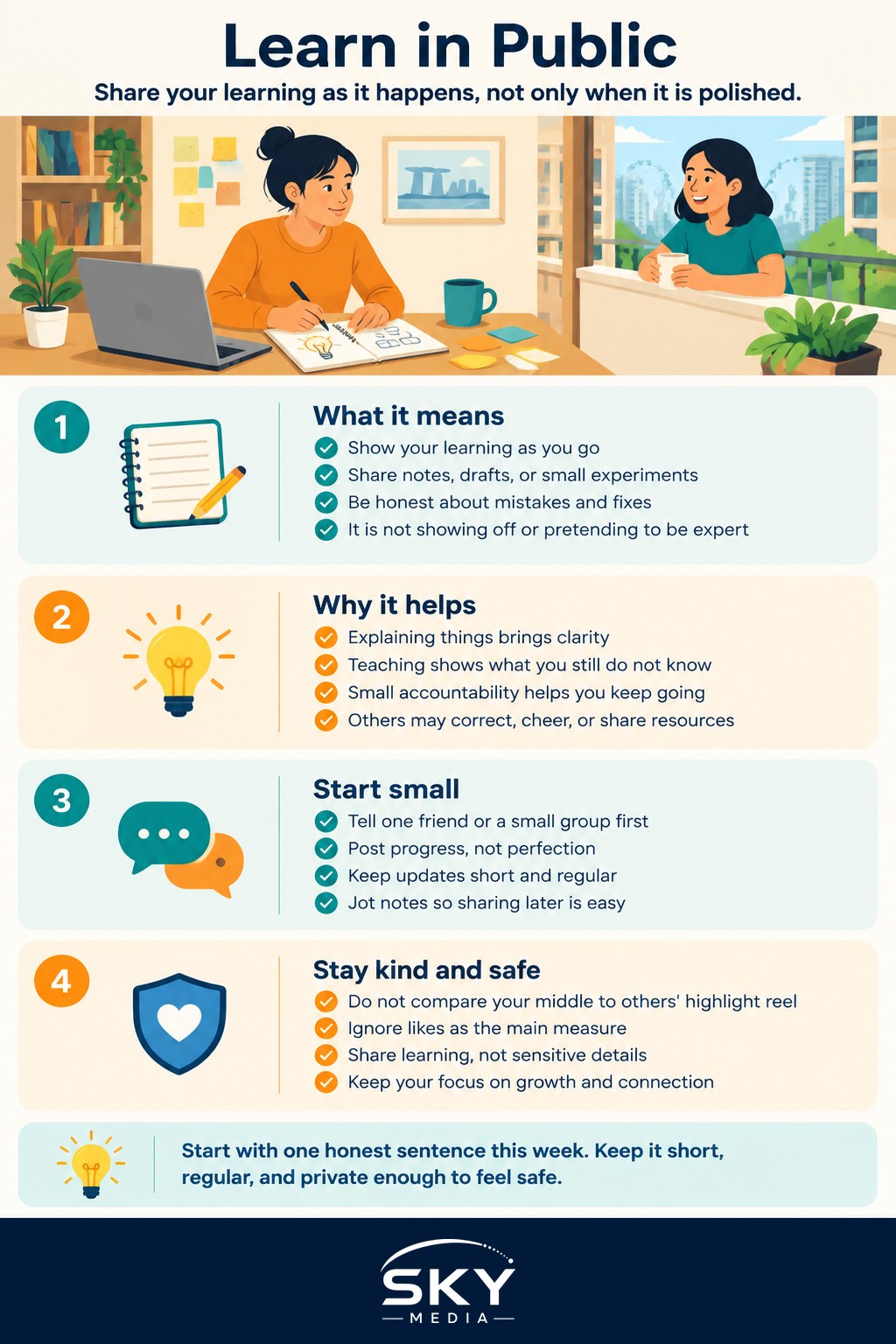
Learning in public simply means letting others see your learning while it is still happening, rather than only presenting the finished, tidy result. That might be posting what you learned this week, writing up a small experiment, sharing a rough sketch or draft, or explaining a concept in your own words to whoever is listening.
It is worth clearing up what it is not. It is not showing off, and it is not pretending to be an expert. In fact, the honest version is the opposite of expertise theatre. You share as a learner, mistakes and all, because that is the truth of where you are. It also does not require a huge audience. A message to a few friends, a small group chat, or a modest online post all count. The value comes from the act of putting your thinking into words for someone else, not from applause.
Why it works so well
The biggest benefit is that explaining forces clarity. When you know you have to describe something to another person, you cannot hide behind a vague, fuzzy understanding. You have to actually sort out what you know and what you do not. This is the same principle behind the Feynman technique, where teaching a topic simply reveals the gaps in your own grasp of it.
Sharing as you go also creates gentle accountability. Once a few people know you are learning something, you have a soft nudge to keep going, which is one honest way to stay consistent when life gets busy. And because you are visible, useful things tend to find you: someone corrects a mistake, points you to a better resource, or simply cheers you on. Over time, a trail of your work builds up, a record you can look back on to see how far you have come.
Finally, it normalises being a beginner. When you show your rough early attempts, you give other nervous learners permission to start too. That is a quietly generous thing to do, and it fits well with keeping a beginner’s mindset as you grow.
How to start small in Singapore
You do not need a big platform or a personal brand. Start in the smallest way that feels manageable, and let it grow only if you want it to.
- Share with one person or a small group first. Tell a friend what you are learning, or post in a group chat of people you trust. Low stakes, real practice.
- Post progress, not perfection. “Here is what I figured out this week, still a work in progress” is honest and inviting. You do not owe anyone a masterpiece.
- Keep it short and regular. A few lines once a week beats a grand essay you never publish. Consistency is what builds the habit.
- Document as you go. Jot notes, screenshots, or reflections while learning, so sharing later takes almost no extra effort.
If the idea of being visible makes you nervous, that is completely normal, especially with our local instinct not to lose face. Start privately, build your confidence, and remember that stumbling in public is not failure. It is proof you are actually trying, and every small share stretches you a little further past your comfort zone.
Keeping it healthy and kind
Learning in public has real pitfalls worth handling gently. The first is comparison. The moment you share, it is tempting to measure yourself against people who are further along, which can quietly kill your motivation. Remember that you are seeing their highlight reel, not their messy middle, and that your only fair comparison is with where you were last month. If this trips you up, how to stop comparing yourself to others is worth a read.
The second is caring too much about numbers. Likes and follower counts are a shaky foundation. The real reward is your own deepening understanding and the handful of genuine connections you make, not the applause. Keep your attention on the learning itself. And protect your privacy sensibly: share your progress and your thinking, not sensitive personal details or anything from work you are not free to share.
Handled with a light touch, learning in public turns growth from a lonely, hidden effort into a shared, slightly braver one. You understand more deeply because you have to explain, you stay consistent because others are watching kindly, and you meet people walking the same road. Pick one thing you are learning, share one honest sentence about it this week, and let that small step be the start.
Frequently Asked Questions
What platforms are good for learning in public? Any place where you feel comfortable sharing works, from a personal blog or professional network to a small group chat or study forum. Start with a small, friendly audience. The platform matters less than writing regularly and honestly.
Is it okay to share what I learn from my job or employer? Be careful. Do not share confidential information, client details or anything covered by your employment terms. Stick to general lessons and your own side projects, and check your company’s policy if unsure.
What if people criticise or correct my mistakes online? Treat corrections as free feedback when they are polite and useful, and thank the person. Ignore rude or unhelpful comments, and mute or block where needed. Having a mistake pointed out is part of how learning in public speeds you up.
Could learning in public hurt my job prospects? Usually it helps by showing curiosity and initiative, but think about what you post as employers may read it. Keep the tone honest and professional, avoid complaints about colleagues, and do not claim expertise you do not have.
How do I learn in public if I am an introvert? You can share in writing, in small groups, or by posting occasionally rather than constantly. You do not need to be loud or build a large following. A handful of honest posts and a few real conversations are enough.