

Bringing neighbours together for a street party, a clean up, a festive celebration, or a family day is one of the most rewarding things you can do for your area. Organising a community event in Singapore takes a bit of planning, but the steps are clearer than you might expect. This guide walks you through the essentials so your gathering is safe, welcoming, and well run.
Start with a clear purpose
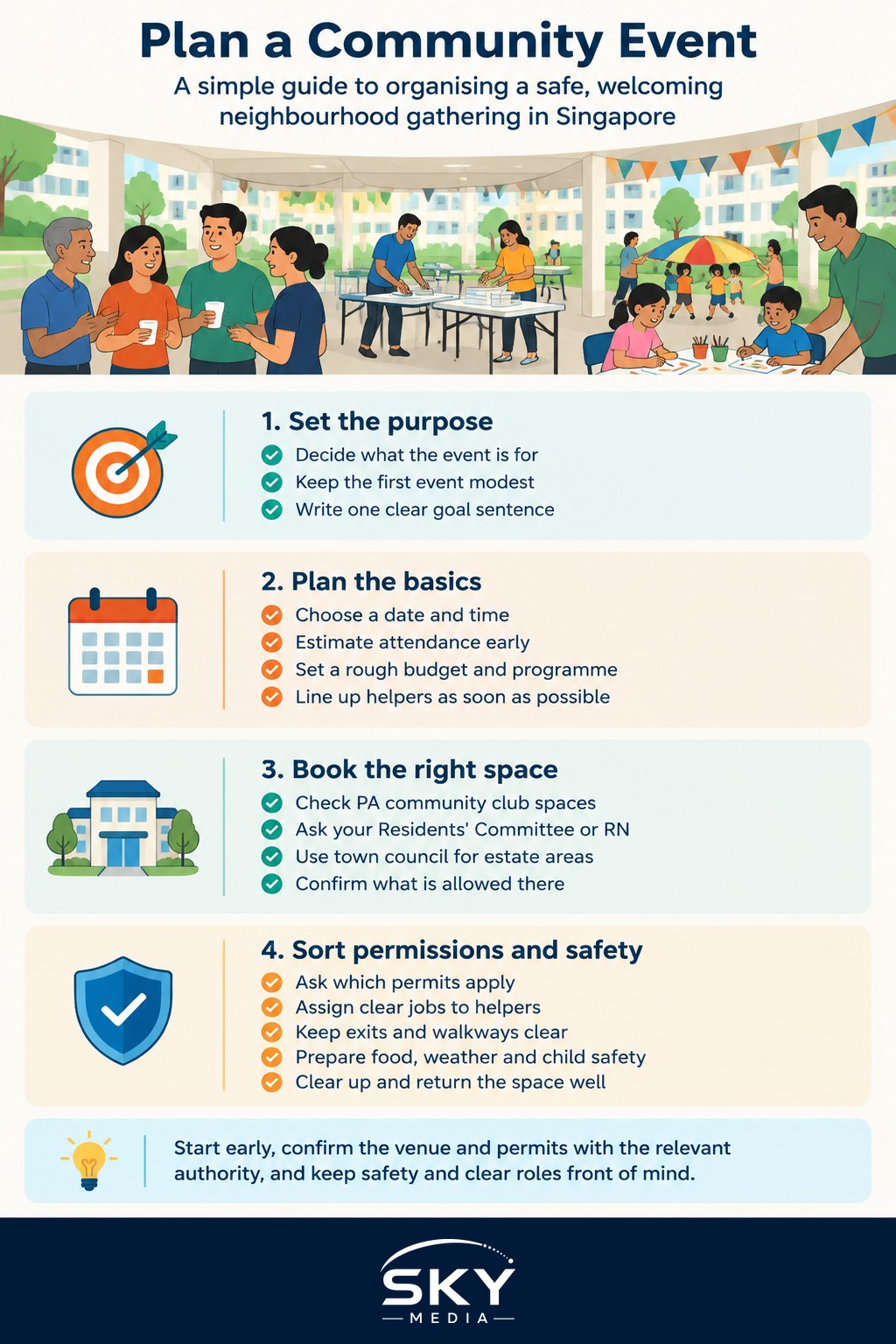
Before anything practical, decide what your event is for. A clear purpose shapes every choice that follows, from the venue to the budget. Are you hoping to help neighbours get to know one another, mark a festival, raise funds for a cause, or tidy up a shared space?
Keep your first event modest. A small, well run gathering builds trust and teaches you what works, which makes the next one easier. Write down your goal in a single sentence and let it guide your decisions.
Plan the essentials early
Good events rest on early planning. Sketch out the key details as soon as you can, then refine them.
- Date and time, avoiding clashes with major holidays or exam periods where possible
- Expected number of attendees, which affects venue, food, and safety
- A rough budget, listing likely costs and any funds or sponsorship
- The programme, or the flow of activities from start to finish
- Who will help you, since few events run on one person alone
Giving yourself several weeks of lead time makes bookings, permissions, and publicity far less stressful.
Booking a venue
Where you hold your event depends on its size and type. In Singapore, two of the most common routes for community spaces are the People’s Association network and your town council.
Community clubs and residents’ network facilities, which come under the People’s Association, offer halls and multi purpose rooms suitable for many gatherings. Your local Residents’ Committee or Residents’ Network can be a helpful first point of contact and may support neighbourhood events. For open spaces within an estate, such as void decks, open fields, and common areas, the town council usually manages bookings and can advise on what is allowed.
Approach the relevant office early, explain your plans clearly, and ask what they need from you. They deal with community events regularly and can point you to the correct forms and any conditions.
Permits and permissions
Different activities carry different requirements, so check before you commit. The exact rules depend on your venue, your activities, and the size of your crowd, so always confirm with the managing authority.
| Activity | Typically needs |
|---|---|
| Using a void deck or common space | Approval from the town council |
| A community club hall or room | Booking through the PA network |
| Selling food or drinks | Relevant food and licensing checks |
| Live music or amplified sound | Permission and noise considerations |
| Larger public gatherings | Additional permits, checked in advance |
Treat this table as a prompt to ask questions, not a final list. When you speak to the venue owner, ask directly which permits apply to your specific plans and how long approval takes, then build that waiting time into your schedule.
Building a team
You cannot do everything yourself, and you should not try. Recruiting a small team of helpers makes the event more fun and far more manageable. Neighbours, friends, and members of your Residents’ Committee are natural first asks.
Assign clear roles so everyone knows their job: someone to handle setup, someone for registration or welcome, someone for food, and someone to keep an eye on safety. Give each helper one main responsibility rather than a vague sense that they will pitch in. People help more happily when they know exactly what is expected.
Keeping it safe
Safety is the quiet foundation of a good event. A few sensible steps protect everyone and give you peace of mind.
- Keep walkways and exits clear at all times so people can move and leave freely.
- Have a simple first aid kit on hand and know where the nearest help is.
- If you serve food, keep it fresh, stored properly, and handled with clean hands and utensils.
- For any activity with heat, water, or equipment, brief helpers on the risks and supervise closely.
- Plan for weather, with a shaded or sheltered option for outdoor events.
- Note the location of fire equipment and make sure nothing blocks it.
If children will attend, arrange enough adults to keep watch, and set a clear point where a lost child can be brought.
Spreading the word
An event only works if people come. Start publicity a couple of weeks ahead. Put up notices in the lift lobby and on community boards where allowed, share the details in neighbourhood chat groups, and ask your helpers to invite people personally. A friendly, face to face invitation often draws the best turnout.
Make the key details impossible to miss: what, where, when, and whether people need to register or bring anything. If your event is free and open to all, say so warmly.
On the day
Arrive early to set up without rushing, and gather your helpers for a quick briefing so everyone knows the plan. Welcome people as they arrive, since a warm greeting sets the tone for the whole event. Keep to your programme loosely, but stay flexible, as community events have a happy way of taking on a life of their own.
Watch the time, mind the safety points, and enjoy yourself. Your calm, cheerful presence helps everyone else relax.
Wrapping up well
When the event ends, clear the space thoroughly and return it in the condition you found it, as most venues require this. Thank your helpers sincerely, because they gave their time freely. A day or two later, jot down what went well and what you would change, so your next event is even better.
A warm closing
Organising a community event in Singapore is simpler than it first appears: set a clear purpose, plan early, book the right space through the PA or town council, sort your permits, and keep safety front of mind. With a small team and a generous spirit, you can turn a patch of common ground into a place where neighbours meet, laugh, and feel a little more at home.
Explore more: Community centres in Singapore · Volunteering in Singapore · Building a social life in Singapore
Frequently Asked Questions
Do I need a permit to organise a community event? It depends on your venue, activities and crowd size. Using a void deck needs town council approval, a community club hall is booked through the PA network, and food sales, amplified sound or larger gatherings may need extra permission. Ask the managing authority which apply.
How far ahead should I start planning a neighbourhood event? Give yourself several weeks. That makes bookings, permissions and publicity far less stressful, and any approvals that take time can be built into your schedule. Start publicity about two weeks before the event.
Where can I hold a small gathering for my neighbours? Community clubs and residents’ network facilities under the People’s Association offer halls and multi-purpose rooms. For void decks, open fields and common areas inside an estate, the town council usually manages bookings. Contact the relevant office early.
How many helpers do I need for a community event? There is no fixed number, but few events run on one person alone. Recruit a small team from neighbours, friends and your Residents’ Committee, and give each helper one clear role such as setup, welcome, food or safety.
What is the best way to get neighbours to turn up? Combine notices in lift lobbies and community boards, neighbourhood chat groups and personal invitations, since a face-to-face invite often draws the best turnout. State what, where, when and whether to register, and say so if it is free.
Further reading: Community Fridges in Singapore: How to Give and Take Food · How to Organise a Photowalk in Singapore