

For anyone who wants to understand the businesses behind the shares they own, the annual report is the single richest document available, and it is free. Yet many people never open one, put off by the length and the jargon. Learning to read an annual report in Singapore is a skill worth building slowly, because it moves you from guessing about a company to actually understanding it. This is general educational information, not financial advice and not a recommendation to buy or sell any particular company. Capital is always at risk when you invest.
An annual report is a company’s yearly account of itself to shareholders. Listed companies publish one, and you can usually find it on the company’s investor relations page or through the exchange. It blends storytelling and hard numbers, and part of the skill is reading both with a healthy dose of scepticism. Below we walk through what to look for and how to keep your bearings.
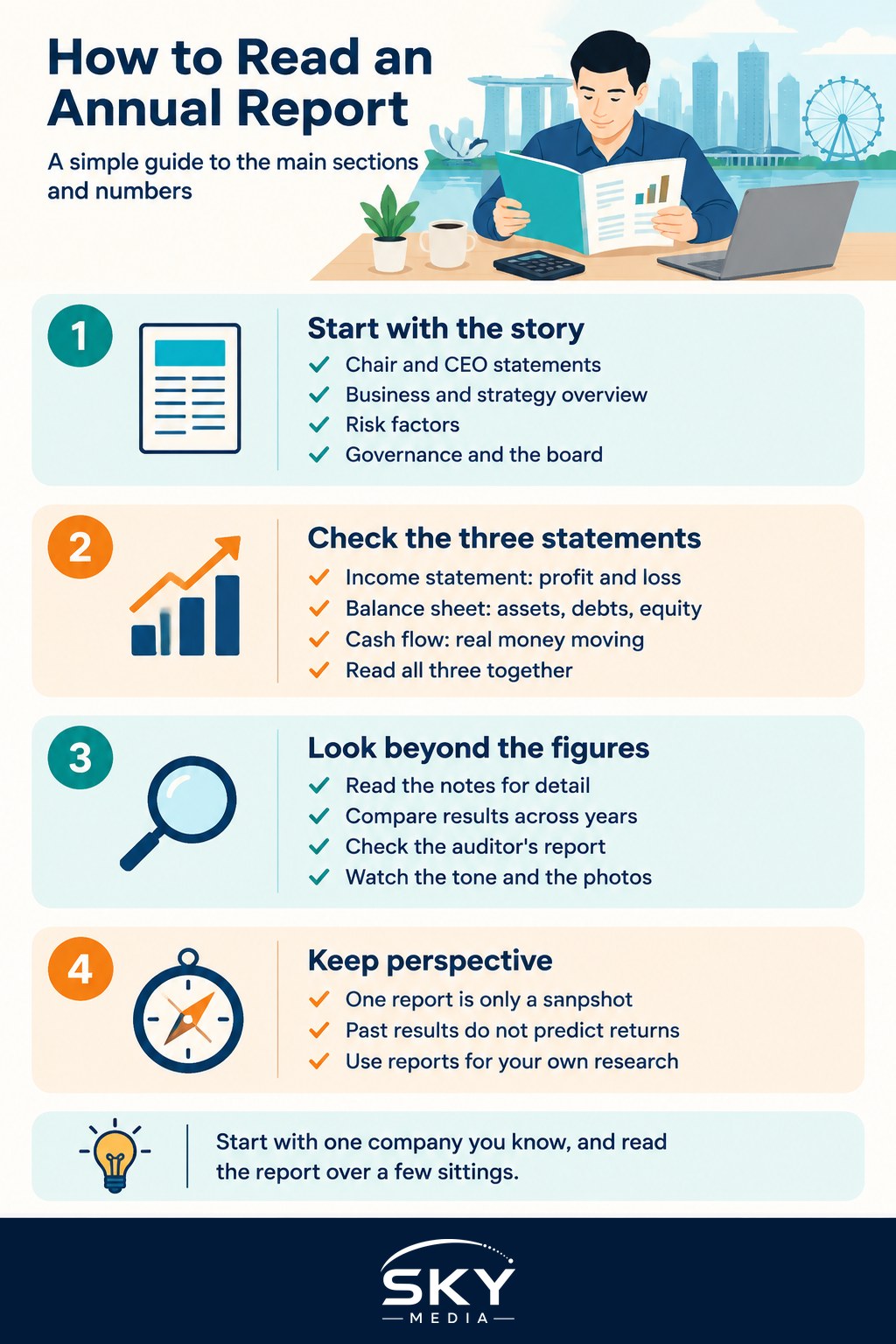
Start With the Narrative Sections
The front of a report is written to be read, and it sets the context for everything that follows. Do not skip it, but do not take every word at face value either.
- Chair and CEO statements. These describe the year in the company’s own words: what went well, what the challenges were, and where management thinks the business is heading. Read for substance, and notice whether difficulties are acknowledged honestly or brushed aside. A report that only ever sounds triumphant deserves extra caution.
- Business and strategy overview. This explains what the company actually does, how it makes money, and who its customers and competitors are. If you cannot understand the business from this section, that is important information in itself.
- Risk factors. Companies are required to spell out the main risks they face. This is one of the most useful and most ignored parts. It tells you honestly what could go wrong, from competition to regulation to reliance on a single big customer.
- Governance and the board. Who runs the company, how they are paid, and how independent the board is. Good governance does not guarantee good returns, but weak governance is a genuine warning sign.
Reading these sections gives you the story. The financial statements then let you check whether the numbers support the story or quietly contradict it.
Understand the Three Core Statements
The heart of any annual report is three financial statements. You do not need to be an accountant to get real value from them, but you do need to know what each one is for.
The income statement, sometimes called the profit and loss statement, shows revenue, costs, and whether the company made a profit over the year. Look at whether revenue is growing, whether profit is growing with it, and whether margins are steady, improving, or slipping. One good year is not a trend; several years of data tell a far more honest story.
The balance sheet is a snapshot on one date of what the company owns (assets), what it owes (liabilities), and what is left over for shareholders (equity). Pay attention to debt levels relative to equity, and to whether the company has enough short-term assets to cover short-term obligations. A profitable company can still get into trouble if it is buried in debt.
The cash flow statement tracks the actual cash moving in and out, split into operating, investing, and financing activities. This one is hard to dress up. A company can report an accounting profit while cash is draining away, so healthy cash generated from day-to-day operations is a reassuring sign. Where profit and cash flow tell very different stories over several years, ask why.
Read these three together rather than in isolation. Each answers a different question, and the picture only makes sense when you combine them. Concepts such as compounding and interest sit underneath a lot of this, and understanding compound interest in Singapore can make the growth numbers easier to interpret.
Dig Into the Notes and Keep Perspective
The financial statements are followed by notes, often the longest part of the report. This is not filler. The notes explain the accounting choices behind the headline numbers, break down items like debt maturities and segment performance, and disclose things the summary figures hide. Serious readers spend real time here, because surprises often live in the fine print.
A few habits keep your reading grounded:
- Compare across years. A single report is a snapshot. Trends over three to five years reveal direction and consistency far better than one year alone.
- Read the auditor’s report. An independent auditor gives an opinion on whether the accounts are fairly presented. Anything other than a clean, standard opinion warrants closer attention.
- Mind the tone. Glossy photos and upbeat language are marketing. Let the numbers and the notes, not the design, shape your view.
- Know the limits. An annual report looks backward. It tells you what happened, not what will happen, and past performance is not a guide to future returns.
Reading annual reports is a core part of doing your own research rather than acting on tips, and it pairs naturally with the broader habits in DIY investing in Singapore and with learning to spot bad financial advice and red flags in Singapore. Even so, no single document should decide a purchase on its own, and understanding a company is not the same as knowing whether its shares suit your goals, your time horizon, or your risk tolerance.
Take it slowly. Start with one company you already know, read its latest report over a few sittings, and look up terms as you go. Each report gets easier, and after a handful you will read the next one with far more confidence. If you are unsure how any of this fits your own situation, a licensed, MAS-regulated financial adviser can help you make sense of it.
Frequently Asked Questions
Where can I find a listed company’s annual report? Most listed companies post their annual reports on the investor relations section of their own websites. They are also generally available through the exchange’s announcements. Reports are free, so you do not need to pay a third party to see them.
How long does it take a beginner to read an annual report? Plan to read it over several sittings rather than in one go. Start with the narrative sections, then the three core statements, and return to the notes later. It gets quicker as you read more reports and learn the terms.
Which numbers matter most when comparing two companies? Look at revenue and profit trends over several years, debt compared with equity, and cash generated from operations. Compare companies in the same industry, since norms differ between sectors. No single figure tells the whole story, and the notes often explain the differences.
What does it mean if the auditor’s opinion is not clean? A qualified or modified opinion means the auditor had concerns about how the accounts were prepared or presented. It deserves closer attention and questions about the reason. Read the explanation in the auditor’s report before drawing conclusions.
Can I rely on the annual report alone to decide whether to buy shares? No, because it looks backward and says little about future performance or whether the shares suit your goals. Combine it with other research, your own time horizon and risk tolerance. A licensed adviser can help if you are unsure.
Further reading: Attending a Listed Company AGM as a Retail Shareholder