
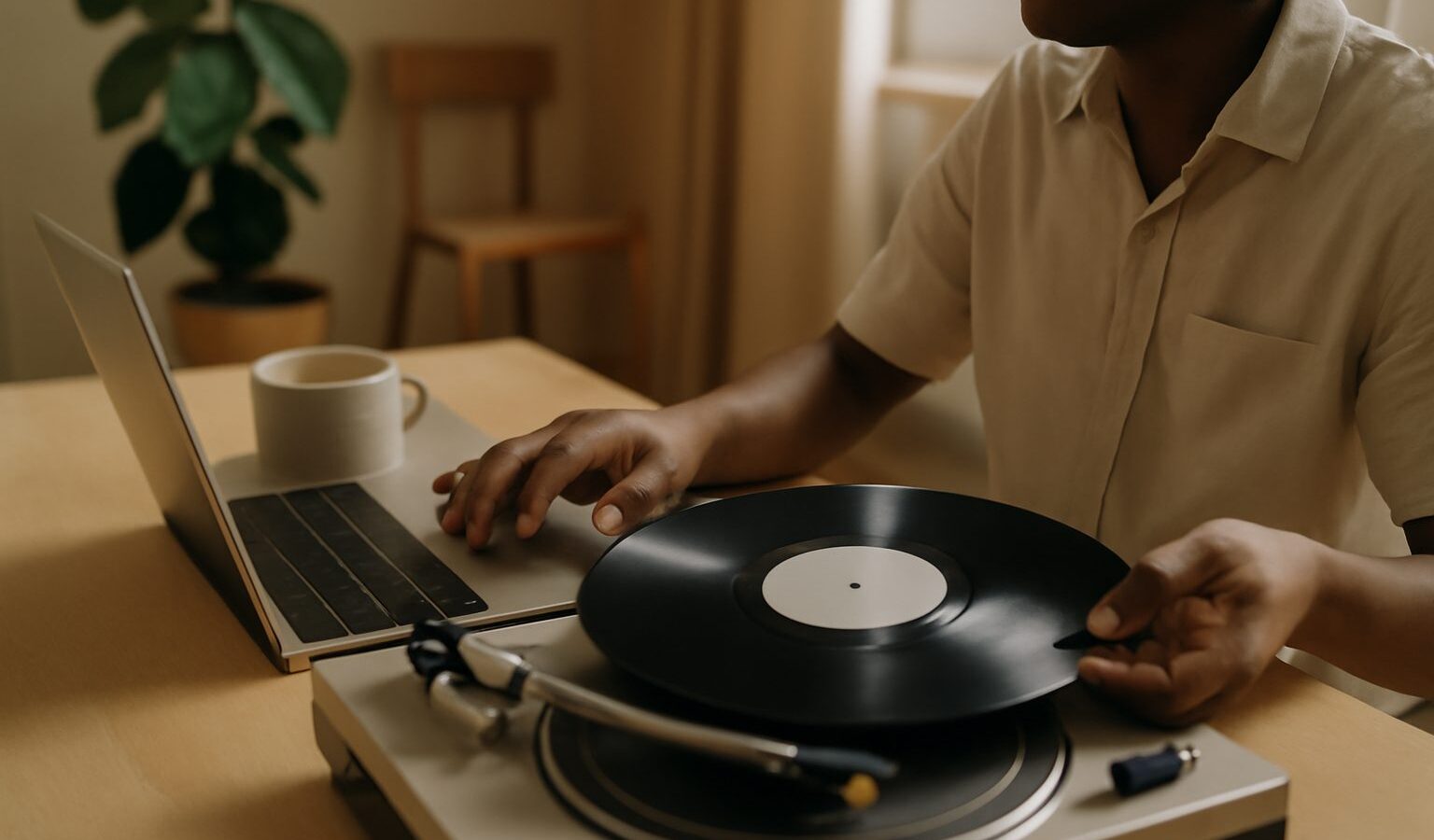
Sampling music legally is something every producer should understand before building a track around a borrowed sound. A clever sample can define a song, but using part of someone else’s recording without permission can create real problems. This guide explains what rights are involved, when you need to clear them, and the safe, practical ways to sample without worry. It is general information, not legal advice.
What Sampling Actually Involves
Sampling means taking a portion of an existing recording and reusing it in a new piece of music. That portion could be a drum break, a vocal phrase, a horn stab or a few seconds of a groove. Because the material already exists as a finished recording, someone owns it, and that ownership is where the legal questions begin.
The key thing to grasp is that a single piece of recorded music usually carries not one but two separate sets of rights. Many beginners assume that buying a song, or finding it freely online, gives them the right to reuse it. It does not. Owning a copy is not the same as owning the rights to reuse the work.
The Two Rights You Need To Clear
When you sample a commercial recording, two distinct copyrights come into play, and both generally need permission.
The first is the composition. This covers the underlying song itself: the melody, the chords and the lyrics. It is typically controlled by the songwriter and their publisher.
The second is the master. This covers the specific recording you are actually sampling, the exact performance captured in the studio. It is usually controlled by the record label or whoever owns that recording.
To use a commercial sample legally, you generally need permission for both. Clearing only one leaves you exposed. This is why sample clearance can be slow and costly, and why large numbers of independent producers avoid uncleared commercial samples altogether.
Ways To Sample Without Clearing Commercial Rights
The good news is that you do not need to chase clearances to sample creatively. There are several routes that keep you on solid ground.
- Royalty-free and licensed sample packs, where the creator has already granted permission to use the sounds under a licence.
- Public-domain works, where copyright has expired, though you must confirm status carefully.
- Recordings you make yourself, which you own outright.
- Sounds you create from scratch using synthesisers and virtual instruments.
Each of these lets you build without first securing permission from a rights holder. For most home producers, these are the everyday tools of the trade.
Comparing Your Sampling Options
Here is how the common approaches line up.
| Source | Permission needed | Risk level | Best for |
|---|---|---|---|
| Uncleared commercial recording | Yes, composition and master | High | Avoid |
| Cleared commercial sample | Yes, negotiated licence | Lower once cleared | Established projects |
| Royalty-free or licensed pack | Covered by the licence | Low | Most producers |
| Public-domain work | None if truly expired | Low, verify status | Classical and old works |
| Your own recording | None, you own it | Very low | Original material |
The table makes the safest path clear: for the vast majority of producers, licensed packs and original recordings offer creative freedom with very little risk.
Understanding Licences On Sample Packs
A royalty-free sample pack does not mean there are no rules. It means the creator has set the terms in advance and, in many cases, does not ask for ongoing payments each time you use a sound. You still agree to a licence, and that licence spells out what you may and may not do.
Read it before you rely on a pack. Some licences allow full commercial release, some restrict certain uses, and some ask that you do not repackage the sounds and sell them as your own. The word royalty-free describes the payment model, not a complete absence of conditions. Keep a copy of the licence and your purchase record so you can show where your sounds came from if anyone ever asks.
Public Domain Needs Care
Public-domain material can be a rich source, but it needs a careful eye. When a work enters the public domain, its copyright has expired and it can be reused freely. The trap is that a famous old composition and a modern recording of it are two different things.
A symphony written centuries ago may well be in the public domain as a composition. A recent recording of that same symphony, however, is a new master with its own fresh copyright. Sampling that modern recording still requires permission for the master, even though the underlying music is ancient. Always check both the composition and the specific recording before assuming a sound is free to use.
Building Safe Habits
A few simple habits keep your projects clean and your mind at ease.
- Assume any commercial recording is protected unless you have clear evidence otherwise.
- Favour licensed packs, public-domain works and your own recordings.
- Keep records of every licence and purchase.
- Read the terms rather than guessing what a licence allows.
- When a project could earn money or reach a wide audience, take extra care and consider proper advice.
These habits cost very little effort and save enormous stress later. Producers who sort out their sources early rarely run into trouble down the line.
When To Seek Proper Advice
If you genuinely want to use a recognisable slice of a commercial record, that is the moment to slow down. Serious releases, sync placements and anything with real commercial ambition are worth handling formally. Reaching out to rights holders, or working with someone who handles clearances, turns a risky move into a legitimate one.
Nothing in this guide is a substitute for advice from a qualified professional who understands your situation. Copyright can be detailed, and the stakes rise as your audience grows. Treat this as a map of the landscape, not a final ruling.
Sample With Confidence
Sampling music legally is not about giving up creativity. It is about choosing sources you are allowed to use and keeping tidy records of how you got them. Lean on licensed packs, public-domain works you have verified, and recordings you make yourself, and you can chop, layer and rearrange to your heart’s content. Understand the two rights behind commercial recordings, respect them, and build your music on ground you can stand on with total confidence.
Explore more: Music copyright and royalties explained · Using loops and samples in Singapore · Mixing basics for beginners