

If you arrived looking for Great Singapore Sale tips, the principle is still to buy well rather than buy more. The Singapore Retailers Association now runs the Singapore Retail Festival as its annual retail event, while other seasonal sale campaigns continue throughout the year. These events can be a genuine chance to get things you already wanted at a better price. It can also be a fast way to spend on stuff you never needed, swept up in the excitement of red tags and countdowns. The difference comes down to preparation and a cool head. This guide covers how to shop the Great Singapore Sale and seasonal sales smartly, as general everyday-money guidance rather than financial advice.
Plan before the sale starts
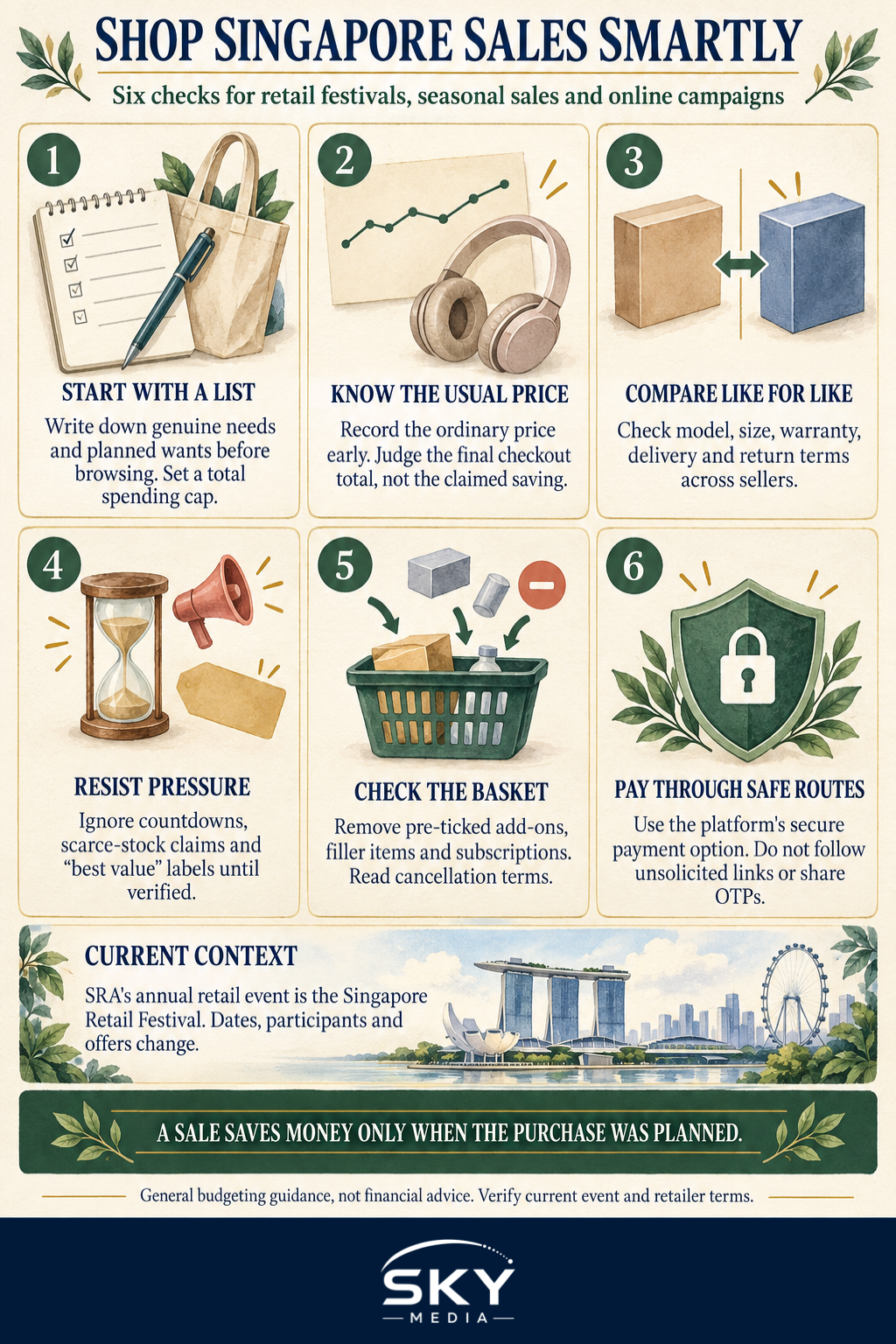
Smart sale shopping is decided before the sale begins. The single most useful habit is to keep a want-list through the year: things you genuinely need or have been meaning to buy, from a replacement appliance to school items to a wardrobe gap. When the Singapore Retail Festival or another seasonal event arrives, you shop from that list rather than from whatever catches your eye.
Set yourself a rough budget for the period too, so the fun stays within limits you chose on purpose. A sale is only a saving if you were going to spend the money anyway. Buying something you did not plan, however discounted, is still spending, not saving.
A simple pre-sale routine:
- Write down what you actually need before the sale.
- Note the usual price of those items now, so you can judge the deal later.
- Set a total budget for the sale so treats stay guilt-free.
- Prioritise the list, so if the budget runs low, the essentials come first.
Know the real price before you judge a deal
A discount only matters against a true original price. The most common sale trick is a big “was and now” gap where the “was” was never really charged, or was briefly inflated so the “now” looks dramatic. Because you noted the usual prices before the sale, you can spot a genuine bargain versus a dressed-up one.
Compare across our many options: different supermarket chains, department stores, heartland shops, and online marketplaces often price the same item differently even during a sale. Watch the unit price on groceries and household goods rather than the headline, and remember that GST-registered retailers generally display GST-inclusive public prices. Delivery, installation, add-ons and overseas checkout adjustments can still change the total, so compare the final amount payable. If you are not sure a discount is real, that scepticism is your friend. We go deeper on this in the sibling guide on spotting fake discounts, linked below.
Time your purchases well
Seasonal sales have rhythms, and timing can matter as much as the discount. Some items are best grabbed early while stock and sizes last. Others get cheaper as an event goes on and shops clear remaining stock. Big annual and seasonal sale dates, festive periods, and end-of-line clearances each suit different buys, so match the timing to the item rather than assuming day one is always best.
Here is a rough guide to timing across the sale calendar.
| Situation | Smart timing move | Why it helps |
|---|---|---|
| Popular item, limited stock | Buy early in the sale | Sizes and stock sell out fast |
| Non-urgent want | Wait and compare | Prices may fall further later |
| End-of-line or clearance | Shop the tail end | Deeper cuts to clear stock |
| Big planned purchase | Track its price beforehand | You know a real deal on sight |
A few timing habits that help:
- Do not rush a big-ticket buy on the first countdown; a fair price usually returns.
- Ignore “only a few left” pressure unless you had already decided to buy.
- If something you planned to buy is genuinely discounted, that is your green light.
Avoid the urgency traps
Sales are engineered to make you act fast: countdown timers, flash deals, limited-quantity labels, and free-shipping thresholds that push you to add one more thing. None of these are scams, but they are designed to bypass your judgement. The antidote is the pause. If an item is not on your list, give yourself a short wait before buying. The urge often passes, which tells you it was the excitement talking.
Add a little friction online, where sale spending is easiest. Remove saved card details, leave items in the cart overnight, and turn off sale notifications so offers stop chasing you. Be alert to scams that spike around big sale periods, such as fake sale sites and phishing messages promising huge discounts. Buy through official retailers, and if something feels off, verify directly and look up the current ScamShield or Police hotline rather than trusting a link.
Make the sale part of smart everyday money
The Singapore Retail Festival and other seasonal sales work best as tools in a wider smart-spending habit, not a licence to splurge. Fold it into the rest of your money routine: use CDC and government vouchers where they apply, checking the official announcement for current details since amounts and timing change; lean on loyalty and cashback where it fits spending you were doing anyway; and consider whether a secondhand option meets the need before paying full price. Small, planned wins across the year beat one dramatic sale haul that fills the cupboard with things you rarely use.
For a neutral grounding in spending and saving, MoneySense, the national financial-literacy programme, is a helpful place to start. The heart of shopping any sale smartly is control: decide what you want before the noise starts, know the real prices, time your buys, resist the urgency, and stop when your list is done. Follow these sale-shopping habits and seasonal sales become a genuine chance to save, rather than a well-designed reason to spend.
Explore more
Shop every sale with a clear head using these related reads. Learn the fundamentals in how to become a smarter shopper, see through misleading offers in how to spot fake discounts and sales tricks, and keep excitement in check with how to stop impulse buying.
Frequently Asked Questions
What is the Singapore Retail Festival and how is it different from the Great Singapore Sale? The Singapore Retail Festival is the annual retail event now run by the Singapore Retailers Association, while the Great Singapore Sale name is what many shoppers still search for. Dates and participating shops change, so check the organiser’s official announcements.
Is it better to shop on the first day of the sale or at the end? It depends on the item. Popular things in limited stock and common sizes can sell out early, while clearance goods and non-urgent wants often get cheaper later. Match your timing to what you are buying instead of assuming one day always wins.
Can I return or exchange items bought during a sale? That is up to each retailer’s own policy, and sale items are sometimes treated differently from full-price ones. Ask at the till and check the receipt before you pay. If a shop does not honour its stated policy, CASE can advise you.
How do I stay within budget when everything is on discount? Set a total budget before the sale and take only your want-list. Decide what you will buy first, and stop when the list is done. A discounted item you did not plan for is still spending, so give it a day before buying.
Are online sales or in-store sales better for sale shopping? Both have good deals, so compare the final amount payable on each. Online prices may be offset by delivery or add-ons, while shops may offer in-store specials. Buy only from official retailers, because fake sale sites appear around big events.
Further reading: The Great Singapore Sale, Explained