

A delivery business in Singapore rides on a simple, lasting truth: goods need to move, and online shopping keeps growing. That demand is real, but so is the competition, and margins in logistics can be tight. Fuel, vehicles, manpower, and time all cost money, and a poorly planned route quietly eats your profit. This guide covers the practical foundations, the compliance you cannot skip, and an honest look at what running deliveries actually takes.
Pick a Model That Fits Your Resources
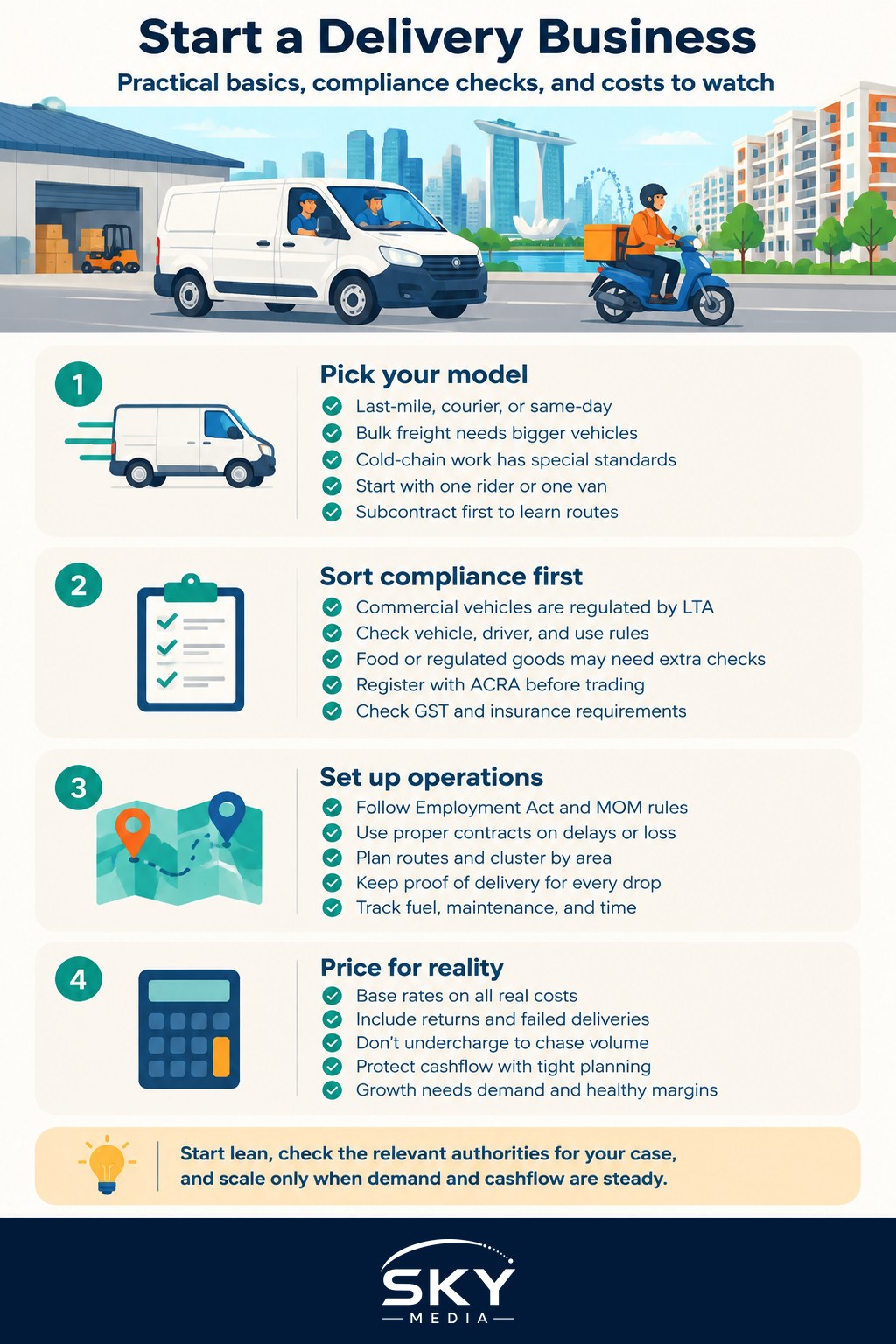
“Logistics and delivery” spans a wide range, and your model determines your costs and your rules. At the lighter end, last-mile parcel delivery moves packages from a hub to doorsteps, often using vans or motorcycles. Courier and same-day services promise speed for documents and small parcels. Bulkier operations handle furniture, appliances, or pallet freight, needing larger vehicles and often two-person crews. Some businesses focus on a niche, such as cold-chain delivery for food, which brings its own handling standards.
Choose based on the resources you genuinely have. A single rider or one van is a realistic start; a fleet is not a beginning, it is a later stage. Many operators start by subcontracting to established platforms or larger logistics firms to learn routes and build cashflow before winning their own direct clients. That path is less glamorous but far safer than sinking capital into vehicles before you have steady demand.
Be honest about the economics. Deliveries are a volume-and-efficiency game. You make money by planning routes tightly, keeping vehicles busy, and avoiding wasted trips. A day of half-empty runs still burns fuel and hours, so watching your costs closely matters, because in logistics small inefficiencies add up fast.
Vehicles, Licensing and Compliance
This is the part that needs real care. Commercial vehicles and their use in Singapore are governed by the Land Transport Authority (LTA), and there are rules about vehicle categories, commercial registration, and drivers. Treat everything here as general information, not legal or licensing advice, and confirm the specific requirements for your vehicles, drivers, and type of operation with LTA before you commit, because the rules change and depend on exactly what you do and carry.
Environmental and other rules can also apply. Vehicle emissions standards and related requirements fall to bodies such as the National Environment Agency (NEA), and certain goods, such as food, may attract handling or safety rules from the relevant authority. If you plan to deliver food, cold-chain items, or anything regulated, check the specific standards with the right body rather than assuming. Do not treat any single licence as settled fact; verify your own case with the authority.
The usual business foundations apply too. Register with ACRA before you trade and choose a structure that suits a vehicle-based, higher-risk operation. If your turnover crosses the threshold, register for GST and confirm current figures with IRAS. Given the risks involved in driving and handling goods, appropriate business insurance is essential, and you should discuss the right cover with a qualified provider.
Drivers, Contracts and Operations
If you take on drivers or riders as employees, you must comply with the Employment Act and MOM rules, including work passes and CPF where applicable, so check the current requirements before hiring. Our guide to hiring your first employee walks through the basics, but this is general information, not employment advice, so verify obligations with MOM.
Contracts protect you when goods are damaged, late, or lost, which in logistics will eventually happen. Clear agreements with clients should cover liability, delivery timeframes, and what happens when things go wrong. Read our overview of business contracts and agreements basics and have a qualified lawyer review your terms, especially on liability for lost or damaged goods.
Day to day, your systems make or break you. Route planning, tracking, proof of delivery, and clear communication with customers turn chaos into a reliable service. Even a simple structured process beats winging it. A few habits help from the start:
- Plan and cluster deliveries by area to cut wasted travel.
- Capture proof of delivery for every drop to reduce disputes.
- Track fuel, maintenance, and time per job so you know your true cost per delivery.
Pricing and the Honest Picture
Price for your real costs: fuel, vehicle wear, insurance, your time, and the failed or returned deliveries that always occur. Undercharging to win volume is how logistics businesses go broke while looking busy. Our guide to pricing your products helps you build rates that actually leave a margin, and managing your cashflow matters because vehicle and fuel costs hit before client payments arrive.
Be realistic. A delivery business can grow into a solid operation, but it is capital-heavy, operationally demanding, and thin on margin, with no guaranteed profit. Vehicles break down, drivers call in sick, and one bad contract can wipe out a month. Anything here is general information, not professional advice, so consult qualified advisers and check requirements with LTA, NEA, MOM, IRAS, and ACRA for your specific case. Start lean, get your compliance and insurance right, plan your routes tightly, and scale only when steady demand and healthy cashflow justify the next vehicle.