

A sarong is the most useful piece of holiday clothing you can own, and in Singapore it earns its keep all year round. Styling a sarong well means you can go from a Sentosa beach club to a casual lunch nearby without changing into a full outfit, which is exactly what you want in this heat. A good cover-up keeps you comfortable, gives you a little sun protection, and looks far more put together than throwing a T-shirt over your swimsuit. Whether you already own a length of batik or you are shopping for your first proper cover-up, here is how to make it work.
Choosing the Right Sarong or Cover-Up
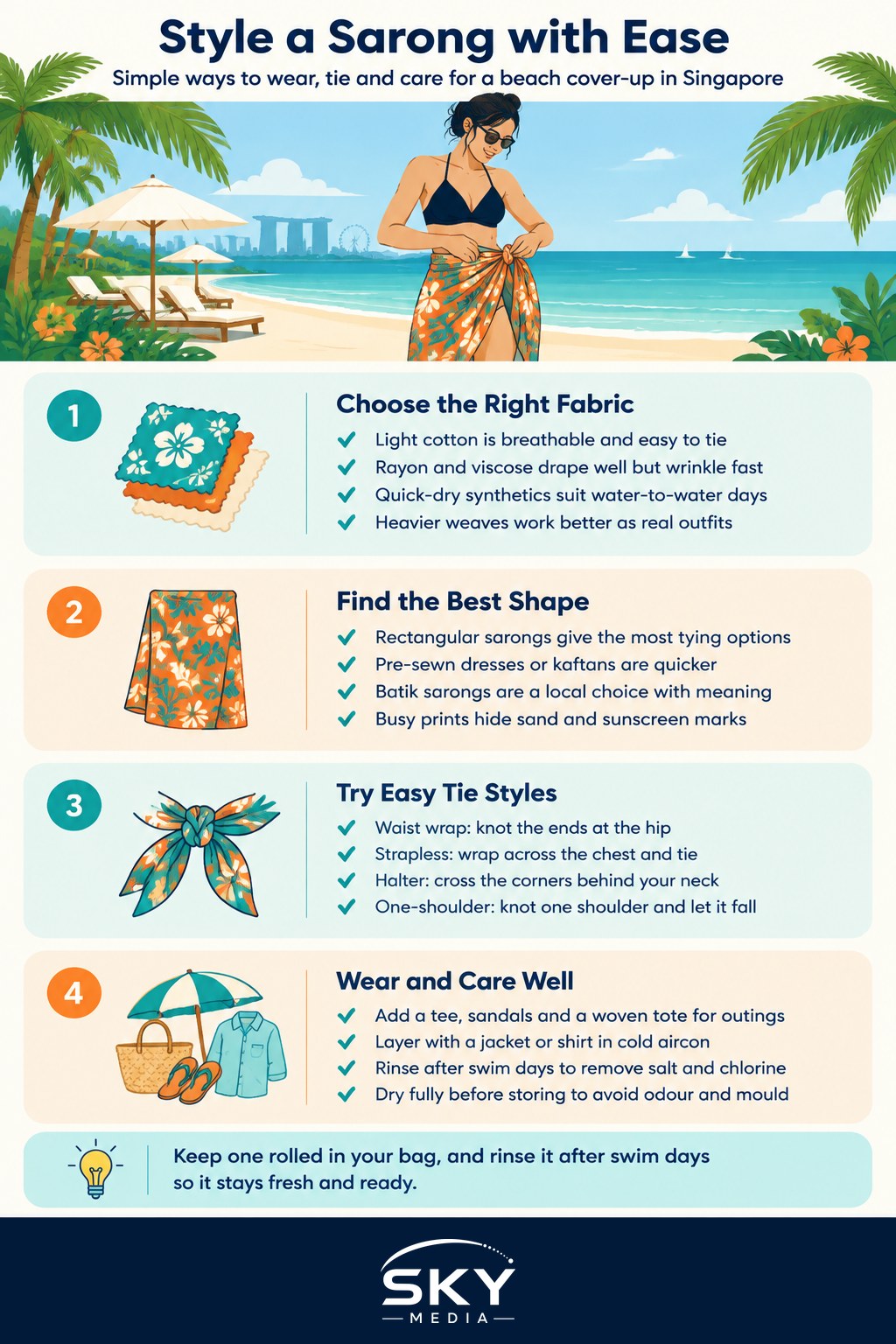
Start with fabric, because that decides how it drapes and how quickly it dries. Lightweight cotton and cotton blends are easy to tie and breathable, which matters when you are walking around in the sun. Rayon and viscose feel silky and drape beautifully but wrinkle fast, so they suit a lounging day more than a busy one. Quick-dry synthetics are handy if you are going in and out of the water. If you want something that doubles as a genuine outfit later, look for a slightly heavier weave that does not go see-through when wet.
Size and shape matter too. A classic rectangular sarong gives you the most tying options, while a pre-sewn cover-up dress or kaftan is quicker to throw on if you do not want to fuss with knots. Batik sarongs are a lovely local option and carry real cultural meaning, so wear them with respect rather than as a novelty. If you want to understand the craft behind the prints, our guide to batik in Singapore is a good place to start. For colour, remember that busy prints hide sand and sunscreen marks better than pale solids.
Easy Ways to Tie and Wear It
You do not need to be an expert to get a few reliable looks. Here are the ones worth learning.
- The waist wrap: Hold the sarong behind you, bring both ends to the front, and tie a knot at the hip. This is the classic beach skirt, and knotting at the side rather than the centre looks a little more intentional.
- The strapless dress: Wrap the fabric under your arms across the chest, then tie or tuck at the top. Great over a swimsuit for a walk to the beach bar.
- The halter: Take the two top corners, cross them behind your neck, and tie. This gives you a light dress shape with a bit more coverage.
- The one-shoulder: Knot two corners over one shoulder and let the fabric fall diagonally. It looks effortless and photographs well.
Whichever tie you choose, a hidden knot or a small safety pin keeps things secure if it is windy near the water. Practise once at home so you are not fiddling in public.
Taking It Beyond the Beach
The real trick to styling a sarong is treating it like a normal skirt or dress once you leave the sand. Tie it as a midi skirt, tuck in a plain white tee or a fitted tank, and add flat sandals, and suddenly you have a resort-lunch outfit. A denim jacket or a light linen shirt thrown over the top makes it work in strong aircon, which every Singapore mall and cafe seems to run cold. If you like this easy, breezy way of dressing, our take on coastal and resort style has more ideas you can borrow for everyday wear.
Accessories do a lot of the lifting here. A woven tote, simple gold hoops, and a good pair of sunglasses turn a beach cover-up into something you would happily wear to brunch. For choosing frames that suit you and handle our glare, see our notes on sunglasses and eyewear in Singapore. Footwear can shift the whole mood too, so swap rubber slides for leather sandals when you move from pool to street. Our guide on how to style sandals and slides covers pairings that keep you comfortable in the heat.
Care and Practical Tips for Our Climate
Because sarongs are thin and often brightly dyed, rinse them in cool water after a swim to get rid of salt, chlorine, and sunscreen, all of which can dull the colours over time. Always check the care label, since rayon and batik can be delicate and may prefer hand washing and drip drying in the shade. Do not leave a damp sarong balled up in your bag, because in our humidity it will start to smell and can develop mould spots surprisingly quickly. Fold it dry before storing, and it will stay fresh for the next outing.
Keep one rolled up in your everyday bag and you will be amazed how often it helps, as a cover-up for a chilly cinema, a picnic mat, a shawl, or a quick swimsuit refresh. Styling a sarong is really about confidence and a couple of good knots, so start with one tie you like and build from there. Once you see how far a single piece of fabric stretches across a Singapore weekend, you will wonder how you managed without it.
Frequently Asked Questions
What can I wear under a sarong at the beach? Most people wear a swimsuit or bikini underneath, since the sarong is meant as a cover-up. If you plan to stay in it afterwards, a fitted tank and shorts also work. Choose a weave that does not turn see-through when wet.
Is it okay to wear a sarong to a restaurant or cafe? Usually yes, if you style it like a normal skirt or dress. Tie it neatly at the waist, add a plain top and sandals, and you will look put together. A beach club or resort setting is more relaxed, while a formal restaurant may expect something dressier.
What is the difference between a sarong and a kaftan? A sarong is an unstitched rectangle of fabric that you tie in different ways, while a kaftan is a loose, sewn garment that you simply slip on. Sarongs give more styling options, whereas kaftans are quicker if you do not want to fiddle with knots.
How big should a sarong be? A classic sarong is a generous rectangle long enough to wrap around your body and tie at the hip, waist or chest. Check the dimensions before buying, as sizes vary. Taller or fuller figures may prefer a larger piece so it stays secure and covers well.
How do I stop a sarong from slipping off? Tie a firm knot at the side of the hip rather than the centre, and tuck the ends in neatly. A small safety pin or a hidden knot adds security on windy days. Practise at home first so you are not adjusting it in public.