
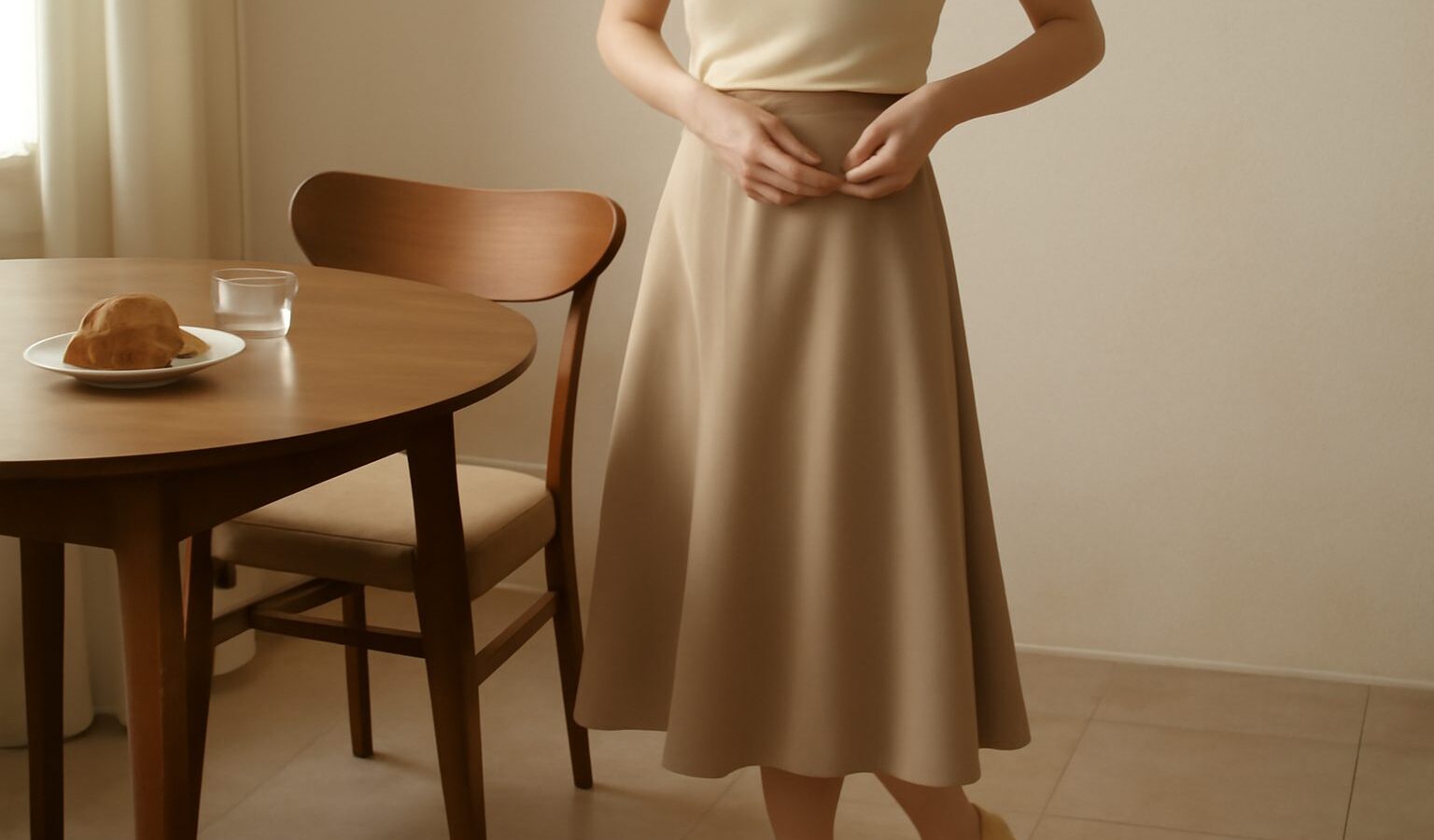
The midi skirt is one of the most forgiving and adaptable pieces you can own, which is exactly why it sometimes feels tricky to get right. Land the proportions and it looks effortless; get them slightly off and it can feel like the skirt is wearing you. Understanding how to style a midi skirt comes down to a few simple ideas about balance, fabric and shoes, and once they click, one skirt turns into a dozen outfits. It is also a genuinely practical choice for Singapore, where a breezy, mid-length skirt keeps you cool outdoors and covered enough for temples, offices and family gatherings.
What Counts as a Midi and Why It Works
A midi skirt falls somewhere between the knee and the ankle, usually mid-calf. That length is its superpower: long enough to feel considered and covered, short enough to keep moving in. It suits a huge range of settings, from a casual weekend to a smart office to a wedding, simply by changing what you pair with it.
It is also a comfortable, breathable option in the heat. A skirt lets air move in a way trousers cannot, and a flowing midi skims the body rather than clinging, which feels far kinder on a humid day. That mix of coverage and coolness is hard to beat for tropical dressing.
There is a practical modesty to the length as well. Because a midi covers the knee and often more, it works for settings where shorter hems feel out of place, such as a temple visit, a mosque, a conservative office or a family gathering with older relatives. You get that coverage without the heat of full-length trousers, which is a big part of why the shape has stayed popular across so many different wardrobes in Singapore.
The One Rule That Makes Midi Skirts Work: Proportion
If you remember nothing else, remember this: a midi skirt covers your lower half, so the outfit needs a sense of shape somewhere to stay balanced. The easiest way is to define your waist and keep your top half relatively neat, so the fuller or longer skirt reads as intentional. Practical ways to do that:
- Tuck your top in, fully or with a loose front tuck, so the waistline shows.
- Choose a top that ends near the waistband if you prefer not to tuck.
- Add a belt to draw a line at the narrowest point if you like more definition.
- Balance a voluminous skirt with a fitted top, and a slim skirt with a slightly looser top.
This is about balance and what makes you feel good, not about hiding or fixing anything. Every body suits a midi; the styling simply helps the outfit hang together. Play with where the waistline sits and how much top you tuck until the proportion feels right to you.
Shoes finish the proportion story. A heel or a pointed flat lengthens the leg line where the skirt ends, while a chunky sneaker or a flat sandal keeps things grounded and casual. Neither is wrong; they just send different signals, which is what makes the skirt so versatile.
Styling One Skirt for Very Different Days
The same midi skirt can travel across your whole week. Here is how the pairings shift the mood.
| Setting | Top | Shoes | Overall feel |
|---|---|---|---|
| Weekend errands | Tucked tee or tank | Clean sneakers | Easy and casual |
| The office | Fitted knit or tucked blouse | Low heels or flats | Neat and professional |
| Dinner or date | Silky camisole, front tuck | Strappy heels | Soft and dressed up |
| Wedding guest | Structured top, light wrap | Heeled sandals | Festive and covered |
| Temple or mosque visit | Modest top covering shoulders | Flats, easy to remove | Respectful and cool |
One skirt, five very different outfits, and the only things that really change are the top, the shoes and one layer. That is the whole case for the midi: high mileage from a single piece.
Choosing Fabric and Length for the Climate
Because you wear a midi against a lot of skin surface, fabric decides how it feels all day. In the heat, lean towards light, breathable materials such as cotton, linen blends, or a fluid viscose that moves with the air. Heavier fabrics and stiff pleats can trap warmth and sit heavily, so save those for air-conditioned days. A skirt with a bit of drape flatters movement and hides creases from a long commute.
Length is worth trying carefully. The most comfortable midi length usually hits at the slimmest part of your calf rather than the widest, which keeps the line clean, but this varies with your height, so try a few and see what feels right on you rather than following a fixed number. If you are petite, a slightly higher waist and a shoe that continues your leg colour can help the proportions; if you are taller, you have more room to play with fuller shapes. These are options, not obligations.
The shape of the skirt changes the mood too. A pleated midi has swing and a slightly dressier feel, a straight or column shape reads sleek and modern, and a bias-cut slip skirt drapes softly and moves beautifully. None is better than another; they simply suit different bodies and days, so it is worth trying a couple of shapes to see which one you keep reaching for.
For shopping, midi skirts turn up everywhere from fast-fashion chains and department stores to local boutiques and secondhand listings on an online marketplace, across every budget band. Check the current price with the retailer, and prioritise a fabric that breathes and a waistband that sits comfortably over anything trend-driven. Because you can wear a versatile midi so many ways, its cost-per-wear is often excellent, and a well-chosen one in a neutral colour will outlast many seasons.
Explore more
A midi skirt loves the right shoes. See how to style sneakers with any outfit for the casual version, and read our guide to choosing comfortable heels when you want to lengthen the line and dress the same skirt up.