

Used well, cashback and rewards apps in Singapore can quietly shave a little off spending you were doing anyway. Used badly, they can nudge you into buying more than you meant to, all in the name of points. The difference is not the apps themselves but how you approach them. This guide describes the main categories generically, without naming specific apps, brands, or prices, and it focuses on one core idea: rewards should follow your normal spending, never lead it. This is general information on everyday money habits, not financial advice, and app terms change often, so always check the current details before you rely on them.
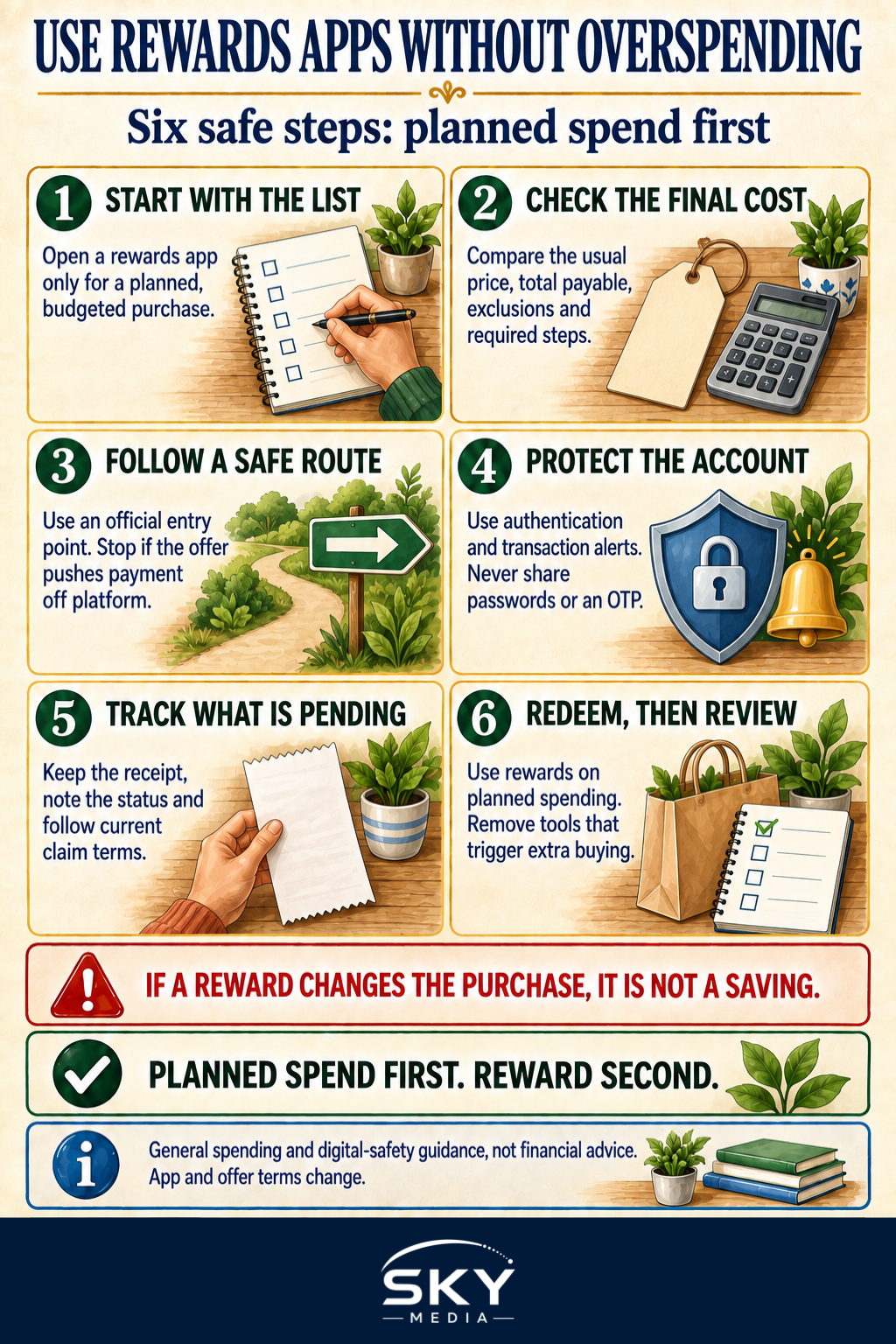
What cashback and rewards apps actually do
Broadly, these tools give you something back on purchases you make. The reward comes in a few common forms. Some return a slice of what you spend as cashback, credited over time. Some award points that you later exchange for vouchers, discounts, or products. Some are tied to a supermarket, a telco, a transport service, or an online marketplace and reward loyalty to that one place. Others sit across many merchants and reward you for shopping through their link or platform.
The value is real but usually modest. Think of rewards as a small bonus on top of a purchase, not a reason to make the purchase. If you would have bought the item anyway, at a fair price, then a little back is a genuine win. The trouble starts when the reward becomes the motive.
The golden rule: rewards should follow spending
The single most important habit is this: never spend more to earn more. It is easy to be lured by a threshold, such as spending a bit extra to unlock a bonus, or buying an item you do not need because the points look generous. In almost every case, the extra you spend outweighs the reward you gain. A points bonus is worth little if it costs you real dollars you would not otherwise have parted with.
Keep a simple test in mind before any reward-driven purchase:
- Would I buy this at this price without the reward? If no, skip it.
- Is the reward genuinely worth more than any premium I am paying? Usually not.
- Am I adding items just to hit a spending threshold? That is the app winning, not you.
If a purchase only makes sense because of the points, it does not make sense. Let rewards be a quiet bonus on planned spending, and they will help. Let them steer your choices, and they will cost you.
Stack savings sensibly, not obsessively
There is a mild art to combining rewards without turning shopping into a second job. Many people layer a couple of methods on the same purchase, for example paying a bill you already owe through a channel that returns a little cashback, or using a supermarket’s own app for a shop you were doing anyway. Done lightly, this is smart. Done obsessively, it eats time and tempts overspending.
Here is a simple way to judge whether a rewards habit is helping or hurting.
| Habit | Helps your money | Hurts your money |
|---|---|---|
| Spending motive | Buy what you planned, earn on top | Buy extra to chase points |
| Number of apps | A few you actually use | So many you lose track |
| Time spent | A minute at checkout | Hours hunting tiny bonuses |
| Redeeming rewards | Use them before they expire | Let points lapse unused |
A few practical tips for sensible stacking:
- Pick two or three tools that match where you already spend, and ignore the rest.
- Concentrate rewards where your regular spending is heaviest, such as groceries or transport, so points build faster.
- Redeem before expiry. Unused points are a saving you never actually banked.
- Review your apps every few months and drop the ones you no longer use.
Watch the traps that quietly cost you
Rewards apps are a business, and their prompts are designed to increase spending. The most common trap is the spending threshold that dangles a bonus just above your normal basket. Another is the countdown or limited-time multiplier that manufactures urgency. A third is simple clutter: signing up for so many programmes that you forget which is which and never redeem anything.
Be mindful of a few other things. Read the terms, since expiry dates, caps, and exclusions are common and change often. Watch your data and permissions, and only grant what a tool genuinely needs to function. Be alert to scams that imitate popular rewards apps to phish your details; when in doubt, verify through the official app store listing or the merchant directly, and look up the current ScamShield or Police hotline rather than trusting a link in a message. GST applies to most purchases, so the price you pay is a touch higher than the tag, which is worth remembering when a reward looks like it fully offsets a cost.
Fit rewards into a bigger money picture
Cashback and rewards are the icing, not the cake. The bigger wins in everyday money come from planning your shop, comparing prices, avoiding impulse buys, and not paying for things you do not use. Rewards work best layered on top of those solid habits, quietly returning a little on spending that was already sensible.
If you want to build the foundation first, MoneySense, the national financial-literacy programme, is a neutral place to start. From there, treat rewards as a light, optional bonus. Choose a couple of tools that fit your real life, use them on spending you were going to do anyway, redeem before things expire, and never let a points offer talk you into a purchase. Do that, and cashback and rewards apps in Singapore become a small, steady tailwind on your budget rather than a reason to spend more.
Explore more
Build the habits that make rewards worthwhile with these related reads. Get the fundamentals in how to become a smarter shopper, get more from store schemes in how to make the most of loyalty programmes, and keep spending intentional with how to stop impulse buying.
Frequently Asked Questions
Are cashback and rewards apps safe to download and use? Most are fine if you download them from the official app store listing and read what permissions they ask for. Grant only what the app needs to work. Be careful of lookalike apps and messages that ask for your details, since scammers copy popular ones.
How much personal data do rewards apps collect? They typically record what you buy, where and when, plus the details you give at sign-up. Read the privacy terms before joining and review the permissions on your phone. If an app asks for more than it plainly needs, it may not be worth using.
Do cashback and points count as taxable income? For ordinary shoppers, small rewards earned on your own purchases are generally treated as a discount rather than income. Rules can differ for business use or unusual arrangements, so check with IRAS or a tax professional if you are unsure.
How many rewards apps should one person keep on their phone? Two or three that match where you already spend most is plenty. More than that and it becomes hard to track balances and expiry dates. Delete any app you have not used in a few months, and redeem leftover points first.
What should I do if my cashback never arrives? Check the app’s terms for how long crediting takes and any exclusions. Keep your receipt or order confirmation, then contact the app’s support with the details. If that gets nowhere, you can ask CASE for advice on your options.