
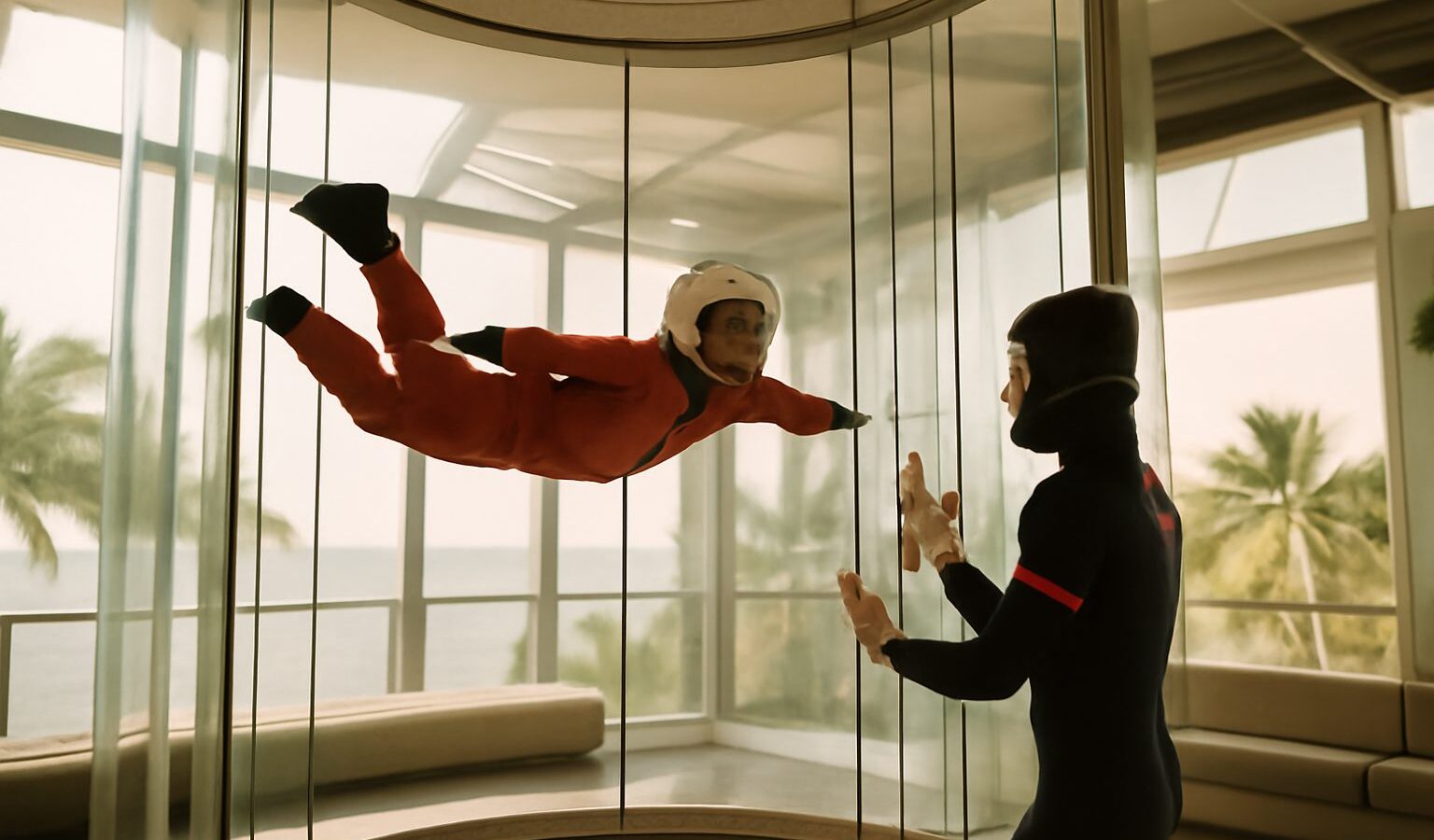
If the idea of leaping out of a plane thrills you but the reality terrifies you, indoor skydiving in Singapore is the sweet spot. You get the sensation of free fall, the roar of rushing air, and the odd, joyful feeling of your body floating on a cushion of wind, all without an aircraft, a parachute, or the long ride up to altitude. It is one of those rare activities that feels genuinely extreme yet is safe enough for kids, cautious first-timers, and grandparents who just want to say they did it.
The best-known place to try it locally is iFly, a vertical wind tunnel where powerful fans generate a controlled column of air strong enough to lift a human off the ground. In this guide we walk through what the experience actually feels like, who it suits, how a typical session runs, and how to get the most out of your flight time.
What Indoor Skydiving Actually Is
Indoor skydiving recreates the free-fall portion of a real skydive inside a see-through vertical wind tunnel. Instead of falling through the sky, you lie face down on a fast-moving stream of air that pushes up against your body. Get your posture right and the wind holds you steady, so it feels less like falling and more like flying in place.
The sport is sometimes called bodyflight, and there is real skill to it. Tiny changes in how you angle your arms, legs, hips, and chin steer you up, down, and around the chamber. Beginners are not expected to master any of this. An instructor is in the tunnel with you the entire time, hands ready to guide your position and keep you stable.
A few things that surprise first-timers:
- The wind is loud, so instructors use hand signals rather than shouting.
- You do not need to jump or brace. You simply lean into the airflow and let it catch you.
- Relaxing is harder than it sounds. The instinct is to tense up, but a loose, arched body flies best.
Who It Suits
The great strength of indoor skydiving is how wide its appeal is. It works for:
- Complete beginners who want a taste of skydiving without the commitment or the height.
- Families, since younger children can usually take part once they meet a minimum age and health guideline. Always check the current requirements before booking.
- Thrill-seekers chasing a new bucket-list experience close to home.
- Groups, from birthday parties to team outings, because everyone takes turns and cheers each other on.
- Nervous flyers who are curious about skydiving but not ready to leave a plane.
There are sensible health limits. People with heart conditions, recent surgeries, shoulder or back injuries, or who are pregnant are generally advised not to fly. Weight and age guidelines also apply. None of this is meant to discourage you, only to keep everyone safe, so read the operator’s current eligibility notes honestly before you sign up.
What to Expect on the Day
Most sessions follow a similar rhythm, even though exact details vary by operator and package, so treat the following as a general picture rather than a fixed script.
You arrive, check in, and complete a short safety waiver. Next comes a training briefing where an instructor teaches you the basic flying posture: chin up, arms out and slightly forward, legs bent at the knee, body gently arched. You practise the key hand signals so you can respond in the tunnel where talking is impossible.
Then you gear up. Expect a jumpsuit, helmet, goggles, and ear protection, all provided. You wait your turn with your group beside the chamber, which is part of the fun as you watch others fly.
When it is your turn, you step to the doorway, lean forward into the airflow, and the wind takes your weight. Each flight is short, often measured in a couple of intense minutes across two turns, but it feels much longer while you are in it. Your instructor stays close, correcting your position and, once you look steady, sometimes taking you on a spiralling ride higher up the tunnel.
| Stage | What happens | Roughly how it feels |
|---|---|---|
| Check-in and briefing | Waiver, safety talk, posture and signals training | Informative, a little nervy |
| Gearing up | Suit, helmet, goggles, ear protection | Excited anticipation |
| First flight | You enter the tunnel and float on the airflow | Loud, exhilarating, disorienting |
| Second flight | Better posture, possible high fly with instructor | Confident, pure fun |
By the second turn most people have relaxed enough to actually enjoy the sensation rather than just survive it.
Where You Find It and How to Get There
In Singapore, indoor skydiving is most associated with the southern resort island area, a short and well-connected trip from the city. You can reach the general Sentosa area by MRT to the nearby interchange and then the connecting monorail, by bus, by taxi or private hire, or on foot via the boardwalk if you enjoy a stroll. Because attractions and transport arrangements do change, check the current directions and any island admission details before you head down.
The location is a genuine draw in itself, with sea views and a cluster of other things to do nearby, so it is easy to build a half or full day around your flight.
Tips for a Great First Flight
A little preparation goes a long way toward a smoother, more enjoyable session.
- Book ahead. Weekends and school holidays fill up, so reserve your slot early and arrive with time to spare.
- Dress simply. Wear comfortable clothes and lace-up trainers. Leave loose jewellery, watches, and anything in your pockets behind.
- Listen closely at the briefing. Nailing the posture and signals is the single biggest factor in how good your flight feels.
- Relax your body. Tensing up makes you unstable. Breathe, soften your shoulders, and trust the air to hold you.
- Keep your chin up. Looking down drops your body position. Eyes forward keeps you level and flying well.
- Consider photos or video. Many venues offer add-ons that capture your flight. It is worth it, because you will want proof.
- Manage expectations. Your first flights are short by design. Think of it as a taste, and many people come back for longer packages once they are hooked.
Prices, package options, opening hours, and eligibility rules all change over time and differ between operators, so always confirm the current details directly before you commit. What does not change is the feeling. Few local activities deliver such a big, memorable thrill in such a short, beginner-friendly package.
Explore More
Indoor skydiving pairs naturally with a bigger day out, so browse our Sentosa guide to fill the rest of your itinerary. For more heart-pumping options, see our roundups of high ropes and adventure parks and go-karting in Singapore. If you are planning around little ones, our guide to Singapore with kids has plenty more ideas.