
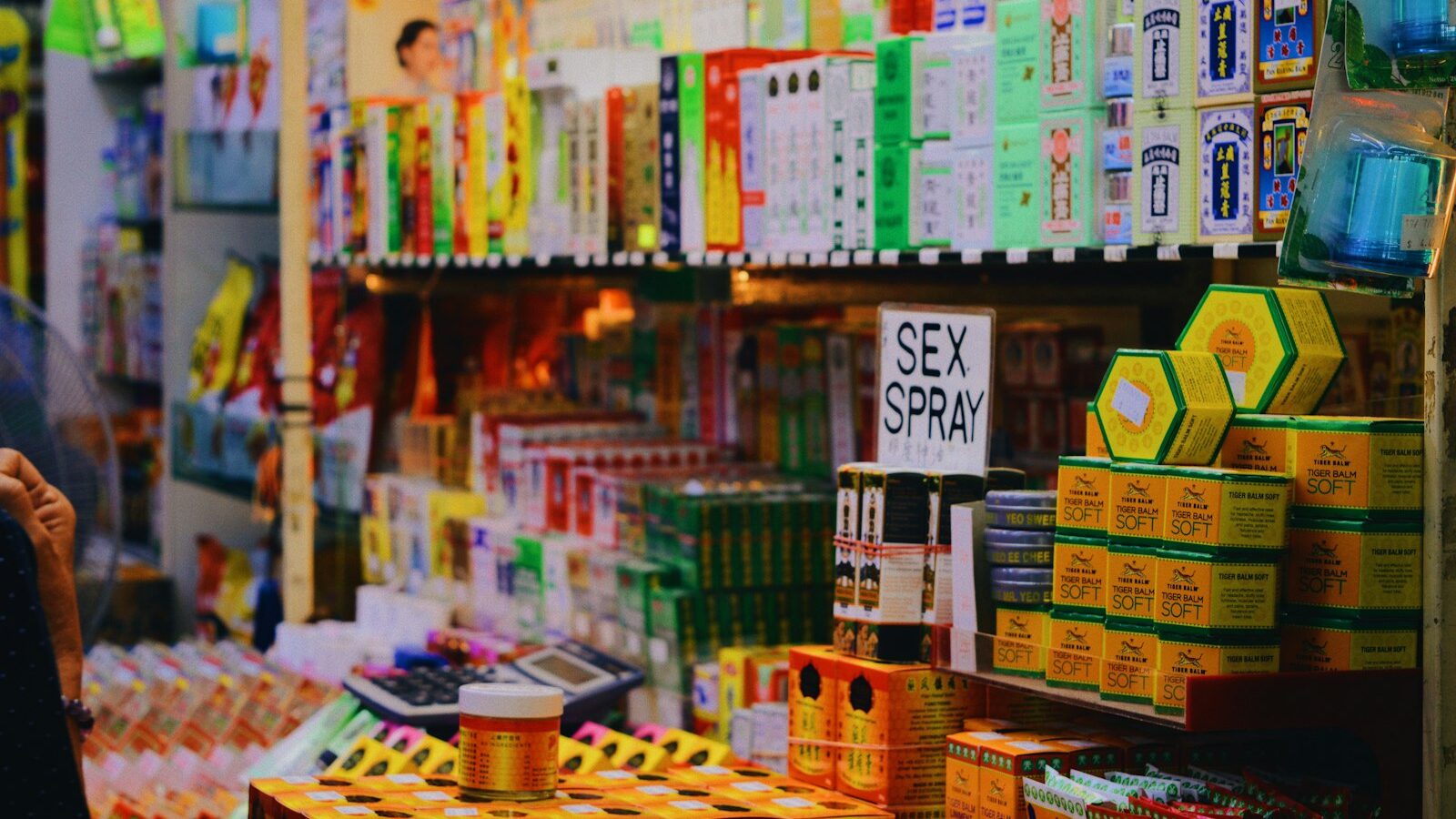
Ask anyone overseas what they know about Singapore and “you can’t chew gum there” is often near the top of the list. The chewing gum ban in Singapore is real, but it is narrower than the myth suggests. It is mainly about selling and importing gum, not about the act of chewing. If you are moving here, or have just arrived, here is what the rules actually cover so you can stop worrying about the pack in your bag and focus on what matters. For the wider picture, see our guides to Singapore laws and fines newcomers should know and Singapore laws to know for visitors and newcomers.
This is general information, not legal advice. Rules can change, so check the current position with Singapore Customs and the Health Sciences Authority (HSA) before relying on it.
Why Singapore Restricted Chewing Gum
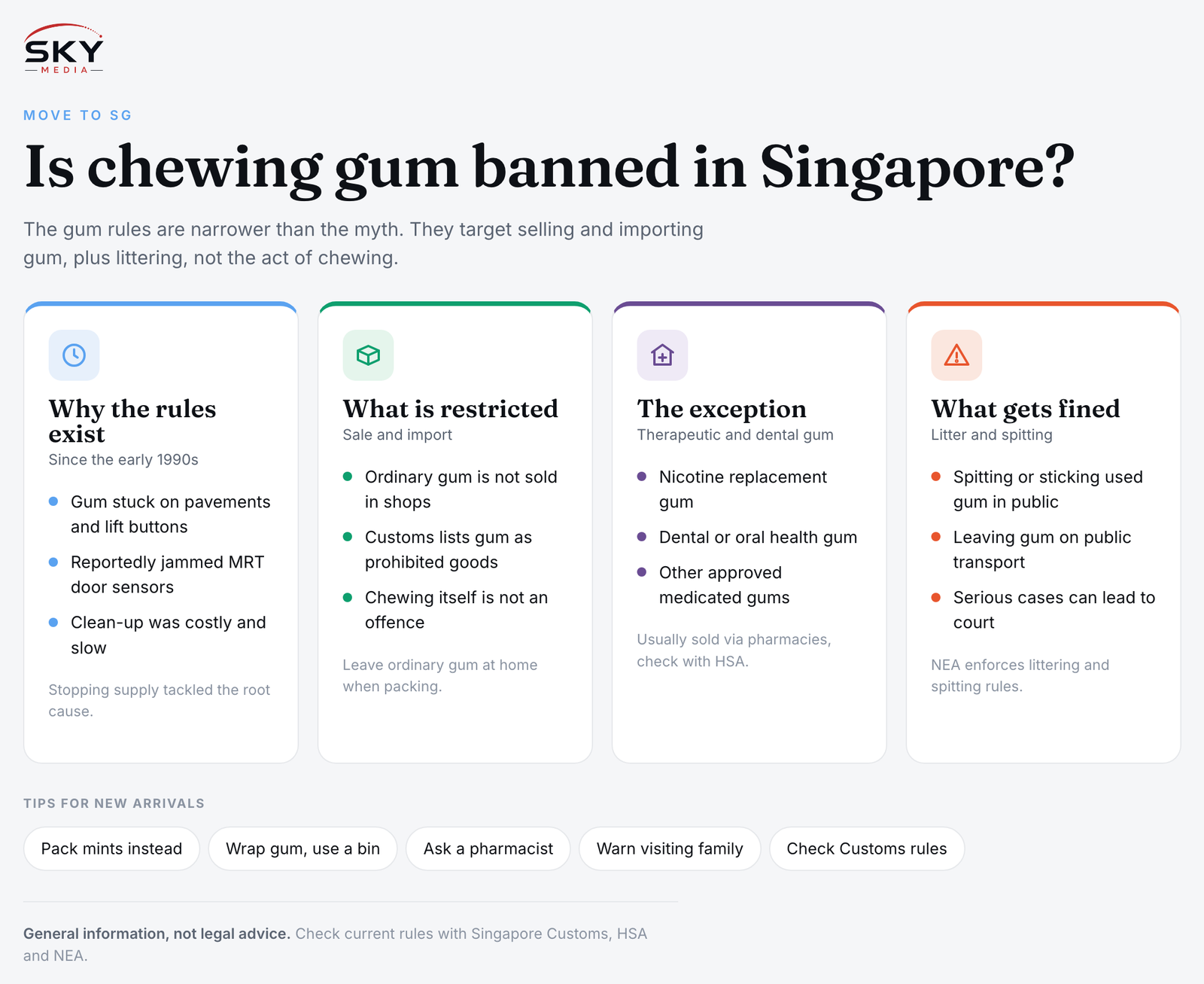
The restriction dates back to the early 1990s. At the time, discarded gum was causing a real maintenance headache. It was stuck on pavements, lift buttons, letterboxes and seats on buses, and it was reportedly jamming the door sensors on MRT trains, which disrupted services. Cleaning it up was expensive and time-consuming.
Rather than relying only on litter fines after the fact, the government chose to stop gum from entering the market in the first place. The result was a set of regulations that control the import and sale of chewing gum. The approach fits a wider Singapore pattern of using clear rules to keep shared public spaces clean, which you will also see in rules on littering, smoking and spitting.
What the Rules Actually Prohibit
The key thing for newcomers to understand is the difference between possessing or chewing gum and importing or selling it.
- Selling ordinary chewing gum in shops is not allowed. You will not find regular bubble gum or spearmint gum at convenience stores, supermarkets or petrol station kiosks.
- Importing chewing gum is controlled. Singapore Customs lists chewing gum, other than dental and medicated gum, among prohibited goods. That includes gum brought in by travellers, not only commercial shipments.
- Chewing gum itself is not a crime. There is no law against chewing gum in public as such. What gets people into trouble is how they dispose of it.
In practice, a traveller with a half-used pack in a coat pocket is unlikely to be the target of enforcement, but that does not make it permitted. The safest approach is simply not to bring ordinary gum into the country. If you are asked about it at the checkpoint, be honest, and follow the officer’s instructions.
The Therapeutic and Dental Gum Exception
Since the mid-2000s, certain types of gum with a health purpose have been allowed. These are often described as therapeutic or dental gum, and they include:
- Nicotine replacement gum, used by people trying to quit smoking.
- Dental or oral health gum, such as some sugar-free gums marketed for tooth health.
- Other medicated gums approved by the authorities.
These products are regulated and are generally sold through pharmacies, often with a pharmacist involved, rather than on open supermarket shelves. The specific rules on which products qualify, who can supply them and whether records are kept are set by HSA, so check with a pharmacist or HSA if you need a particular product.
If you use nicotine gum, speak to a doctor or pharmacist here rather than bringing a large supply from home. If you are interested in gum for oral health, a dentist can advise on whether it is useful for you. Our guide to gum disease in adults covers the basics of looking after your gums.
| Activity | Generally Allowed? | Who to Check With |
|---|---|---|
| Chewing gum you already have, in private | Not an offence in itself | Not applicable, but dispose of it properly |
| Buying ordinary gum in a Singapore shop | No, it is not sold | Not applicable |
| Bringing ordinary gum in your luggage | No, listed as prohibited goods | Singapore Customs |
| Buying nicotine or dental gum from a pharmacy | Yes, within the regulated rules | Pharmacist or HSA |
| Spitting or sticking used gum in public | No, treated as littering or spitting | National Environment Agency (NEA) |
Fines, Littering and What Gets Enforced
The penalties that newcomers most often encounter are not about gum specifically. They are about littering and spitting, which the National Environment Agency (NEA) enforces under environmental public health laws.
- Throwing used gum on the ground, sticking it under a table or leaving it on public transport is littering. Enforcement officers can issue fines, and repeat or serious cases can lead to court and Corrective Work Orders, where offenders clean public areas.
- Spitting in public is also an offence, separate from littering.
- Selling or importing gum illegally is a more serious matter handled under the import regulations, with penalties that can be substantial.
The exact fine amounts change from time to time, so check the current figures on the NEA and Singapore Customs websites rather than relying on numbers quoted in older travel articles.
Practical Tips for New Arrivals
You do not need to treat gum as a major worry, but a few habits will save you from awkward moments:
- Leave ordinary gum at home when packing. If you find some in your bag at the airport, you can dispose of it before clearing customs.
- Choose alternatives for fresh breath, such as mints, lozenges or breath sprays, which are widely sold.
- If you rely on nicotine gum, ask a pharmacist on arrival about local options, and keep any medicine in its original packaging when travelling.
- Always use a bin. If you do have gum, wrap it in paper and put it in a rubbish bin. Bins are common at bus stops, MRT stations and hawker centres.
- Explain the rule to visiting friends and family. Many visitors arrive with gum without knowing the rules, so a quick heads-up before their trip helps.
Putting the Myth in Perspective
Singapore’s gum rules are a good example of how the country manages shared spaces: a clear rule, focused on the root cause, with enforcement mostly aimed at behaviour that affects other people. Once you know that the restriction is about sale, import and litter rather than chewing itself, it becomes just another small local custom to learn, like queueing at hawker stalls or “chope-ing” a table with a packet of tissues.
For anything beyond the basics, especially if you want to bring medicated products into the country, check the current rules with Singapore Customs, HSA and NEA before you travel.
Frequently Asked Questions
Can I bring nicotine gum into Singapore from overseas? Not freely. Medicated gum is regulated by HSA, and it is generally supplied through pharmacies rather than carried in bulk from abroad. Speak to a doctor or pharmacist here about local options, and check the current import rules with HSA and Singapore Customs before you travel.
What are mints and lozenges, and are they fine for fresh breath? Mints, lozenges and breath sprays are widely sold and are the usual alternatives for fresh breath, since ordinary chewing gum is not sold here. Ordinary gum is the thing that is restricted, so these products are an easy substitute for newcomers.
Will a customs officer check my bag for gum at Changi? Customs can inspect baggage, and ordinary gum is listed among prohibited goods. In practice a half-used pack is unlikely to be the focus of enforcement, but that does not make it permitted. If asked at the checkpoint, be honest and follow the officer’s instructions.
What is the penalty for sticking used gum under a table? It counts as littering, which NEA enforces. Officers can issue fines, and repeat or serious cases can lead to court and Corrective Work Orders. Amounts change from time to time, so check NEA’s website rather than older travel articles. Wrap gum in paper and use a bin.
Is it legal to chew gum that a friend gave me in Singapore? Chewing itself is not a crime, as there is no law against chewing gum in public. The restrictions cover importing and selling ordinary gum, and what gets people into trouble is how they dispose of it. Chewing quietly and binning the gum properly is the safe approach.