
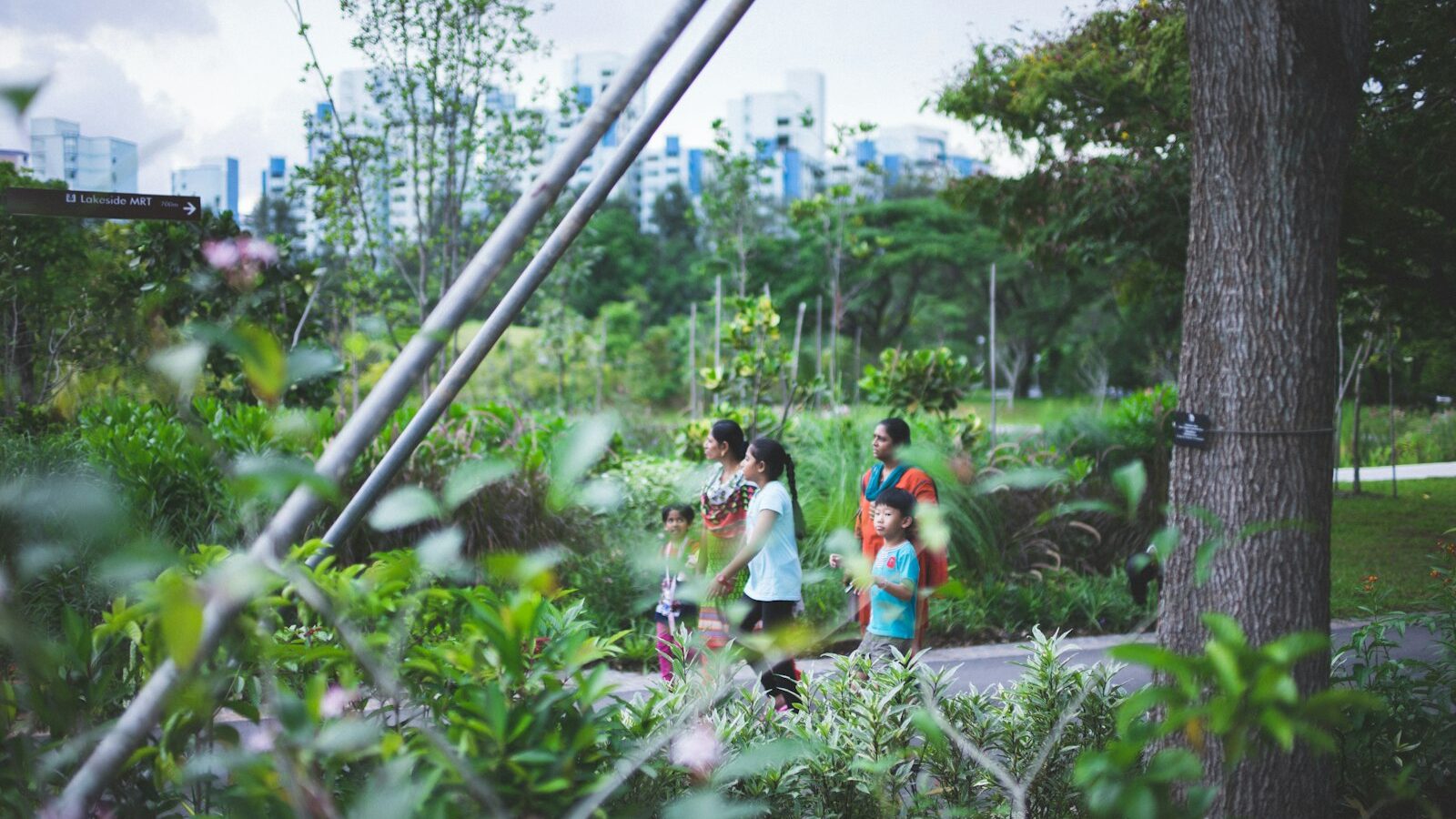
Jacob Ballas Children’s Garden is the part of the Singapore Botanic Gardens built entirely for children. Instead of manicured lawns and orchid displays, it offers water play, a treehouse, rope bridges, a forest stream and small gardens where kids learn where food and plants come from. It is free to enter, shaded in many places, and one of the best half-day outings in town for families with young children.
This guide focuses only on the children’s garden: who can enter, which zones suit which ages, how to plan around water play, and what to bring.
Who Can Enter: The Age and Adult Rules
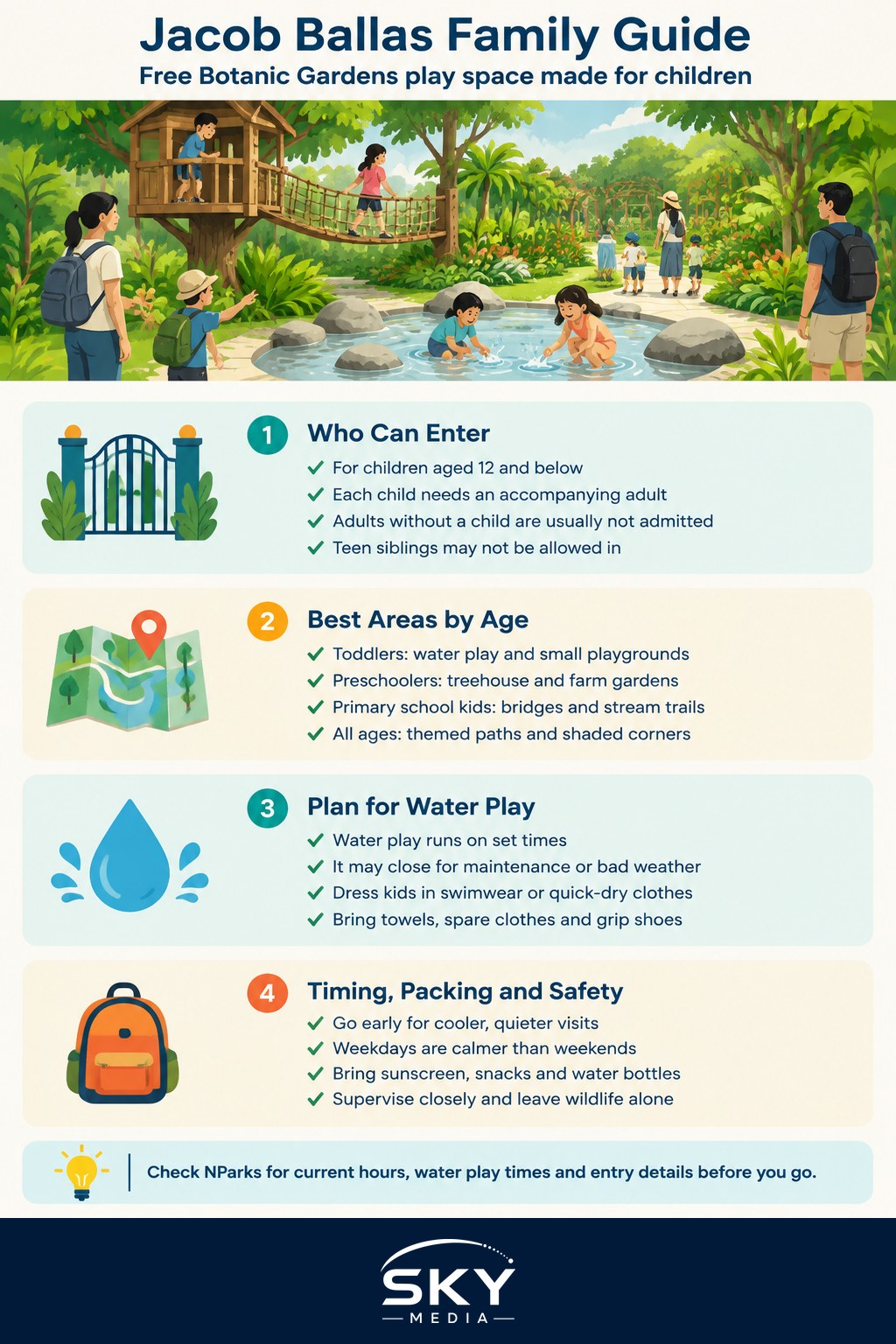
The children’s garden has a simple but strict entry rule. It is designed for children aged 12 and below, and every child must be accompanied by an adult. Adults who come without a child are generally not admitted, which keeps the space focused on families and makes parents feel more comfortable letting little ones roam.
A few practical points follow from this rule:
- Bring an adult for every group of children. Staff may ask about the age of older-looking kids, so keep the rule in mind if you have a tall 11 or 12 year old.
- Teenage siblings may not be allowed in. If you have a teen plus younger children, plan for the older one to explore the rest of the Botanic Gardens with another adult, or check the current entry policy with NParks (National Parks Board) before you go.
Entry rules, capacity limits and any booking requirements can change, especially during school holidays. Check the NParks website for the current details before you set off.
The Main Zones and What Each Age Group Enjoys
The garden is laid out as a series of themed areas connected by paths. You do not need to see everything in order, and most families end up looping back to their children’s favourite spot.
- Water play area. Shallow fountains and splash features where toddlers and young children can get thoroughly wet. This is usually the busiest part of the garden on hot days.
- Treehouse. A multi-level structure with stairs, lookouts and slides. Older children love climbing to the top; toddlers may need a hand on the steps.
- Suspension bridges and rope features. Bouncy bridges and climbing nets through the trees, best suited to confident walkers and school-age kids.
- Forest and stream areas. Natural paths, a stream and rainforest planting where children can spot insects, fish and birds. Remind kids to look but not touch or catch wildlife.
- Farm, orchard and plant gardens. Small edible and educational gardens that show how rice, fruit and vegetables grow, with simple signs for curious readers.
- Playgrounds. Several play areas with equipment sized for younger and older children.
| Child’s age | Best zones to start with | What to watch for |
|---|---|---|
| Toddlers (1 to 3) | Water play, gentle garden paths, smaller playgrounds | Slippery wet surfaces, swim nappies, close supervision near water |
| Preschoolers (4 to 6) | Water play, treehouse lower levels, farm and orchard gardens | Getting overtired, heat, wandering off in crowds |
| Primary school (7 to 12) | Treehouse top, suspension bridges, forest stream trails | Rushing on bridges, staying on marked paths, sun exposure |
Planning Around Water Play
The water play area is the highlight for many families, but it is also where most of the planning goes. A little preparation saves a soggy, unhappy ride home.
- Check the water play timings. Water features often run on a set schedule within the garden’s opening hours and may close for maintenance or bad weather. Confirm on the NParks website before you promise the kids a splash.
- Dress for water from the start. Swimwear under clothes, or quick-dry clothing, makes changing easier. Toddlers in nappies should wear swim nappies.
- Pack a full change of clothes and a towel per child. Include spare underwear and a plastic bag for wet items.
- Bring water shoes or sandals with grip. Wet surfaces can be slippery, and running is common.
- Respect the rules on the day. Staff may pause water play during thunderstorms, which are frequent in Singapore afternoons. Lightning warnings mean everyone should leave the water.
If your child is not keen on getting wet, the treehouse and stream trails offer plenty to do, so water play does not have to be the centre of the trip.
Opening Hours, Getting There and Timing Your Visit
The children’s garden keeps its own opening hours, which are shorter than the wider Botanic Gardens, and it has a regular closure day each week plus occasional closures for maintenance. Because these details are updated from time to time, look them up on the NParks website on the day you plan to visit rather than relying on an old blog post or screenshot.
The garden sits in the Bukit Timah side of the Botanic Gardens, near the Botanic Gardens MRT station on the Circle and Downtown Lines. From the station, it is a short walk to the garden’s entrance, which is handy with a stroller.
Tips on timing:
- Go early in the day. Mornings are cooler and less crowded. By late morning on weekends and school holidays, popular areas like the treehouse can get busy.
- Weekdays are calmer. If your child is not yet in school, a weekday morning is ideal.
- Watch the weather. Afternoon storms are common, especially during the monsoon months. Bring a compact umbrella and a backup indoor plan.
- Plan for a shorter visit with toddlers. Two to three hours is often enough before naps and hunger take over.
What to Pack for a Day at the Children’s Garden
A small, well-packed bag makes the visit far easier:
- Water bottles for everyone, as the heat and play make kids thirsty quickly
- Sunscreen, hats and insect repellent suitable for children
- Swimwear, towels, a change of clothes and a wet bag
- Light snacks, eaten in designated areas only, and never shared with birds or animals
- Wet wipes, tissues and any medication your child needs
- A foldable stroller for younger children, as paths are long for small legs
Food and drink rules, and where you can eat, are set by NParks. Keep the garden clean by taking your rubbish with you, and teach kids not to pick plants, fruit or flowers in the edible gardens, as these are part of the learning displays.
Safety and Garden Etiquette for Families
The children’s garden is designed to be safe, but it is still an outdoor space with water, heights and wildlife.
- Supervise actively. Staff are not lifeguards or babysitters. Keep young children within sight, especially at the water play area and on bridges.
- Agree on a meeting point. For school-age kids, choose an easy landmark in case you get separated.
- Mind the heat. Take shade breaks, drink regularly and watch for signs of overheating such as flushed skin, unusual tiredness or headaches.
- Leave wildlife alone. Monitor lizards, birds, squirrels and insects live in and around the garden. Do not feed, chase or touch them.
- Take turns. The treehouse slides and bridges can get crowded. Remind kids to wait their turn and look out for smaller children.
Making It Part of a Bigger Family Day
Many families pair the children’s garden with other kid-friendly outings. On a rainy day, an indoor option like the Children’s Museum Singapore is a good swap. If your kids love outdoor play and nature, the Admiralty Park family guide and West Coast Park family guide cover two more big playground destinations, while the Singapore Zoo guide works for a full day of animals and shows.
Jacob Ballas Children’s Garden rewards families who come prepared: check hours and water play times, arrive early, pack for getting wet, and let the kids set the pace. It is a free, green and genuinely child-centred space that most families return to again and again.
Frequently Asked Questions
Do toddlers need swim nappies at the water play area? Yes, toddlers in nappies should wear swim nappies for water play. Also bring a full change of clothes and a towel per child, and sandals with grip, since wet surfaces are slippery. Keep a close eye on little ones near the water.
What can we do at the children’s garden if my child dislikes getting wet? Plenty. The treehouse, suspension bridges, forest stream trails, farm and orchard gardens and playgrounds all offer things to do, so water play does not need to be the centre of the trip. Pick zones according to your child’s age.
What happens to water play when it thunders? Staff may pause water play during thunderstorms, which are frequent in Singapore afternoons, and lightning warnings mean everyone should leave the water. Bring a compact umbrella and a backup indoor plan, and confirm water play timings on the NParks website.
How long should we plan for with a toddler? Two to three hours is often enough before naps and hunger take over. Go early in the day when it is cooler and less crowded, and bring a foldable stroller, since the paths are long for small legs.
Further reading: NEWater Visitor Centre: A Family Visitor Guide · Far East Organization Children’s Garden at Gardens by the Bay