
Reach for a drink in Singapore and the default is often sweet: bubble tea, canned soft drinks, or a teh with condensed milk. That is part of the fun of eating here, but plenty of people are looking for something lighter for everyday sipping. Kombucha in Singapore has gone from a niche health-shop item to a supermarket regular, and it sits within a wider shift towards lower-sugar drinks. This guide walks through what these options actually are, where to find them, and how to read a label so you can choose with confidence. It is general information, not medical or nutrition advice.
What Kombucha Actually Is
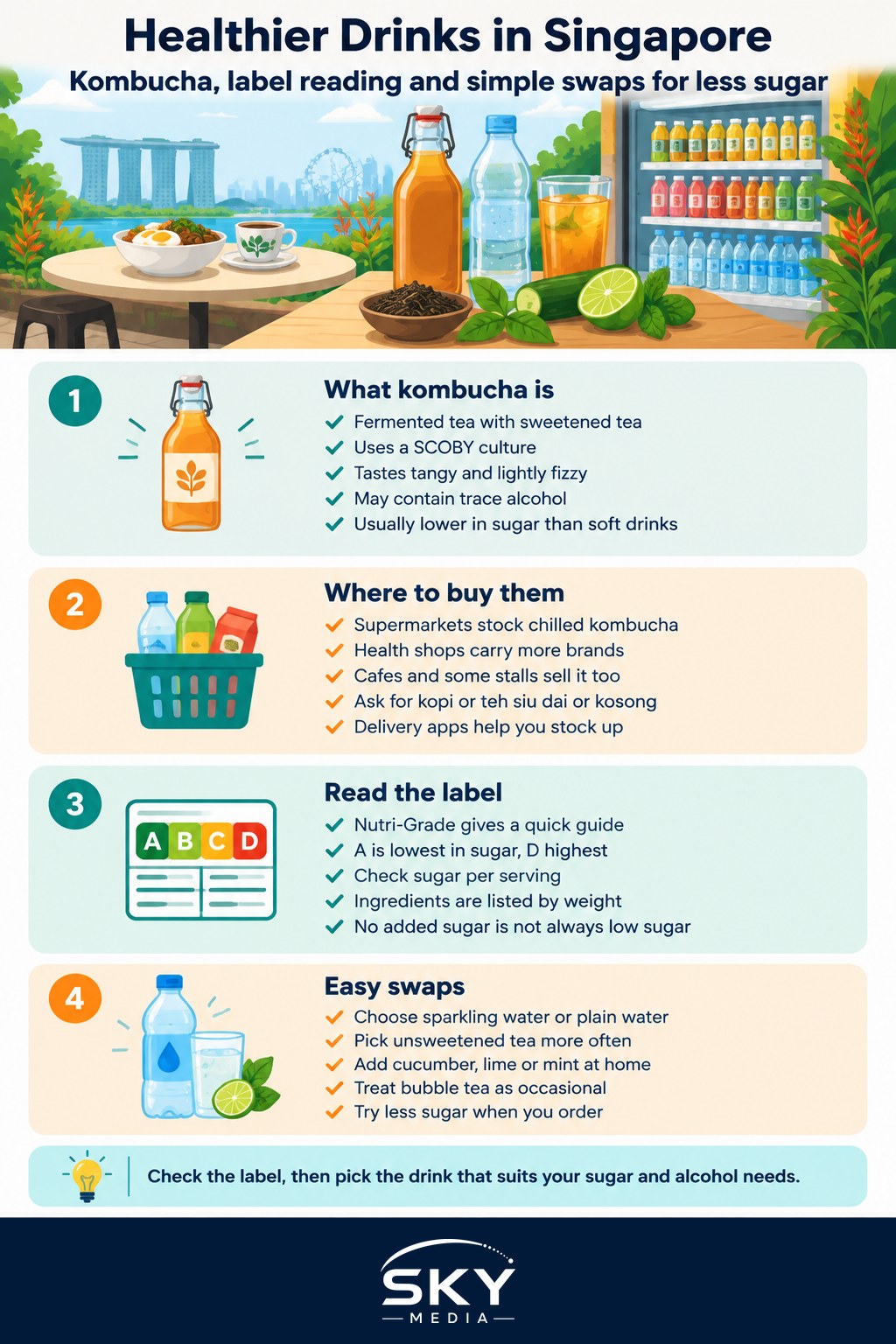
Kombucha is a fermented tea. Brewers take sweetened tea and add a culture, often called a SCOBY, which is a community of bacteria and yeast. Over one to a few weeks the culture ferments the sugar, producing a tangy, lightly fizzy drink with a small amount of remaining sweetness and, in some cases, a trace of alcohol from fermentation.
People are drawn to it for a few reasons:
- It is tart and refreshing, which suits our climate, and it scratches the itch for something fizzy without a heavy hit of sugar.
- It usually has far less sugar than a soft drink, though the amount varies a lot by brand and flavour.
- Fermented foods and drinks are popular with people interested in gut health, though claims here should be treated with caution rather than as fact.
A sensible note: because a little sugar and sometimes a trace of alcohol remain, kombucha is not automatically suitable for everyone. If you are pregnant, managing a health condition, or watching your alcohol intake, check the label and speak to a doctor or an accredited dietitian rather than relying on general buzz.
Where to Find Healthier Drinks in Singapore
The good news is that you no longer need a specialist shop. Options turn up across the island:
- Supermarkets stock chilled kombucha, coconut water, sparkling water, unsweetened teas and increasingly kefir and other fermented drinks.
- Health and organic shops carry a wider range of brands, larger bottles and less common flavours.
- Cafes and some hawker drink stalls now offer kombucha on tap or by the bottle, along with fresh-brewed teas you can order with less or no sugar.
- Kopitiams and drink stalls already give you a healthier lever most people forget: just ask for your kopi or teh with less sugar, “siu dai”, or no sugar, “kosong”.
- Delivery apps and online stores are handy for stocking up on local craft kombucha brands by the case.
Because ranges and stockists change, it is worth checking the specific shop or app for what is currently available rather than assuming, and prices vary widely between a supermarket bottle and a cafe pour.
Reading the Label and Nutri-Grade
A drink marketed as healthy is not automatically low in sugar, so the label matters more than the branding.
Singapore’s Nutri-Grade system helps here. Many pre-packaged and freshly prepared drinks carry a grade from A to D based on sugar and saturated fat, with A being the lowest in sugar and D the highest. It is a quick visual cue, but it is a guide, not a full picture, so it is still worth glancing at the nutrition panel.
A few practical habits:
- Check sugar per serving, and the serving size. A bottle may quietly contain two servings, which doubles the sugar you actually drink.
- Scan the ingredients order. Ingredients are listed by weight, so if a sweetener sits near the top, the drink is sweeter than its “natural” image suggests.
- Watch for words that sound healthy but still mean sugar, such as cane sugar, fruit juice concentrate, honey and agave. They are still sugars your body treats similarly.
- Do not assume “no added sugar” means low calorie. A juice can be unsweetened yet still high in natural sugars.
None of this means sweet drinks are forbidden. It simply means you can make an informed choice instead of guessing.
Comparing Everyday Healthier Options
Here is a rough comparison to help you pick day to day. Sugar levels and prices vary a lot by brand and by how a drink is prepared, so treat this as a general guide and check the label or venue for specifics.
| Drink | Rough sugar level | Fizzy? | Good to know |
|---|---|---|---|
| Kombucha | Low to moderate | Yes | Fermented, tangy, may have trace alcohol |
| Plain sparkling water | None | Yes | Zero sugar, add lime or mint for flavour |
| Unsweetened tea | None | No | Green, oolong or herbal, hot or cold |
| Coconut water | Low to moderate natural | No | Hydrating, choose plain over sweetened |
| Kefir or yoghurt drink | Varies, check label | No | Fermented, some are quite sweet |
| Kopi or teh kosong | None added | No | Just ask the stall for no sugar |
Simple Swaps That Add Up
You do not need to overhaul your whole diet to cut back on sugary drinks. Small, repeatable swaps tend to stick better:
- Order kopi or teh siu dai or kosong by default, and let your taste adjust over a couple of weeks.
- Keep a bottle of plain or sparkling water with you in the heat so a sweet drink is a choice, not a reflex when you are thirsty.
- Infuse water at home with cucumber, lime, mint or a few slices of ginger for flavour without sugar.
- Treat bubble tea and full-sugar soft drinks as an occasional pleasure rather than a daily habit, and use the “less sugar” options when you do order them.
- Try brewing your own iced tea or, if you are curious, a home kombucha kit, keeping clean equipment and good hygiene in mind so your ferment stays safe.
The aim is not to make drinking joyless. Singapore’s drink culture is one of its pleasures, from a well-pulled teh to a fresh coconut. Kombucha and its lower-sugar cousins simply widen the choice, so most days you can sip something light and save the sweet stuff for when it really counts. As always, if you have a medical condition, an allergy or a specific dietary goal, check with a doctor or accredited dietitian first.
Explore more
Thirsty for more? Our guide to coconut shake, water and coconut drinks covers another refreshing, lighter option, while non-alcoholic drinks and mocktails is handy when you want something special without the alcohol. If you would rather slow down with a hot cup, try our look at specialty tea houses next.