

Learning japanese in singapore is a rewarding project, whether you love anime and manga, dream of travelling through Kyoto, or want an edge at work with Japanese firms here. The good news is that you already live in a city with plenty of resources, patient communities, and a habit of picking up new languages. This guide walks you through what the language is really like, what a realistic path looks like, and the small daily habits that carry you forward without burning out.
Why Japanese Is Worth Learning
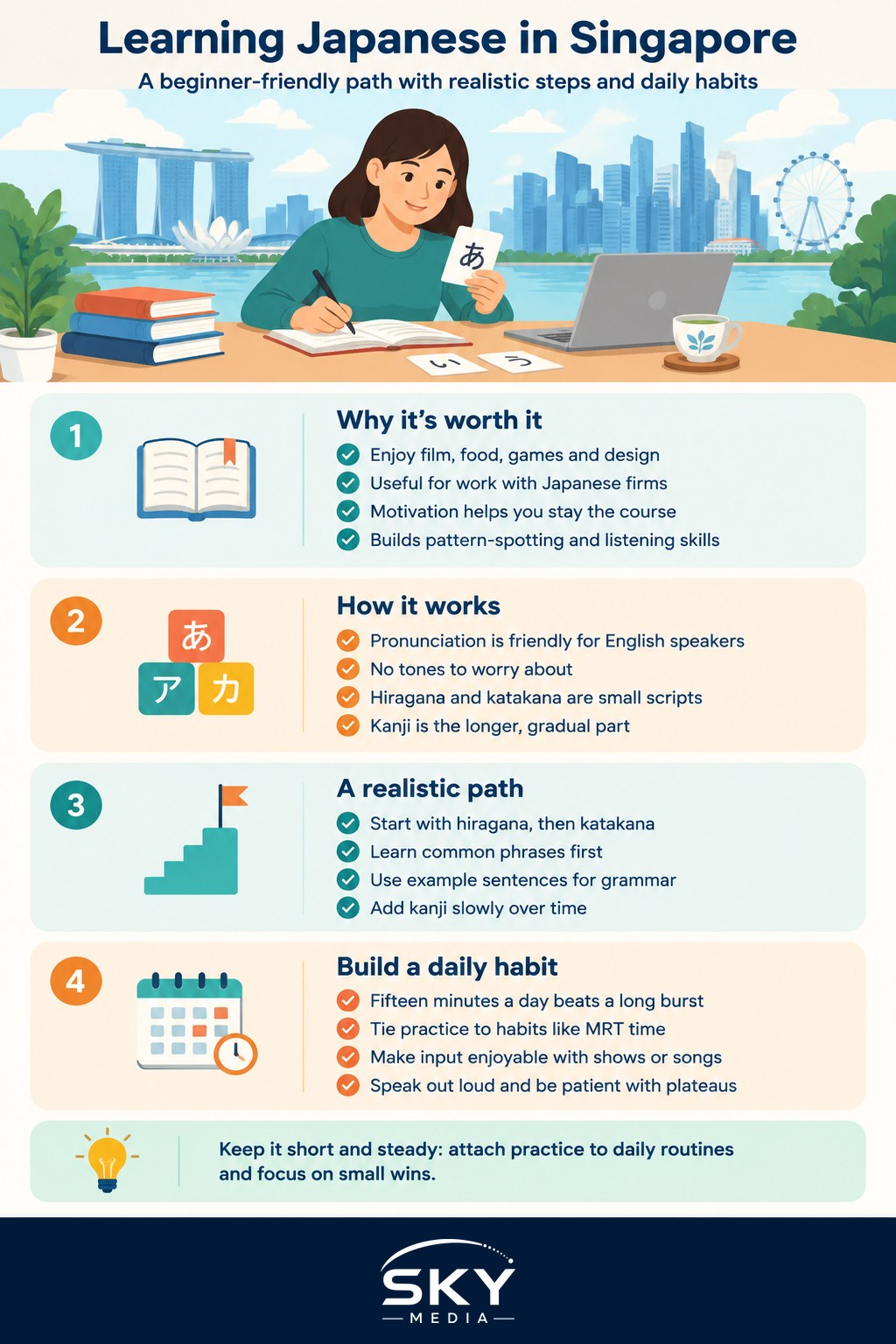
Japanese opens a door to a rich culture of film, food, literature, games, and design. For many people in Singapore that cultural pull is the real fuel, and it matters, because motivation is what keeps you going on the days you feel stuck. Beyond the fun, Japanese can be useful professionally, since many Japanese companies operate in the region and value staff who can bridge the language gap even at a basic level.
There is also a quieter benefit. Studying a language that works very differently from English trains your brain to notice patterns, listen closely, and be comfortable with not understanding everything at once. Those are skills that help with any kind of learning. If you are still deciding, our overview on learning a new language can help you weigh your reasons before you commit.
How Japanese Actually Works
Japanese has a reputation for being hard, but a lot of that fear comes from the writing system rather than the spoken language. Pronunciation is friendly for English speakers. There are only a handful of vowel sounds, words are made of clear syllables, and there are no tones to worry about, unlike Mandarin. Most learners find they can say simple sentences understandably within their first few weeks.
The writing is where you invest patience. Japanese uses three scripts together. Hiragana and katakana are two sets of phonetic characters, each fairly small, that you can learn over a few weeks with steady practice. Kanji, the characters borrowed from Chinese, are the long game, and you pick them up gradually over months and years. A helpful mindset is to treat the two phonetic scripts as your early wins and kanji as a slow, ongoing collection rather than a mountain to clear in one go.
Grammar also runs in a different order from English, with the verb usually at the end and small particles marking who does what. This feels strange at first and then, with exposure, starts to click. The trick is to learn through lots of simple example sentences instead of memorising rules in the abstract.
A Realistic Path for Beginners
Set your expectations kindly. Reaching comfortable everyday conversation in Japanese usually takes a good stretch of consistent study, often measured in a year or more of regular effort, not weeks. Progress is not a straight line, and that is normal.
A sensible order looks like this:
- Learn hiragana first, then katakana, so you can read sound out words.
- Build a core of everyday phrases for greetings, ordering food, and asking simple questions.
- Add basic grammar patterns through example sentences, one small pattern at a time.
- Start collecting common kanji slowly once the phonetic scripts feel solid.
You can mix free and paid routes. Free options include library materials, videos, and language exchange meetups where you practise with others. Paid options include structured classes and tutors, which give you feedback and a steady rhythm. Neither is required to succeed, and many people blend both. If you enjoy trading practice with real people, see our tips on finding a language exchange.
If you eventually want to test your level, Japanese has a well known standardised proficiency exam. Rather than trusting rumours about its format or cost, check the official organising body for current levels, dates, and fees. We also cover it separately in preparing for the JLPT.
Building a Daily Habit That Sticks
Consistency beats intensity. Fifteen honest minutes a day will take you further than a rushed three hour session once a fortnight. Anchor your practice to something you already do, such as reviewing flashcards on the MRT or listening to a simple podcast while you cook.
Make the input enjoyable so it never feels like a chore. Watch shows with subtitles, follow along with song lyrics, and label a few objects at home. Speak out loud even when alone, because your mouth needs practice forming new sounds. Expect a plateau or two, and treat them as a sign to change your method rather than to quit. For the longer view on moving past the beginner stage, read our guide on how to become fluent in a language.
Above all, be patient and kind with yourself. Learning japanese in singapore is a marathon you get to enjoy along the way, and every small phrase you understand is a real win worth celebrating.
Frequently Asked Questions
Do I have to learn kanji to speak Japanese? Not to speak. Pronunciation is friendly for English speakers, and you can say simple sentences within weeks. Kanji is the long game, picked up gradually over months and years once hiragana and katakana feel solid.
Which should I learn first, hiragana or katakana? Hiragana first, then katakana, so you can read and sound out words. Both are small sets of phonetic characters that you can learn over a few weeks with steady practice.
How long does it take to hold an everyday conversation in Japanese? Usually a good stretch of consistent study, often a year or more of regular effort, not weeks. Progress is not a straight line, so expect slow patches and keep a steady routine.
Is Japanese useful for working in Singapore? It can be, since many Japanese companies operate in the region and value staff who can bridge the language gap even at a basic level. How much it helps depends on your industry and role.
Where can I check the Japanese proficiency exam fees and dates? Check the official organising body for current levels, dates and fees instead of trusting rumours. The article covers the JLPT separately in its own preparation guide.
Further reading: Learning Basic Phrases for Travel