

In many countries, marriage and moving in together happen at the same time. In Singapore, that is often not the case. Couples register their marriage, hold the banquet, and then go home to separate family flats for months or even years. Living separately after marriage is common here, yet few people talk openly about how to handle it well.
This guide covers the practical and relationship side of being married but not yet sharing a home, whether you are waiting for a new flat, caring for family, or sorting out other circumstances. It is not about long-distance or commuter marriages where one spouse works in another city by choice; it is about the in-between phase before you can set up home together.
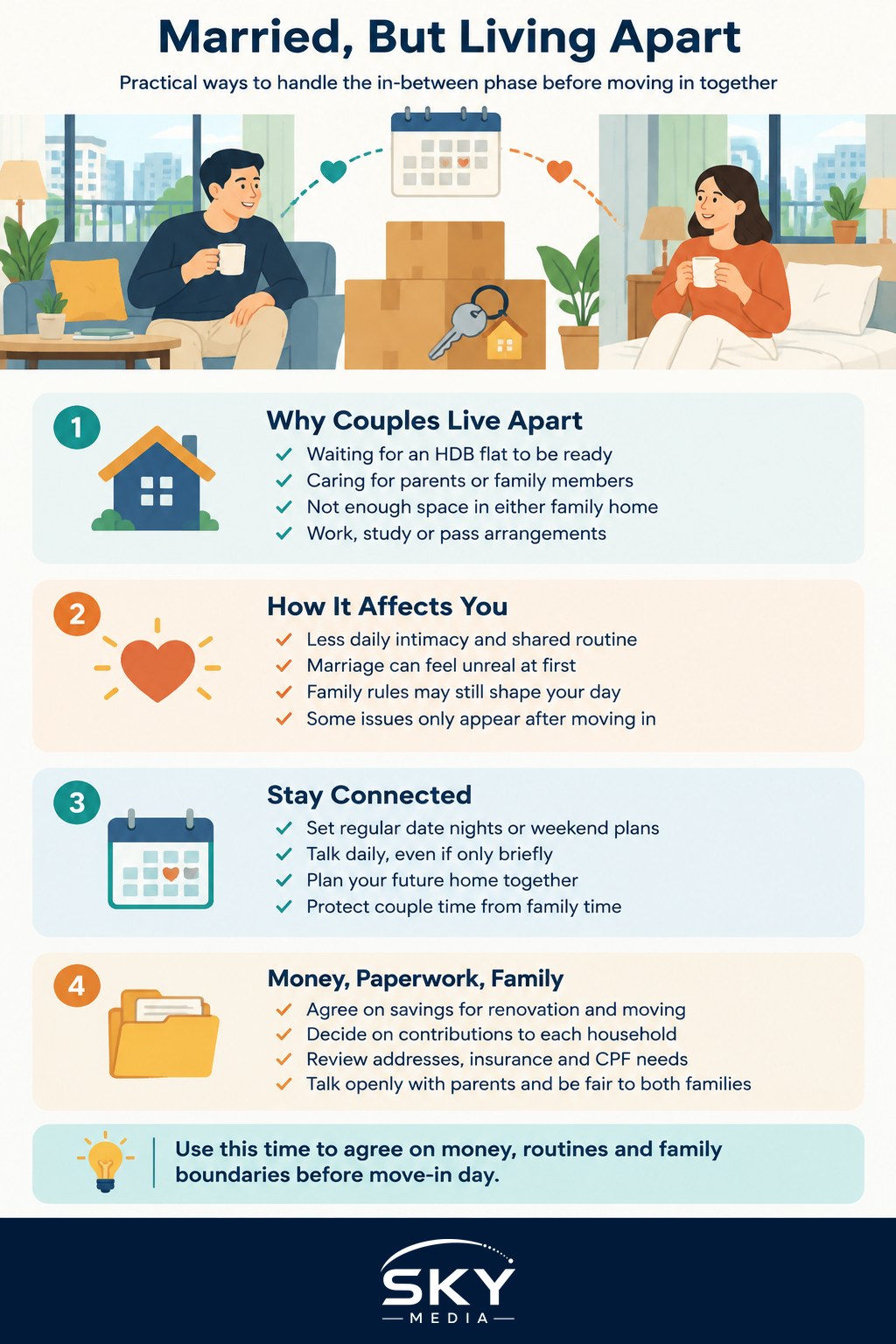
Why So Many Singapore Couples Start Married Life Apart
There is no single reason. Common situations include:
- Waiting for a new flat. Many couples apply for an HDB flat before or soon after marriage, and the wait for completion can be long. Moving in with in-laws is not always practical or wanted.
- Living with and caring for parents, especially an elderly or unwell parent who relies on one spouse.
- Space constraints. One or both family homes may simply not have room for another adult.
- Work, study or pass arrangements, such as a spouse finishing a course, or a foreign spouse sorting out their long-term visit or work pass.
- Financial planning, where staying with family a little longer helps the couple save for renovation and furnishing.
Rules on flat eligibility, application timelines and occupancy can affect your plans and may change. Check the current requirements with HDB directly rather than relying on what friends experienced a few years ago.
How Living Apart Can Affect Your Relationship
Living apart while married brings some real upsides: more time to save, continued support from family, and a gentler transition. But it also has challenges that are easy to underestimate.
- Little daily intimacy. You miss the small moments, such as chatting over dinner or winding down together at night.
- Feeling “not quite married”. Some couples say the marriage feels unreal until they share a home.
- Family dynamics. Parents may still treat you as a child at home, or expect you to follow household routines and curfews.
- Uneven effort. One partner may end up doing most of the travelling, planning or visiting.
- Postponed conflicts. Disagreements about chores, money and habits may not surface until you finally move in.
The table below compares common arrangements couples use during this phase.
| Arrangement | What it looks like | Things to agree on |
|---|---|---|
| Each lives with own family | Separate homes, regular dates and visits | How often you meet, and who travels |
| Split weeks between homes | Some nights at each family’s home | House rules, privacy, and contributing to each household |
| Live with one set of parents | Couple shares a room in one family home | Boundaries, chores, and time alone as a couple |
| Short-term rental | Renting a room or flat while waiting | Budget impact and whether it delays savings goals |
Staying Connected as a Couple
Being apart does not have to mean drifting apart. Couples who navigate this phase well tend to be intentional.
- Set a regular rhythm. Fixed date nights or weekend plans give you something to look forward to.
- Have overnight time when possible. Some couples alternate weekends at each family’s home, or plan the occasional staycation.
- Talk daily, even briefly. A short call or voice message before bed keeps you in each other’s routine.
- Plan your future home together. Discussing layouts, furniture and renovation ideas builds a sense of shared life.
- Share chores in advance. Cooking together at one family’s home, or shopping together for the flat, gives a preview of living together.
- Protect couple time from family time. Visiting both families is important, but not every meeting should be a family gathering.
For ideas on building habits in these early years, see our guide to your first year of marriage in Singapore.
Money and Paperwork While You Live Apart
Living separately does not pause the practical side of marriage. In fact, it is a good time to set up systems before the costs of a new home arrive.
Money matters:
- Agree on a savings plan for renovation, furniture and moving costs, and track progress together.
- Decide how you will handle contributions to each family household, especially if you pay your parents something for your keep.
- Discuss whether to open a joint account now or wait until you move in. Our guide on combining finances after marriage covers the main approaches.
- Avoid lifestyle creep. Frequent dates and staycations add up, so budget for them.
Paperwork to review:
- Your addresses. Each of you may keep your family address on your documents until you move. Update them when you do. Our guide to updating your documents after marriage lists what to change.
- Insurance. Check whether your policies reflect your new marital status and beneficiaries.
- CPF nominations and wills. Marriage can affect existing wills, and nominations may need updating. Read about making a will as a married couple, and check CPF nomination rules with CPF Board.
- Emergency contacts. Make sure your spouse is listed with employers, clinics and schools where relevant.
Managing Family Expectations
When you live with your parents after marriage, both generations need to adjust.
- Talk openly with your parents about how long you expect to stay and what will change, such as your spouse visiting or staying over.
- Respect house rules, while gently asking for privacy when you need it.
- Agree as a couple first before raising issues with either family, so you present a united front.
- Be fair to both families. Try to balance time at festivals, weekend meals and visits.
- Show appreciation. Helping with chores, groceries or household costs keeps relationships warm.
Cultural expectations vary from family to family. Some parents are relaxed about a married child staying over at the spouse’s home; others are not. Patient, respectful conversation usually works better than assumptions.
Preparing for the Move-In Day
Eventually, keys will be collected and the waiting will end. Use the time apart to prepare for living together.
- Discuss daily habits: sleep times, cleanliness, cooking and noise.
- Agree on how chores will be shared from day one.
- Plan your first few months’ budget, including utilities and groceries.
- Talk about how often family members will visit or stay over.
- Expect an adjustment period, even for couples who have dated for years.
Living separately after marriage can be a meaningful season rather than a frustrating wait. With good communication, clear plans and a little creativity, you can build a strong foundation before you share a front door.
Frequently Asked Questions
Is my marriage still valid if we do not live together after the wedding? Yes, a marriage is legally valid once it is registered, regardless of where each spouse sleeps. Living arrangements do not create or cancel the marriage. For anything that depends on shared residence, such as flat applications, check the current rules with HDB.
How do we know if living apart is starting to strain our marriage? Warning signs include meeting less and less, one person always doing the travelling, and small issues going unspoken. If you dread conversations or feel more like housemates visiting than partners, address it early. A calm talk about the rhythm that suits you both usually helps, and a counsellor can assist if you get stuck.
Is renting a room or flat while we wait for our flat worth it? It depends on how long the wait is and what you give up. Renting gives privacy and a trial run of shared living, but the rent can eat into the savings meant for renovation and furniture. Work out the monthly cost against your goals before deciding.
Which address should we use for official letters before we move in together? Most couples keep each family address until they have a shared home, as long as post reaches them reliably. Make sure each of you checks mail at that address, and update your records once you move. Government agencies and banks each have their own update process, so confirm on their websites.
How can we split the cost of dates and staycations fairly while living apart? Agree on a monthly dating budget and decide whether you split evenly or in proportion to income. Alternating who pays, or using a shared pot, keeps one person from quietly carrying the travel and outing costs. Review it every few months so it does not become a source of resentment.
Further reading: Making a Commuter Marriage Work in Singapore