
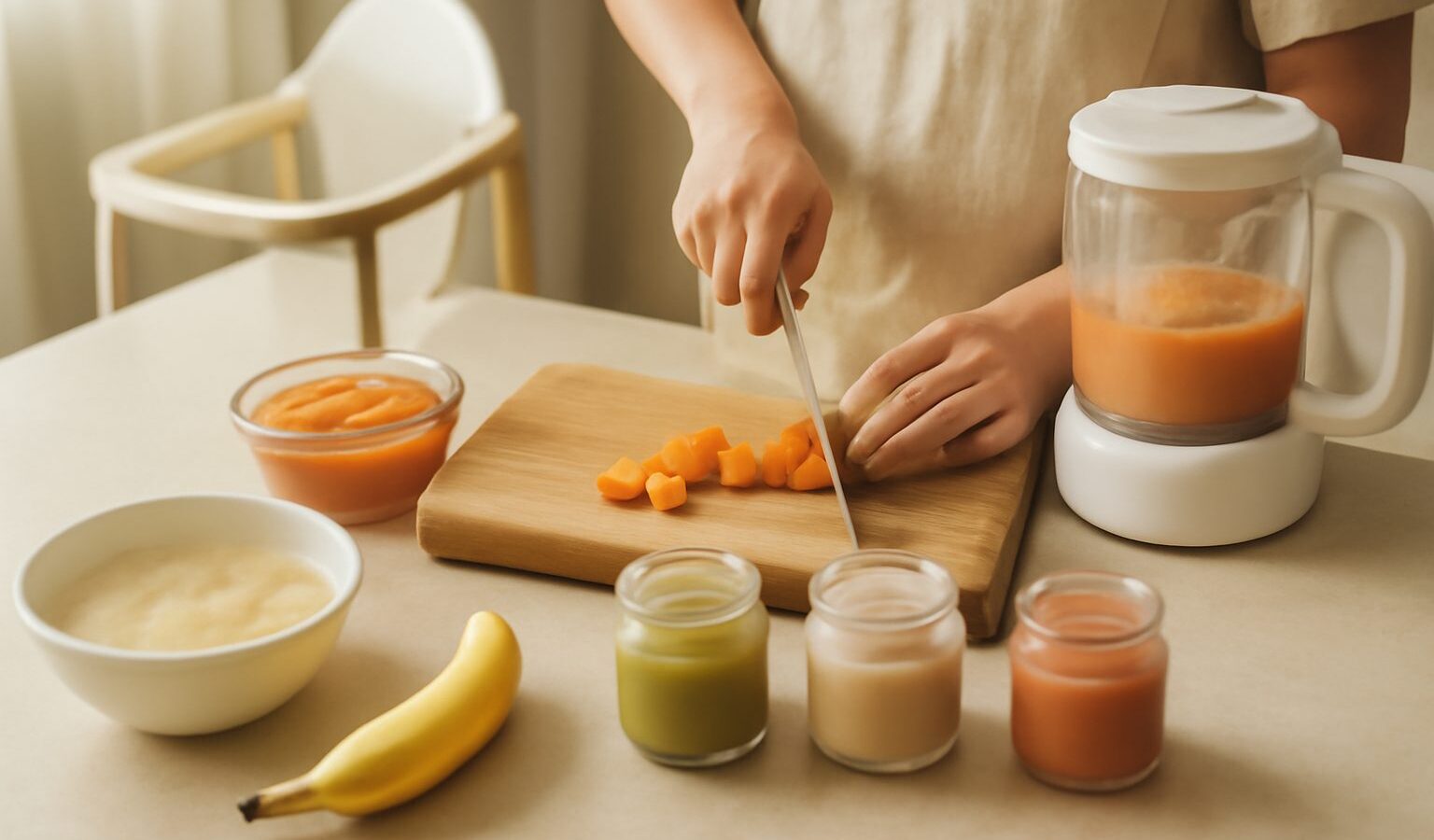
Preparing homemade baby food in Singapore can be a lovely way to introduce your little one to fresh flavours, and it is often simpler and cheaper than many parents expect. With a little planning and good hygiene, you can offer a wide range of tastes and textures at your own pace. This is a general guide only, not medical advice, so please speak to your doctor or paediatrician about your baby’s specific feeding needs and any concerns.
Before you begin, remember that most babies are ready to start solids at around six months, though every baby is different. Your doctor can confirm when your baby is developmentally ready to start.
Getting Started Safely
Good hygiene is the foundation of safe homemade baby food. A baby’s immune system is still developing, so cleanliness matters at every step. Wash your hands, and clean all surfaces, chopping boards, and utensils thoroughly before you begin. Rinse fruit and vegetables well, and cook foods until they are soft enough to mash or puree easily.
A few basics to keep in mind:
- Cook meat, poultry, eggs, and fish thoroughly, right through
- Cool food properly before serving, and check the temperature yourself
- Store fresh purees in the fridge and use them within a day or two
- Freeze extra portions in small, clean containers and label them with the date
- Never refreeze food that has already been thawed
- Reheat thoroughly and stir well, then let it cool to a safe warmth
One of the most important rules for babies under one year is simple: do not add salt, sugar, or honey. A baby’s kidneys cannot handle salt, added sugar is unnecessary, and honey is not safe for babies under one because of the risk of infant botulism. Let the natural flavours of the food come through instead.
Choosing First Foods and Textures
Simple, single ingredients make gentle first foods, and smooth purees suit babies who are just beginning. Soft cooked vegetables, mashed fruit, and well-cooked grains are all good starting points. As your baby grows more confident, you can slowly move towards thicker, lumpier textures and eventually soft finger foods.
Progressing textures at the right pace helps your baby learn to chew and reduces frustration. The rough guide below can help, though your baby sets the real timetable, so follow their cues and your doctor’s advice.
| Stage | Typical texture | Example foods |
|---|---|---|
| Beginning | Smooth, thin puree | Pureed carrot, pumpkin, or apple |
| Building up | Thicker puree, soft mash | Mashed sweet potato, banana, or peas |
| Getting confident | Soft lumps and minced food | Minced soft-cooked vegetables and fish |
| More independent | Soft finger foods | Soft steamed vegetable sticks, ripe fruit pieces |
There is no need to rush through these stages. Some babies take longer than others, and that is perfectly fine. Offer variety patiently, and let repeated, relaxed exposure do its gentle work.
Introducing Allergens Thoughtfully
Introducing common allergen foods is an area where current paediatric guidance has changed over the years, so it is well worth discussing with your doctor before you start. Speak to your paediatrician first if your baby has eczema, a known allergy, or a strong family history of allergies, as they may suggest a particular approach for your child.
In general, introduce one new allergen food at a time, in a small amount, and preferably earlier in the day so you can watch for any reaction. Wait a few days before adding another new one, so that if something does upset your baby, you can more easily tell what caused it. Common allergen foods that are often introduced include well-cooked egg, smooth peanut butter thinned into other food, dairy, and fish, but always prepared in a safe, age-appropriate texture.
If you ever notice signs of a reaction such as swelling, a rash, vomiting, or breathing difficulty, seek medical help immediately. For anything that looks like a severe reaction, call for emergency help without delay. Your doctor is the right person to guide allergen introduction for your individual baby.
Keeping Mealtimes Choke-Safe
Choking is a real risk with babies and young children, so safe preparation matters just as much as the food itself. Always stay with your baby while they eat, and have them sit upright rather than lying back or moving around.
Some sensible precautions:
- Cook foods until soft, and cut them small enough to be safe
- Avoid hard, small, round, or sticky foods that can block the airway
- Cut round foods such as grapes and cherry tomatoes lengthways into quarters
- Remove any bones, pips, stones, and tough skins
- Never leave your baby alone with food, not even for a moment
Learning basic infant first aid, including what to do if a baby chokes, gives many parents real peace of mind. It is worth looking into a recognised course when you can.
It also helps to know the difference between gagging and choking, as the two are often confused. Gagging is a normal, noisy reflex that helps a baby move food forward and learn to eat, and it usually resolves on its own. Choking is quiet and serious, as the airway is blocked. Staying close and calm lets you tell them apart and respond well. Offer new textures when your baby is alert and content rather than tired or upset, since a relaxed baby manages food far more safely. Go at your baby’s pace, and never hurry a mealtime.
A Gentle Final Word
Making homemade baby food is a rewarding way to nourish your little one, and it need not be complicated or stressful. Keep it clean, keep it safe, move through textures at your baby’s pace, and let mealtimes stay relaxed and happy. Above all, trust your instincts and lean on your doctor or paediatrician whenever you have a question or concern. You are giving your baby a wonderful, caring start.
Explore more
Introducing Solids and Weaning
Baby Development and Milestones
Children’s Nutrition and Healthy Eating