
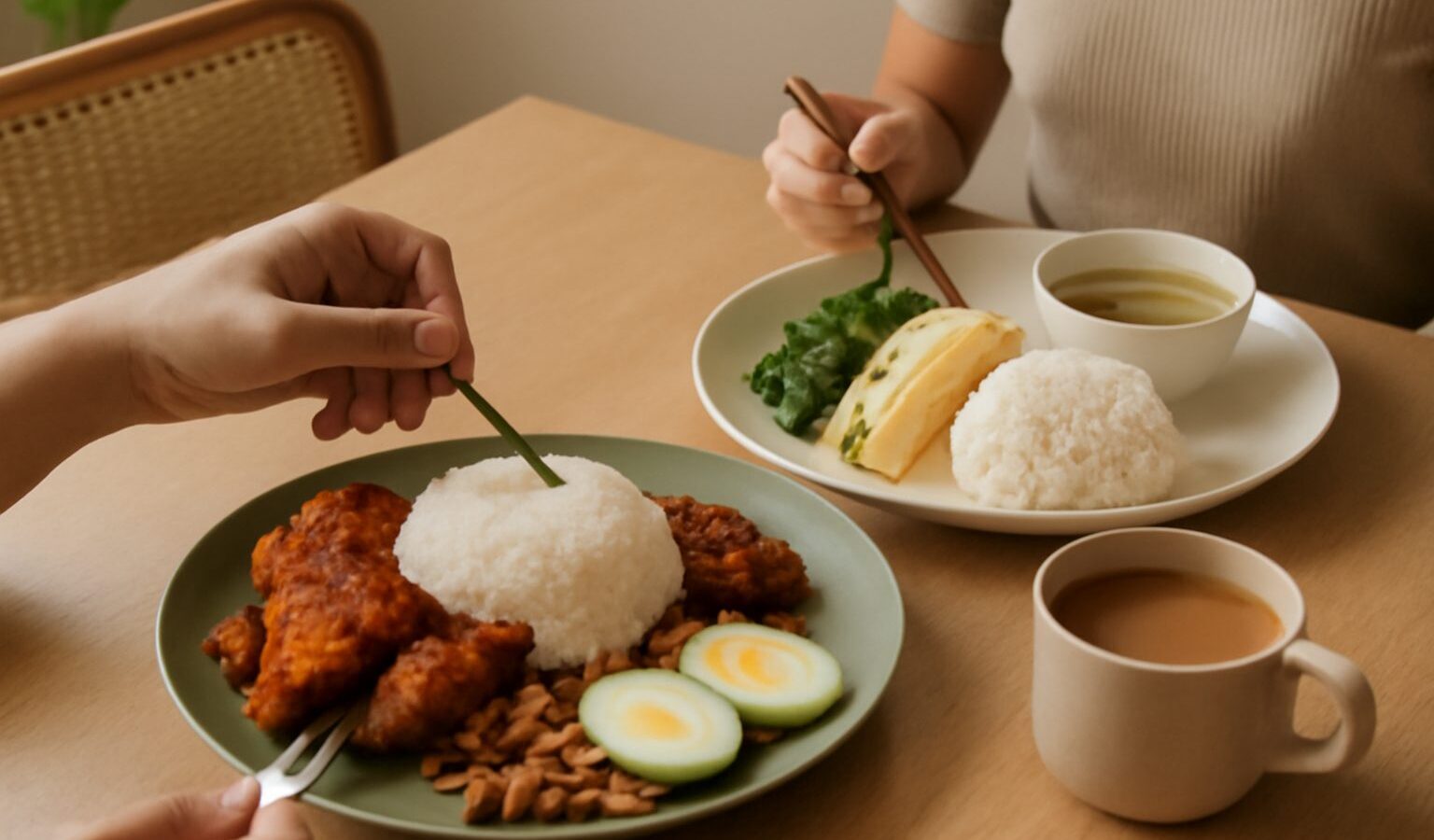
Few debates get two neighbours going quite like Malaysian vs Singaporean food. Order chicken rice on either side of the Causeway and you will find fierce loyalty, gentle teasing, and a shared love that runs far deeper than the rivalry. The truth is that both cuisines grew from the same roots: Malay, Chinese, Indian and Peranakan cooks trading ideas across the same markets for generations. What we now argue about are the small, delicious differences that appeared once each side started cooking to its own taste. This guide keeps things good-humoured and steers well clear of declaring a winner, because honestly, there is not one.
A Shared Table, Split by a Causeway
For most of history the peninsula and the island were one food culture. The same aunties and uncles sold the same noodles, the same curries simmered in the same clay pots, and recipes travelled freely with the families who cooked them. When the border settled, the dishes stayed on both sides but slowly drifted, each shaped by local produce, tastes and habits.
That is why a Singaporean tucking into a plate of char kway teow in Penang feels instantly at home, yet notices something is a little different. The dish is the same idea, the execution has its own accent. Think of it less as two rival cuisines and more as two dialects of the same delicious language. You understand both, but you can hear where a cook learned to speak.
A few honest generalisations, offered with a smile and plenty of exceptions:
- Malaysian versions often lean a touch sweeter, darker and more generous with the wok’s smoky char.
- Singaporean versions tend to be tidied up, standardised across stalls, and served in a fast, orderly hawker system.
- Both sides will insist, with total sincerity, that theirs is the original and the best.
The Dishes Everyone Argues About
Some plates carry more emotional weight than others. Chicken rice is the big one. Both claim it proudly, both do it beautifully, and both will happily debate the poach, the rice and the chilli for hours. Laksa is trickier still, because the word means different things in different towns. A rich coconut curry laksa is common across both countries, while the tangy, prawn-and-tamarind assam laksa is strongly associated with Penang and rarely found done the same way down south.
Then there is bak kut teh, and here the split is clearer. The peppery, clear-broth style is beloved in Singapore, while a darker, more herbal version is a familiar sight across the Causeway. Neither is wrong. They are simply two answers to the same comforting question of what to eat on a rainy morning.
Here is a light-hearted look at how a few shared favourites tend to differ. Treat it as a friendly map, not a rulebook, because every cook and every town has its own way.
| Dish | Common in Singapore | Common in Malaysia |
|---|---|---|
| Bak kut teh | Peppery, clear broth | Darker, more herbal broth |
| Laksa | Coconut curry style widespread | Tangy assam laksa strongly associated with Penang |
| Char kway teow | Lighter, often less sweet | Darker, sweeter, big on wok smokiness |
| Nasi lemak | Neat plated set, popular any time | Often wrapped in banana leaf, a classic breakfast |
Why the Same Recipe Tastes Different
The differences are not random. They come from real, everyday factors that quietly shape a plate over decades. Understanding them makes the whole rivalry more fun and a lot less heated.
- Ingredients and produce. Small changes in local chillies, soy sauces, sugar and seafood shift the balance of a dish, even when the method is identical.
- The hawker system. Singapore’s centralised hawker centres reward consistency and speed, so recipes get standardised. Across the Causeway, more street stalls and coffeeshops leave room for wider variation from town to town.
- Local taste memory. Cooks cook for their regulars. Over time, a neighbourhood’s preference for sweeter, spicier or saltier nudges a recipe in one direction.
- Pride and tradition. Families guard their versions closely, and that loyalty keeps regional styles distinct rather than blending back together.
None of this makes one side more authentic. It simply means each place has kept its own memory of a dish alive, which is a lovely thing when you stop to think about it.
How to Enjoy the Rivalry Like a Local
The best way to settle the Malaysian vs Singaporean food debate is, of course, to eat as much of both as you can. In Singapore, that means heading to a busy hawker centre or an old coffeeshop, joining the queue at the stall with the longest line, and being ready to dabao a second plate for later. Order the classics first, then ask the uncle what he recommends. Half the joy is the chatter.
If you are comparing across the border, keep an open mind and a light heart. A few friendly pointers:
- Order the same dish in both countries and taste them side by side over a trip, rather than judging from memory.
- Notice the small things: the darkness of the sauce, the level of sweetness, the char, the chilli.
- Chat to the stallholder. Most are proud to explain what makes their version theirs.
- Resist the urge to crown a winner out loud in the wrong country. It is a fast way to start a very passionate conversation.
Remember that food changes constantly. Stalls open, close and hand recipes down, so flavours you loved years ago may have shifted, and a new favourite could be one queue away. Treat every plate as its own experience.
So Who Wins?
Nobody, and that is the point. The rivalry is really a shared inside joke between two food cultures that grew up at the same table. Malaysian and Singaporean cooks have spent generations perfecting the same beloved dishes in slightly different ways, and we are all the luckier for it. The smart eater does not pick a side. The smart eater orders both, goes back for seconds, and keeps the friendly argument going over the next plate.
So the next time someone insists their chicken rice is the only real chicken rice, smile, nod, and quietly plan your next meal on the other side of the Causeway. There is more than enough good food to go around.
Explore more
Hungry for more world flavours close to home? Try our guide to modern Singaporean Mod Sin cuisine for a taste of where these traditions are heading next, or branch out with Turkish food in Singapore and African food in Singapore. Each one shows how the island keeps welcoming new flavours to its already crowded, wonderful table.