

Few things unsettle a parent like being woken by a child screaming in the dark. If your little one thrashes, cries or sits up looking terrified but does not seem to recognise you, you may be dealing with a night terror rather than a nightmare. For many night terrors singapore parents, the first experience is frightening, yet the reassuring truth is that both nightmares and night terrors are usually a normal part of childhood. Most children grow out of them. This article explains the difference, how to keep your child safe, and the signs that mean it is worth seeing a doctor. It offers general information only, not medical advice.
Nightmares And Night Terrors Are Not The Same
Although they sound similar, these two sleep experiences are quite different, and telling them apart helps you respond calmly.
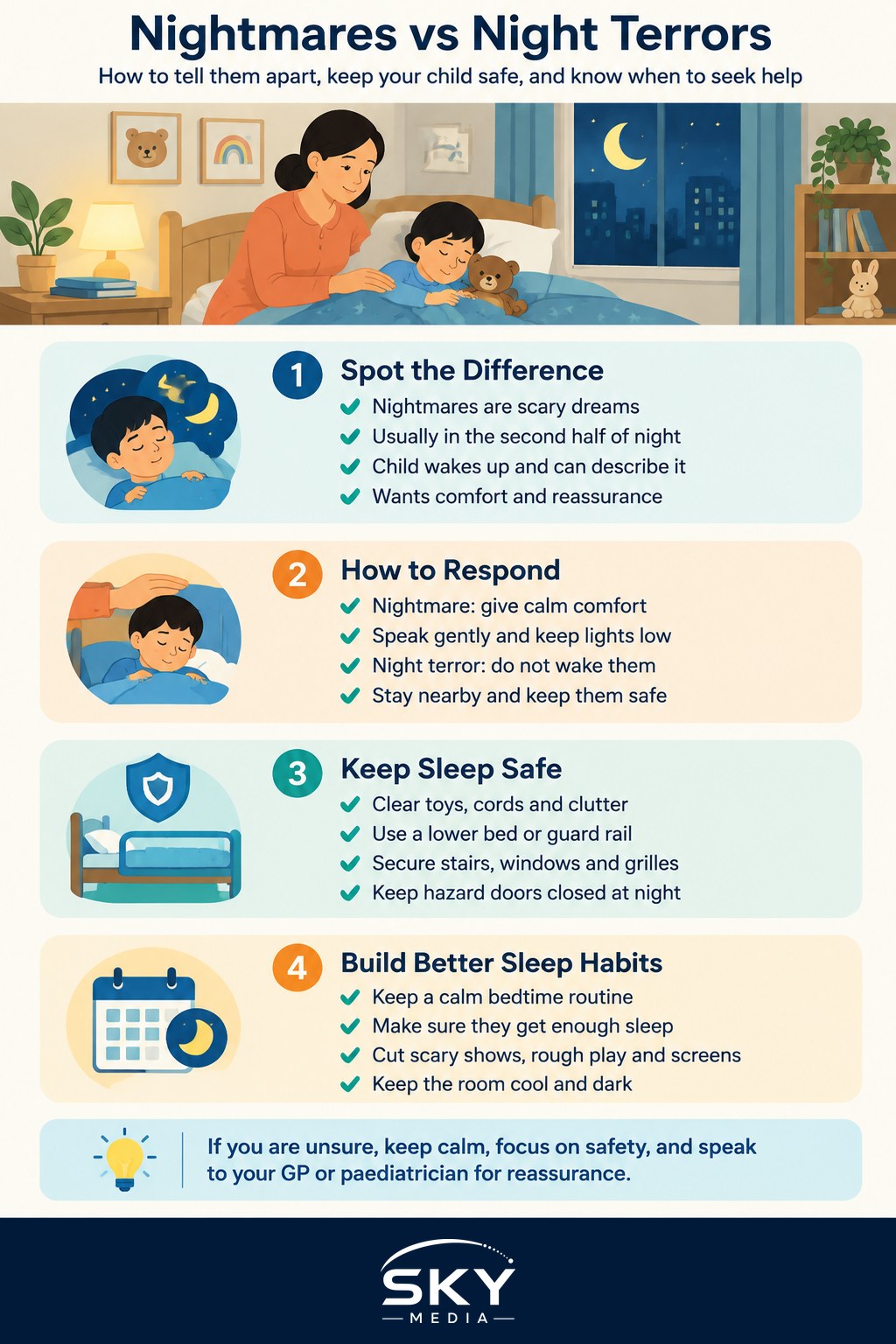
Nightmares are bad dreams. They usually happen in the second half of the night, during dream-rich sleep. A child wakes up properly, is scared, and can often tell you about the monster, the fall or the scary scene. Because they are awake and aware, they want comfort and reassurance, and they may be reluctant to go back to sleep or to their room. Nightmares are extremely common, especially in the preschool and early school years, and often reflect a big imagination, a scary story, or day-to-day worries.
Night terrors are quite different. They tend to happen in the first few hours of the night, during deep sleep. The child may suddenly sit up, scream, cry, sweat, breathe fast, look wide-eyed and panicked, or even thrash about, yet they are not truly awake. They usually do not respond to you, do not recognise you, and, crucially, have no memory of it in the morning. To a parent it looks alarming, but the child is not suffering the way it appears, and they are not aware of the episode at all.
Night terrors are most common in young children and often run in families. Things that disrupt deep sleep can make them more likely, including being overtired, unwell, feverish, over-stimulated, or having an irregular sleep schedule.
How To Respond In The Moment
Your response should match what is happening.
During a nightmare, go to your child, offer calm comfort, and reassure them that they are safe. Keep the lights low, speak gently, and let them tell you about the dream if they want to. A brief cuddle, a comforting phrase and a return to their own bed usually helps. Avoid overexplaining or promising the dream will never come back, and keep the routine soothing so sleep can return.
During a night terror, the guidance is different and very important: do not try to wake your child. Waking a child mid-terror can confuse and distress them further, and may prolong the episode. Instead, stay nearby, keep calm, dim the lights, and quietly make sure they cannot hurt themselves. Most terrors pass within a few minutes, and the child settles back into deep sleep on their own with no memory of it. Simply being a calm, watchful presence is the best thing you can do.
Keeping The Sleep Environment Safe
Because a child in the grip of a night terror may move about without full awareness, safety matters, especially in a compact HDB home:
- Keep the bedroom floor clear of toys, cords and clutter that could cause a trip or fall.
- If your child sleeps in a raised bed, consider a lower bed or a guard rail while terrors are frequent.
- Fit safety gates at the top of any stairs and make sure windows and grilles are secured.
- Keep doors to hazards, such as the kitchen or bathroom, closed at night.
These simple steps give you peace of mind that if your child does move during an episode, they will stay safe.
Gentle Habits That Can Help
You cannot always prevent nightmares or night terrors, but good sleep habits reduce how often they happen. Aim for enough sleep for your child’s age, since overtiredness is a common trigger, and keep a calm, predictable wind-down before bed. Our guide to establishing good bedtime routines for children and our tips on helping your child wind down before bed both offer practical ideas. Limit scary shows, rough play and screens close to bedtime, and keep the room cool, dark and comforting. If daytime worries seem to be feeding bad dreams, gentle chats and reassurance during the day help, and our piece on managing toddler fears of the dark may be useful.
For night terrors that happen at a very predictable time each night, some families find that gently rousing the child a little before the usual episode can help break the pattern. This is worth discussing with your doctor rather than trying blindly.
When To See A Doctor
Nightmares and night terrors are usually harmless and outgrown, but do speak to your GP or paediatrician if:
- Episodes are very frequent, or are worsening rather than easing over time.
- They are causing your child real distress, daytime tiredness, or fear of going to sleep.
- The behaviour seems unusual, involves complex movements or wandering, or your child seems to stop breathing or gasp during sleep.
- Episodes start for the first time in an older child or continue well into the school years.
- You are simply worried and would like reassurance, which is always a good enough reason.
A doctor can check that nothing else is going on and guide you on next steps.
A Practical Wrap-Up
Nightmares and night terrors look scary but are usually a normal, passing part of growing up. Comfort a child after a nightmare, and during a night terror stay calm, keep them safe, and do not wake them. Protect good sleep, keep the bedroom safe, and reach out to a doctor if episodes are frequent, distressing or unusual. With time, patience and a steady bedtime routine, most children sleep soundly again.
Frequently Asked Questions
At what age do night terrors usually stop? Most children outgrow night terrors as their sleep patterns mature, often well before the teenage years, though timing varies. They are most common in young children. If they continue into the school years or begin in an older child, mention it to your doctor.
Should I record my child’s night terror on video for the doctor? A short clip can help a doctor see what happens, as long as you stay calm and keep your child safe first. Also note the time of night, how long it lasts and anything unusual, such as breathing pauses or wandering.
Can screen time before bed cause nightmares? Scary or exciting content close to bedtime can feed bad dreams and make settling harder. Keep the last stretch of the evening calm, switch off screens earlier and choose gentle stories. Every child is different, so watch what seems to trigger yours.
My child is afraid to go back to sleep after a nightmare. What helps? Offer a short cuddle, keep the light low and talk calmly about the dream. A comforting phrase, a favourite soft toy and a familiar routine help. Avoid long explanations or promising it will never happen again, and stay close until your child settles.
Is it okay to let my child sleep in my bed after bad dreams? Occasional comfort is fine, and it is a family decision. If it becomes a habit, you can return gently to the child’s own bed using a calm routine. Consistency helps, and a nightlight or favourite toy can ease the move.
Official sources: HealthHub