

A flutter of nerves before an exam is normal and even helpful. It means you care, and a little adrenaline can sharpen your focus. But when worry starts to crowd out clear thinking, keeps you awake, or makes you avoid your books altogether, it has tipped into something heavier. If you are dealing with study anxiety singapore students know it well, from the PSLE year right through to university finals, and the aim of this guide is to help you steady yourself with kindness rather than pressure.
Before anything else, one thing needs saying plainly. Your exam results are not a measure of your worth as a person. They are information about a particular set of questions on a particular day, and no more than that.
Understanding What Anxiety Is Doing
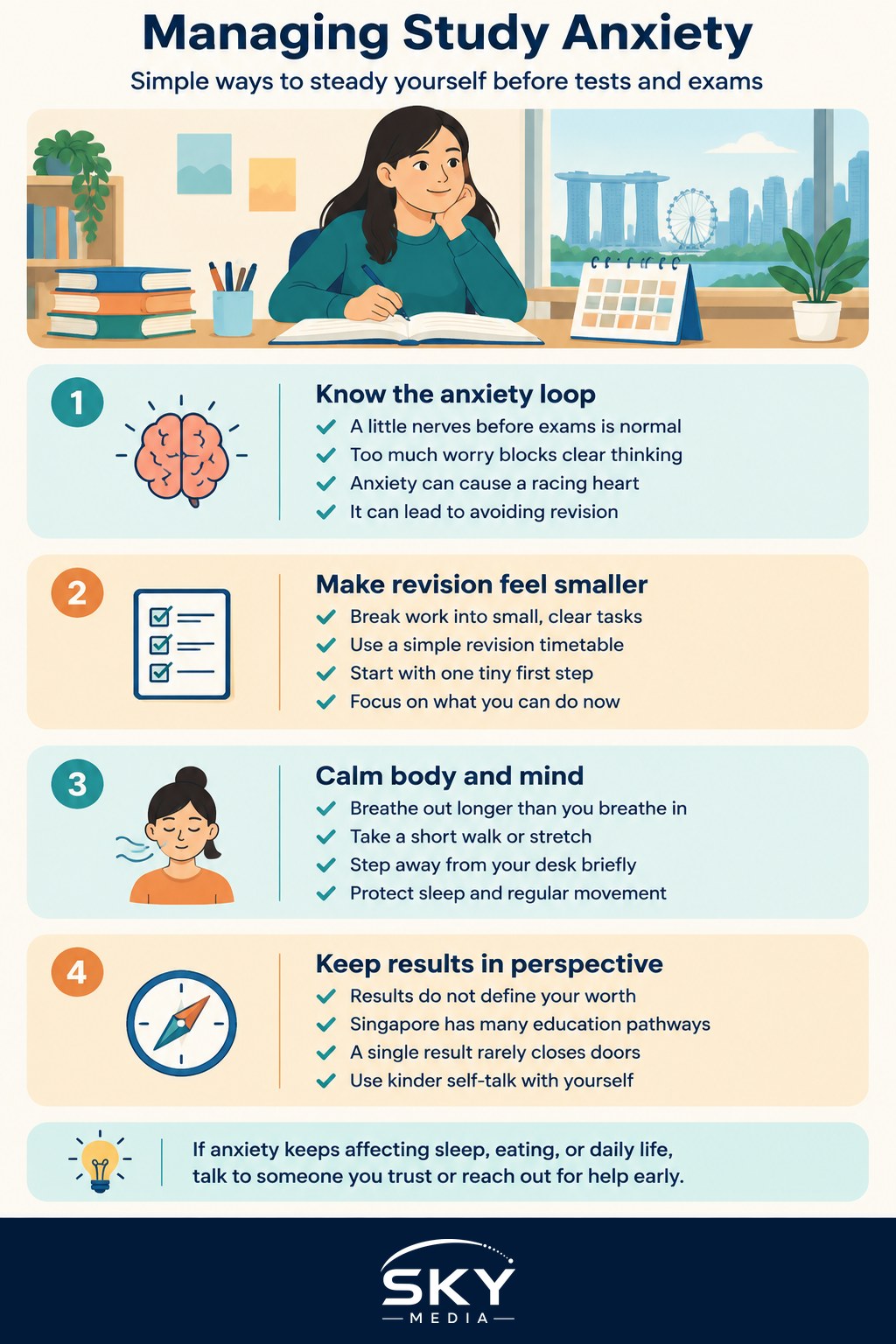
Anxiety is your body’s alarm system reacting to a threat, real or imagined. When you sit down to revise and your mind goes blank, your heart races, or your stomach knots, that alarm has been triggered by the fear of failing rather than by any actual danger. The frustrating part is that this stress response actively makes it harder to think, remember, and reason, which then feeds the worry further.
Recognising this loop is the first step to breaking it. You are not weak or incapable. Your body is simply overreacting to pressure, and there are practical ways to turn the volume down.
Common signs that study anxiety is building include:
- Reading the same paragraph over and over without it going in.
- Putting off revision because starting feels overwhelming.
- Trouble sleeping in the run up to tests, or waking with a tight chest.
- Harsh self talk, such as telling yourself you are hopeless or bound to fail.
Practical Ways to Steady Yourself
The good news is that small, concrete actions can settle an anxious mind more effectively than telling yourself to calm down.
Make the work feel smaller
Anxiety thrives on the sense that there is a mountain to climb. Break your revision into small, clear tasks, so instead of revise chemistry you have review one topic for twenty five minutes. A structured plan removes a lot of the fog, and making a revision timetable can turn a scary blur into a series of manageable steps. When starting feels impossible, the ideas in beating procrastination as a student can help you take the first small action, which is usually the hardest.
Calm the body to calm the mind
Because anxiety is physical, physical tools help. Slow breathing, where you breathe out for longer than you breathe in, signals to your body that the threat has passed. A short walk, a stretch, or a few minutes away from your desk can reset a spinning mind. Regular sleep and movement are not luxuries here. They are part of managing anxiety, and skimping on them makes everything harder.
Prepare in a way that builds real confidence
A lot of exam anxiety comes from the fear of the unknown. Familiarity is a powerful antidote. Working through past papers under gentle time pressure makes the real thing feel less alien, and the calming strategies in managing exam day nerves are worth practising before the day itself. Confidence built on genuine preparation is far steadier than confidence you try to talk yourself into.
Keeping Results in Perspective
It helps to zoom out. In Singapore’s education system there are many pathways, and a single result rarely closes doors the way it feels it might in the moment. Students move between routes, resit, and find their footing all the time. The stakes are almost always lower than an anxious mind insists.
Be gentle with your self talk. You would not speak to a struggling friend the way anxiety makes you speak to yourself. Try swapping I am going to fail for I am finding this hard, and I am working on it. That small shift is not just positive thinking. It gives your brain room to actually work.
When to Reach Out for More Support
Self help strategies are enough for most everyday nerves. But if anxiety is persistent, severe, or stopping you from sleeping, eating, or functioning day to day, please treat that as a signal to reach out, not something to push through alone.
Talk to someone you trust, such as a parent, a teacher, or a friend. Your school counsellor is there for exactly this and can offer support without judgement. If low mood or anxiety continues, speaking to a doctor or a mental health support service is a wise and ordinary step, and in Singapore there are services such as the Institute of Mental Health and various student helplines that exist to help. Reaching out early is a sign of strength and good sense, not failure.
You are more than your marks. Take the pressure seriously, but hold it lightly, and be as kind to yourself as you would be to a friend sitting the very same paper.
Frequently Asked Questions
What can I do in the minute before an exam when my heart is racing? Breathe out for longer than you breathe in, slowly, a few times. This signals your body that the threat has passed. Relax your shoulders, feel your feet on the floor and remind yourself you are prepared. Practising these calming steps before the day makes them easier to use.
Why does my mind go blank when I sit down to revise? Anxiety triggers the body’s alarm system, and that stress response makes it harder to think, remember and reason. It is not a sign you are incapable. Shrink the task to one small topic for a set time, breathe slowly, and start with something easy.
How do I stop comparing my results with my classmates? Notice the comparison, then bring your attention back to your own effort and progress. Results show how a set of questions went on one day, not your worth. Talking to a teacher about your own goals can help you focus on what you can control.
Can past papers make exam anxiety better or worse? Done gently, they usually help, because familiarity reduces fear of the unknown. Start with short sections, then work up to timed practice. If every paper sends you into a spiral, ease off, talk to your teacher and practise calming techniques alongside.
When should I talk to someone about study anxiety? Reach out if anxiety is persistent, severe, or stopping you from sleeping, eating or functioning day to day. Start with a parent, teacher or your school counsellor. If low mood or anxiety continues, a doctor or a mental health service can help, and asking early is sensible.