

After a long day of work, commuting, and the constant hum of Singapore life, a good night of rest can feel hard to come by. Many people reach for their phones and headphones to help them wind down, and there is real wisdom in that habit. The connection between music and sleep is something humans have understood for a very long time, from lullabies sung to babies to the quiet playlists we cue up at bedtime. This is a general wellbeing guide, not medical advice, so if you struggle with ongoing sleep problems, please speak to a doctor. For everyday winding down, though, the right sound can be a lovely part of your evening routine.
How Sound Helps You Wind Down
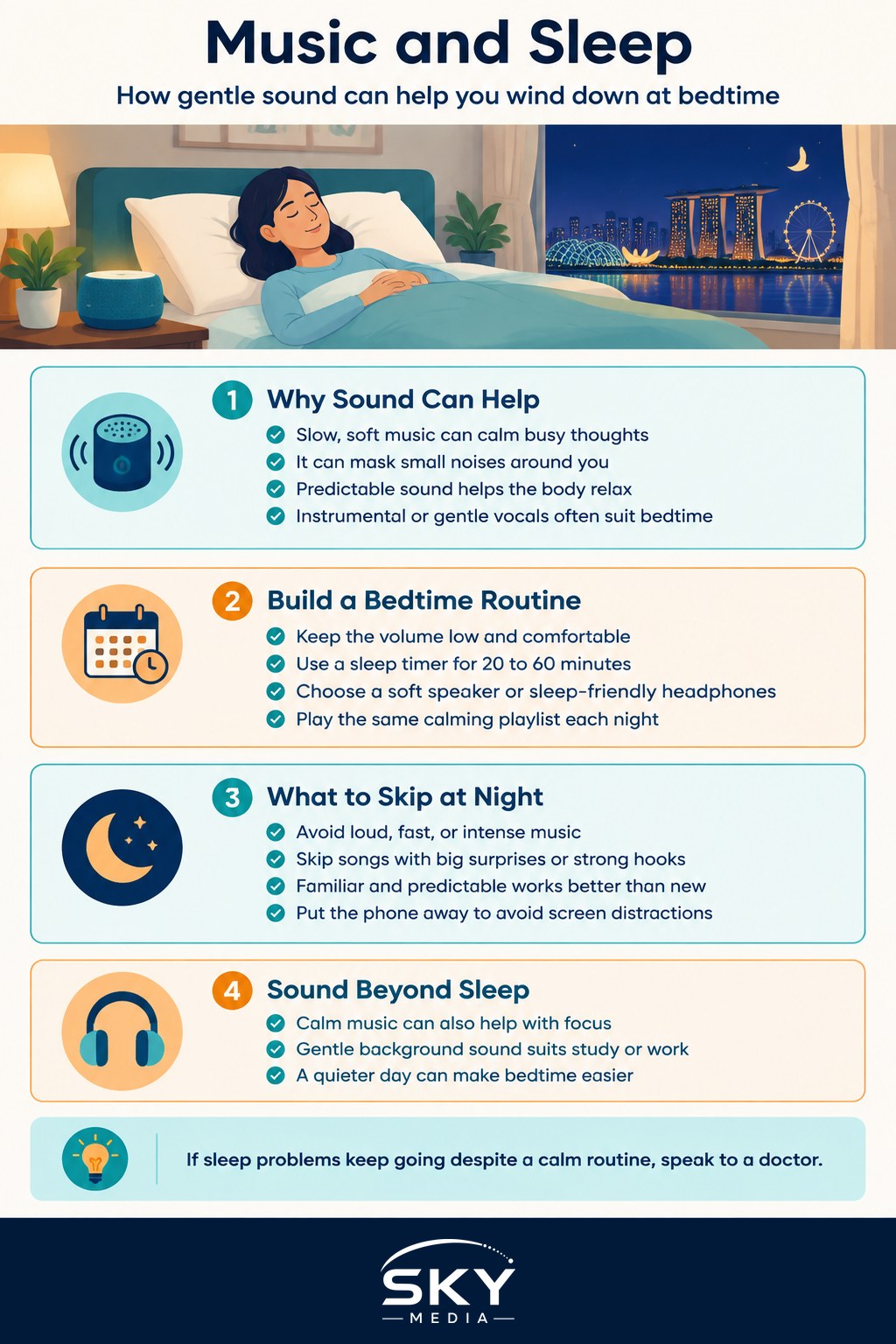
Your body relaxes best when it feels calm and unhurried, and gentle sound can gently guide it there. Slow, soft music tends to ease the racing thoughts that keep so many of us awake, giving your mind something soothing to settle on instead of tomorrow’s to do list. Calming sound can also mask the little noises that jolt you awake, which is helpful in a busy HDB block where you might hear a lift, a corridor, or traffic outside.
The general idea is that slower, quieter, and more predictable music helps most. Pieces with a gentle, steady pace, soft instruments, and no sudden loud moments give your body permission to relax. Some people love ambient textures, others prefer soft piano or acoustic guitar, and many enjoy nature sounds like rain or waves. Our guide to getting into ambient music is a lovely place to explore calm, spacious sound made for drifting off.
There is no single correct genre. What matters is that the music feels soothing to you and does not pull your attention with big changes, catchy hooks you want to sing along to, or lyrics that get you thinking. For many people, instrumental or very gentle vocal music works best at bedtime.
Building a Restful Listening Routine
The way you use music at night matters as much as the music itself. A few simple habits help:
- Keep the volume low. Bedtime listening should be soft and comfortable, never loud. Gentle levels are kinder to your ears and more relaxing anyway.
- Use a sleep timer. Set your music to fade out after twenty to sixty minutes so it does not play all night. This helps your ears rest and stops sound disturbing your deeper sleep later.
- Choose comfortable listening. Falling asleep with hard earbuds pressing into your ears can be uncomfortable. A soft speaker at low volume, or headphones designed for sleep, tends to work better. Our guide to choosing wireless earbuds for music can help if you prefer personal listening.
- Build the same routine each night. Playing the same calming playlist as you get ready for bed teaches your brain to associate that sound with winding down, so over time it becomes a helpful cue for rest.
- Curate a dedicated wind down playlist. Fill it with slow, soft tracks and nothing energetic. Our piece on how to build a great playlist has friendly tips for putting one together.
Consistency is your friend here. The more regularly you use a calm routine, the more your body learns to relax when it hears those familiar sounds.
What to Avoid Before Bed
Just as some music helps, some works against you. Loud, fast, or intense music tends to raise your energy rather than lower it, which is the opposite of what you want at night. Save the upbeat playlists and heavy tracks for your workout or your commute, not the hour before bed.
Be mindful of anything that grabs your attention too strongly. A brand new album you are excited about, a song with lyrics you cannot help analysing, or a playlist that keeps surprising you with different moods can all keep your mind active. For sleep, familiar and predictable usually beats new and exciting.
Screens are worth a mention too. If you use your phone to play music, the bright screen and the pull of notifications can undo the calm you are trying to build. Consider setting your playlist, then putting the phone face down and out of easy reach, or using a simple speaker so you are not tempted to keep scrolling.
Sound for Focus, Not Just Sleep
Music can support your rest in other ways during the day too. Getting good, calm focus while you work or study can leave you less wired by bedtime, and gentle background sound helps some people concentrate. If that interests you, our guide to music for focus and studying can help you use sound thoughtfully across your whole day, not only at night.
Rest Easy
Music and sleep make a gentle, natural pairing when you use sound with a little care. Keep it soft, keep it slow, set a timer, and build a routine your body can learn to trust. Choose calm over exciting at bedtime, protect your ears with low volumes, and let familiar, soothing sound become part of how you signal that the day is done. If sleep troubles continue despite a good routine, do reach out to a doctor, since persistent problems deserve proper care. For everything else, cue up something gentle, dim the lights, and let the music help you drift off.
Frequently Asked Questions
Is it safe to fall asleep with earbuds in? Occasional use at a low volume is usually fine, but it is not ideal as a nightly habit. Earbuds can be uncomfortable lying down, and sound played all night keeps your ears busy. A small speaker, or headphones made for sleep, with a timer is gentler. See a doctor if you get ear pain.
Is nature sound or white noise better than music for sleeping? It depends on the person. Steady sounds like rain, waves or a fan can mask background noise without drawing your attention, which suits light sleepers in busy blocks. Others prefer soft instrumental music. Try each for a week or so and keep whichever helps you settle fastest.
Can music help a baby or young child fall asleep? Soft lullabies or gentle instrumental music can be a soothing part of a bedtime routine for little ones. Keep the volume low and the speaker well away from their ears, and avoid leaving it playing all night. If your child has ongoing sleep difficulties, talk to a paediatrician.
How long before bedtime should I start my wind-down playlist? There is no set rule, but starting as you begin getting ready for bed works well. That lets the music become a familiar cue for your body to relax. Pair it with a timer, dimmed lights and a phone put down, so the whole routine signals that the day is over.
What if music keeps me awake or does not help me sleep? Then it may not suit you, and that is fine. Some people sleep better in quiet, or find that listening makes them focus on the sound. Try slower, more familiar tracks or a different type of sound. If poor sleep carries on despite a good routine, see a doctor.