

You love the same person, share a home, and dream about the same future, yet you cannot agree on a single news headline. If that sounds familiar, you are far from alone. Navigating political differences as a couple in Singapore is more common than many people admit, especially in a diverse society where views on policy, race, religion, and social issues can vary widely even within one family. The good news is that a difference in opinion does not have to become a threat to your relationship. Many strong couples hold different views and stay deeply connected.
What matters is not whether you agree, but how you handle disagreement. With respect and a little patience, differing politics can even become a source of richer conversation rather than constant conflict.
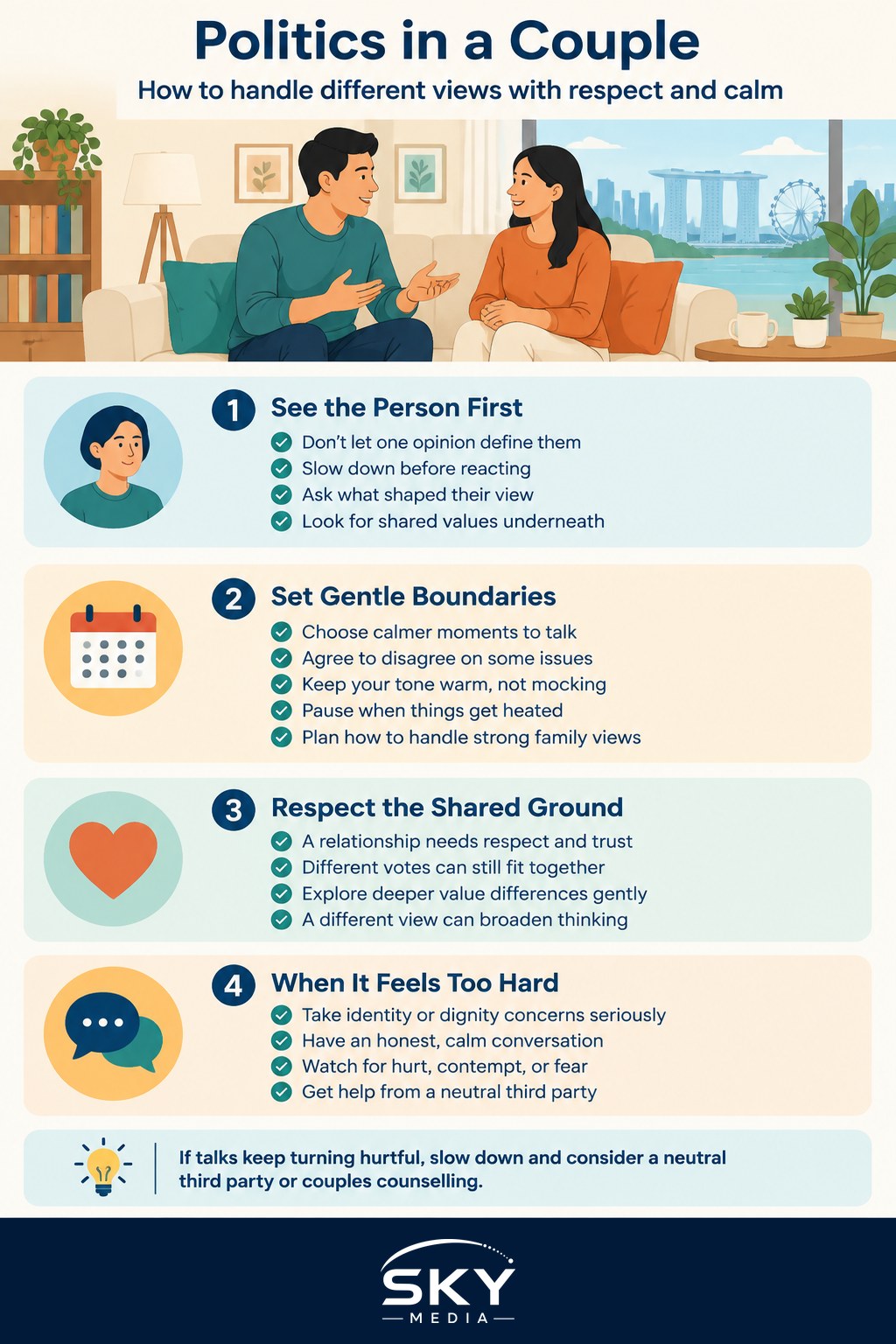
Separate the Person From the Position
When your partner says something you strongly disagree with, it is easy to feel that they are attacking your values, or even attacking you. Try to slow down before you react. Remember that this is the same kind, thoughtful person you chose, and that a single opinion does not define their whole character.
It helps to get curious instead of combative. Ask what shaped their view. Was it their upbringing, their family, an experience at work, or something they read? People rarely arrive at a belief for no reason. Understanding the story behind an opinion often softens the sharp edges, even when you still disagree. You may find that underneath the surface disagreement, you actually share the same underlying value, such as wanting fairness or wanting people to be cared for, and you simply differ on how to get there.
Listening well is the heart of this. If political talk quickly turns heated in your home, our guide on how to be a better listener in a relationship can help you hear each other out before jumping to rebut.
Set Ground Rules for Heated Topics
Not every conversation needs to happen at every moment. Couples who navigate differences well often agree on some gentle ground rules, spoken or unspoken.
- Pick your timing. Debating a divisive issue late at night when you are both tired rarely ends well. Choose calmer moments.
- Agree to disagree on some things. You do not need to win, and you do not need to convert your partner. Some topics can simply be set aside.
- Watch your tone. Sarcasm, eye-rolling, and mocking a partner’s view do lasting damage. Firm disagreement can still be warm.
- Take a break when things heat up. It is perfectly fine to say, “Let us pause this, I do not want it to turn into a fight.”
- Avoid dragging in extended family. In Singapore, festive gatherings and multigenerational households can add pressure, so agree in advance on how you will handle relatives with strong opinions.
These small agreements keep disagreements contained, so one tense conversation does not spill over and sour the whole evening.
Focus on Respect and Shared Values
A relationship does not stand on identical opinions. It stands on respect, trust, and the sense that you are on the same team. You can vote differently, feel differently about a policy, and still build a happy life together, as long as you both feel respected.
Where things get harder is when a difference in politics reflects a deeper difference in core values, such as how you treat people, whether you value honesty, or how you want to raise children one day. Those are worth exploring gently and honestly, because they shape your shared future. Our piece on talking about the future as a couple offers a calm way to check that your bigger goals still line up.
Try also to appreciate what a different perspective brings. A partner who sees the world differently can broaden your thinking, challenge your assumptions kindly, and keep you from living in an echo chamber. Many couples find that once the heat dies down, they actually enjoy a good-natured debate.
When Differences Feel Too Big
Sometimes the gap feels genuinely painful, especially if an issue touches your identity, your community, or something you feel is a matter of basic dignity. Those feelings deserve to be taken seriously, not brushed aside. It is worth having an honest, calm conversation about whether you can both hold your views while still honouring each other.
If the disagreements keep escalating into hurt, contempt, or feeling unsafe to be yourself, that is a sign to slow down and talk more deeply, perhaps with the help of a neutral third party. Couples counselling can be a supportive space to work through values that feel far apart. If constant clashing is wearing you down, our guide on resolving conflict in a relationship has gentle tools that apply well beyond politics.
Differing views do not have to divide you. Handled with respect and curiosity, they can be just one more part of two whole people choosing to build a life side by side. Keep leading with love, and let respect be the ground you always return to.
Frequently Asked Questions
Should we avoid talking about politics altogether? You can, but you do not have to. Many couples manage if they choose calm timing, keep a respectful tone and are willing to pause. Setting a few ground rules is often easier than avoiding the topic entirely.
How do we handle political arguments at family gatherings? Agree beforehand how to respond to relatives with strong opinions, such as steering the conversation elsewhere. Back each other up quietly, and skip debates when tired or at a crowded table. Discuss it privately afterwards.
Is it a dealbreaker if we disagree on social issues? Not automatically. It depends on whether the disagreement touches core values, like how people are treated or how you would raise children. If you can respect each other, differences can coexist. Honest, calm talks help you tell which it is.
How do I explain my view without sounding like I’m attacking my partner? Use ‘I’ statements, describe what shaped your view, and ask what shaped theirs. Avoid sarcasm and keep a warm tone. Remember you do not need to win, and some topics can be left unresolved.
What if we have different religious or cultural views too? Treat them with the same curiosity and respect. Ask about what the tradition means to them, and be clear about what matters most to you. If the gap feels painful, a neutral counsellor can help you explore it together.