
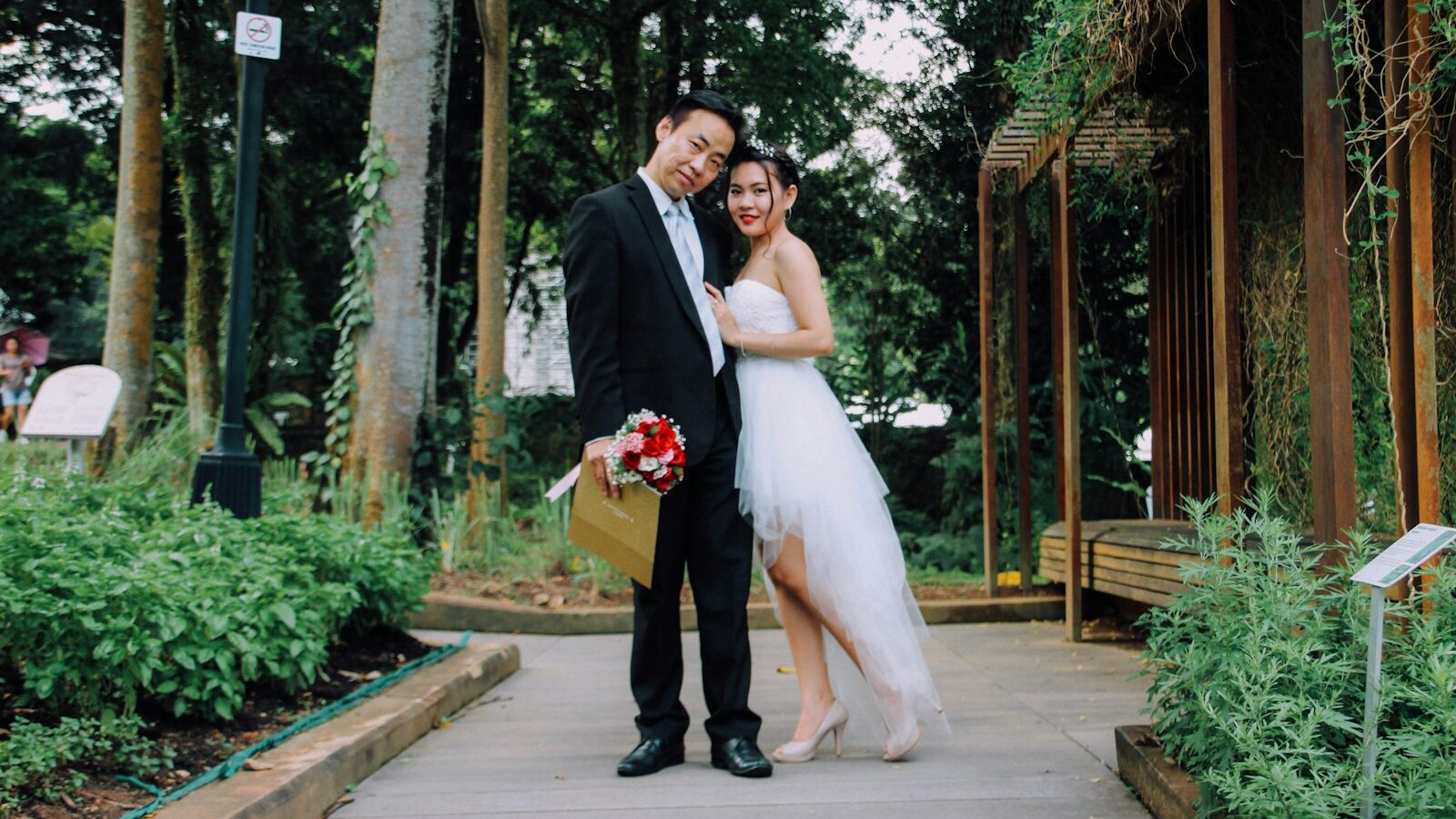
An intimate wedding trades the big hotel banquet for something smaller, warmer, and more personal. Instead of hundreds of guests you barely have time to greet, you spend the day with the handful of people who matter most. In Singapore, where the grand banquet has long been the default, choosing to go small can feel like swimming against the current, but more couples are doing exactly that. Planning an intimate wedding is not simply a shrunken version of a big one. It is a different approach with its own joys and its own challenges, and this guide walks you through both.
There is no fixed number that makes a wedding “intimate”. For some it means twenty guests, for others fifty or sixty. The spirit is what counts: a celebration small enough that every person there is someone you genuinely wanted present. Whether you are drawn to it for the closeness, the cost, or the calm, the same principles apply.

Know Why You Are Going Small
Before you plan anything, get clear on your reasons as a couple. Your “why” will guide every decision that follows and help you hold firm when family pressure arrives.
- Closeness. You want real time with each guest, not a blur of handshakes and posed photos.
- Budget. Fewer guests can mean a lower total spend, freeing money for a honeymoon, a flat, or simply less debt.
- Less stress. A smaller event has fewer moving parts, fewer vendors, and fewer chances for things to go wrong.
- Personal style. You would rather have a meaningful meal in a place you love than a formal ballroom evening.
Being clear on your reasons matters, because an intimate wedding often invites questions from relatives who expected something bigger. When you know your own “why”, those conversations get easier.
Build the Guest List First
For an intimate wedding, the guest list is the single most important decision, and it drives everything else. Get it right and the rest falls into place.
- Start with the non-negotiables. Your closest family and dearest friends. The people you cannot imagine marrying without.
- Set a firm cap. Decide your maximum number early and treat it as fixed. Every “just one more” chips away at the intimacy you wanted.
- Apply one clear rule. For example, no plus-ones for people you have never met, or immediate family only. A consistent rule is easier to defend than case-by-case decisions.
- Expect the pressure. Parents may have their own must-invite lists, especially in cultures where weddings are a family and community affair. Discuss this early and find a compromise you can live with.
Keep the list somewhere you both can see it, and resist last-minute additions. A cap only works if you hold it.
Choose a Venue That Suits the Scale
A small guest count opens up venues that a large banquet never could. This is one of the real joys of going intimate. A private dining room, a restaurant, a garden space, a boutique hotel, or even a beautifully arranged home can all work.
Look for a space that feels full and warm at your numbers, not cavernous. Consider these factors:
- Right size. A room built for two hundred feels empty with thirty. Match the space to your headcount.
- Atmosphere. Intimate weddings lean on mood over grandeur. Good lighting, comfortable seating, and a personal touch matter more than sheer scale.
- Practicalities. Check on catering, corkage, sound, wet-weather backup for outdoor spots, and whether the venue handles small events well.
- Flexibility. Smaller venues sometimes offer more freedom to personalise than a large hotel with fixed packages.
Always get the details and any quote in writing, and confirm what is included before you commit. Prices and packages vary widely, so compare a few options.
Compare an Intimate Wedding With a Large Banquet
Neither format is better. They simply suit different couples. Use the table to weigh what matters to you.
| Factor | Intimate wedding | Large banquet |
|---|---|---|
| Guest experience | Deep time with each guest | Broad, briefer contact |
| Typical cost | Often lower overall spend | Usually higher, more per head adds up |
| Planning load | Fewer vendors and details | Many moving parts to coordinate |
| Family expectations | May need managing and explaining | Aligns with the traditional default |
| Personalisation | High, easy to tailor | Lower, often package-driven |
Read the table honestly against your own priorities. Some couples value the community feel of a big banquet, and that is equally valid.
Handle Family Expectations With Grace
In Singapore, weddings are often seen as a family and community event, not just a couple’s choice. Choosing something small can surprise or even upset relatives who expected to invite their friends and extended family. Handle it early and kindly.
- Talk to parents first. Explain your reasons before the guest list becomes a battleground. Involving them early softens the news.
- Offer a compromise. A separate, larger tea ceremony, a casual gathering, or a bigger dinner later can satisfy relatives who want to celebrate too.
- Stay united. Present decisions as a couple, together. It is far harder to pressure a united front.
- Be respectful but firm. You can honour your families while still holding the boundaries of your own day.
This is general guidance, and every family is different. The aim is a celebration that feels true to you without needlessly hurting the people you love.
Make the Small Details Count
The beauty of an intimate wedding is that you have the time and budget to make small things special. Personalise the food, write a thoughtful note for each guest, choose music that means something, and build in real moments to connect with everyone present. Personal touches like writing your own wedding vows or a carefully chosen wedding theme and colours land beautifully in a small setting. Some couples pair the intimate day with a simpler ROM-only wedding, while others hold a small engagement party beforehand to include a wider circle.
An intimate wedding proves that meaning does not depend on scale. When every guest is someone you truly wanted there, and every detail reflects who you are as a couple, you get a day that feels less like a production and more like the start of a marriage. That, in the end, is the whole point.
Frequently Asked Questions
How do I tell people they are not invited to our intimate wedding? Tell them early, kindly and in person or by call if they are close, and explain that you are keeping the day very small. Apply the same rule to everyone so it does not feel personal. Many couples also offer a casual get-together afterwards.
Can we live-stream our intimate wedding for relatives who cannot attend? Yes, many couples do this so far-away or less mobile relatives can watch. Check with your venue and solemniser that filming is allowed, ask a friend to handle the setup, and tell guests beforehand. Test the connection early so it does not distract from the ceremony.
Can we hold an intimate wedding at home or at a void deck? It is possible, but check the rules first. For a void deck, ask your town council about approvals and conditions. For home, think about space, noise and neighbours. Also ask your solemniser or the relevant registry what is needed for the legal ceremony.
Do we still need a photographer and other vendors for a small wedding? Not necessarily, but a photographer is often worth keeping because a small day passes quickly. You may need fewer vendors overall, and some roles can be handled by trusted friends. Decide based on your priorities, and still get written quotes for anyone you book.
What can we do with the money saved from a smaller wedding? That is entirely up to you. Many couples put it towards a honeymoon, a flat or renovation, an emergency fund or reducing debt, as the article suggests. Agree on this together early so the savings do not quietly creep back into extra wedding spending.