

Thinking about what happens to your home after you are gone is never a cheerful task, but it is one of the kindest things you can do for your family. Clear planning spares the people you love from confusion, delay and disputes at an already painful time. Property inheritance singapore rules can be surprising, particularly the way your home passes on, so it pays to understand the basics and then get proper advice. This is general information to help you ask the right questions, not legal advice.
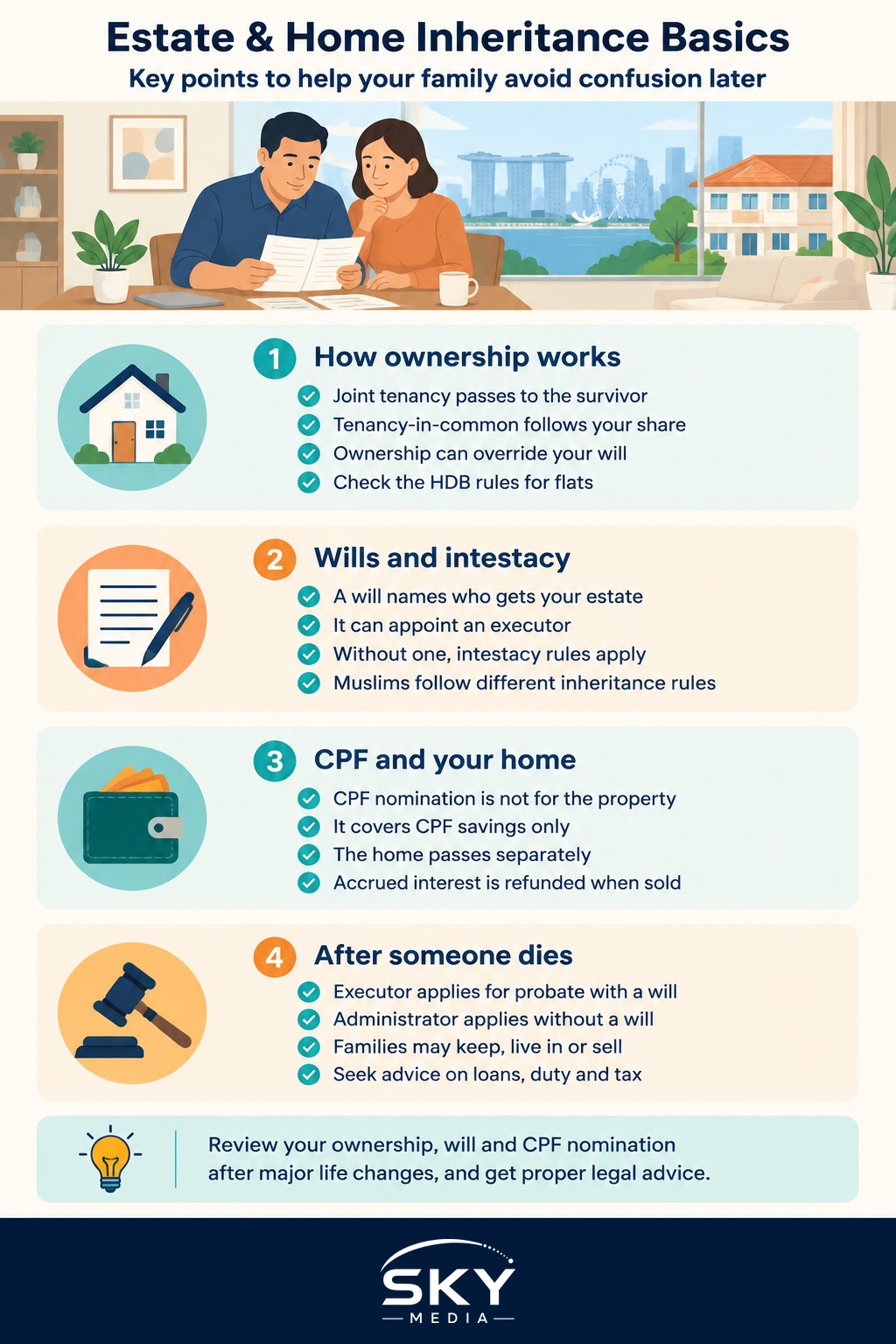
How your property passes on
The single most important thing to understand is that how you hold your property often decides what happens to it, sometimes overriding your will.
If you own a home jointly under a joint tenancy, the right of survivorship usually applies. On the death of one owner, that person’s share passes automatically to the surviving co-owner or owners, outside the will. If instead you hold the home as tenants-in-common, each owner has a defined share that forms part of their estate and can be left to whomever they choose. This distinction matters enormously for planning, and many couples do not realise which arrangement they have. Our explainer on joint tenancy vs tenancy-in-common walks through the difference and why it shapes inheritance.
For HDB flats there are additional rules on who may inherit and continue to own the flat, tied to eligibility conditions. An inheritor may need to meet ownership and citizenship criteria, and in some cases may have to sell or give up a share. HDB is the authority here, and its current rules should be checked directly rather than assumed.
Wills, intestacy and CPF
A will lets you say who receives your estate and appoint an executor to carry out your wishes. Without a valid will, you die intestate, and the law decides who inherits under the Intestate Succession Act, following a fixed order of family members. That order may not match what you would have wanted, which is the clearest argument for making a will. For Muslims, inheritance is governed by different rules under the Administration of Muslim Law Act, so the guidance below on intestacy does not apply in the same way.
A common misconception is that a CPF nomination covers your property. It does not. CPF nomination governs the CPF savings in your account, not the flat or house itself. Your home passes under your will or, absent one, under intestacy rules and the way the property is held. Keeping these two things separate in your mind avoids a costly assumption. To understand how CPF you used for the home is accounted for, our guide to CPF accrued interest and your home is a useful companion, since accrued interest is refunded to the CPF account when a property is sold or transferred.
When property is inherited
When someone inherits a home, the estate normally goes through a legal process first. If there is a will, the executor applies for a grant of probate; if there is no will, an administrator applies for letters of administration. Only then can the property be dealt with, transferred or sold. This takes time and paperwork, and it is not something most families should attempt without guidance.
Inheritors often face a choice about whether to keep, live in, or sell the property, and each path carries its own considerations around eligibility, existing loans, stamp duty and tax. If selling is on the cards, our guide on selling an inherited property and, for homes still in the estate process, buying a probate property explain how these situations work in practice. Do not assume figures such as stamp duties or tax, since these are set by IRAS and change; check the current position for your circumstances.
Getting it right
Estate planning rewards being deliberate. Review how you hold your property, make or update your will, keep your CPF nomination current, and tell your executor where documents are kept. Revisit everything after major life events such as marriage, divorce, a new child or buying a new home.
Because wills, probate and estate matters carry real legal consequences, this is an area to get properly advised rather than to improvise. Engage a qualified lawyer to draft or review your will and to guide your family through probate or administration, and speak to HDB about flat eligibility and to CPF Board about nominations. A short conversation with the right professional now can save your family enormous stress later. Treat this article as a map of the questions to raise, not as a substitute for advice tailored to your family.